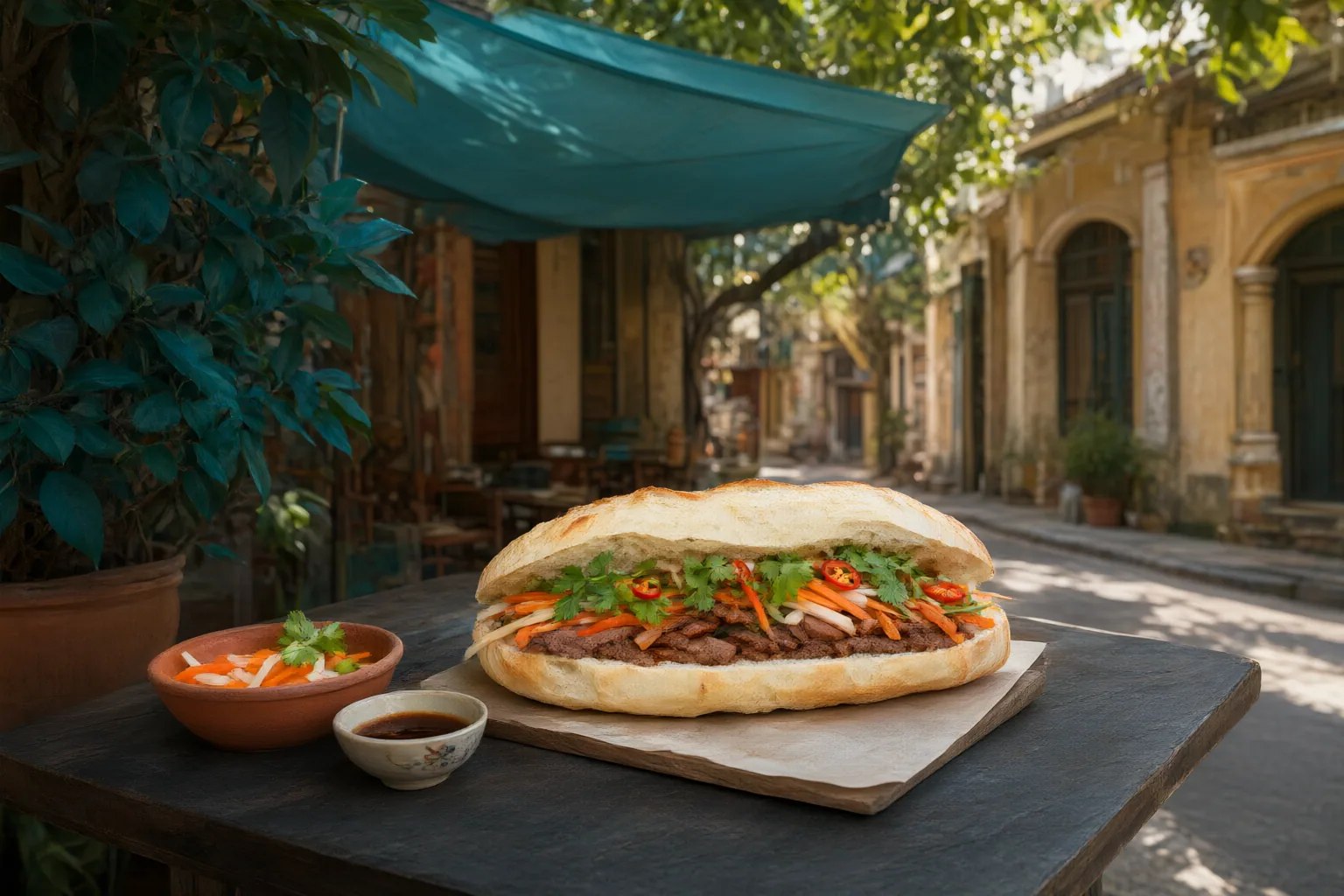
Bánh mì can mean bread, a Vietnamese baguette, or a filled sandwich. Across Vietnam, use the bread, fillings, pickles, condiments, and heat level as practical points of comparison rather than expecting one universal version.
What “Bánh Mì” Means in Vietnam
In Vietnamese, “bánh mì” does not always identify a filled sandwich. Depending on context, it can refer to bread generally, the Vietnamese baguette, or the familiar sandwich assembled inside it. Plain, unfilled bread may be called “bánh mì không.” This distinction is useful when reading a menu or looking at a food display: if the offering is unclear, ask whether the quoted item is the loaf alone or includes fillings.
The sources describe bánh mì as widely eaten street food and as a common choice for breakfast or a snack. That everyday role does not imply a single recipe. Even before considering the filling, the bread matters: cited descriptions emphasize a crisp crust surrounding a soft, airy interior. Begin an exploration by identifying what the seller means by bánh mì, then notice how the loaf contributes to the finished food.
How History and Saigon Shaped the Filled Sandwich
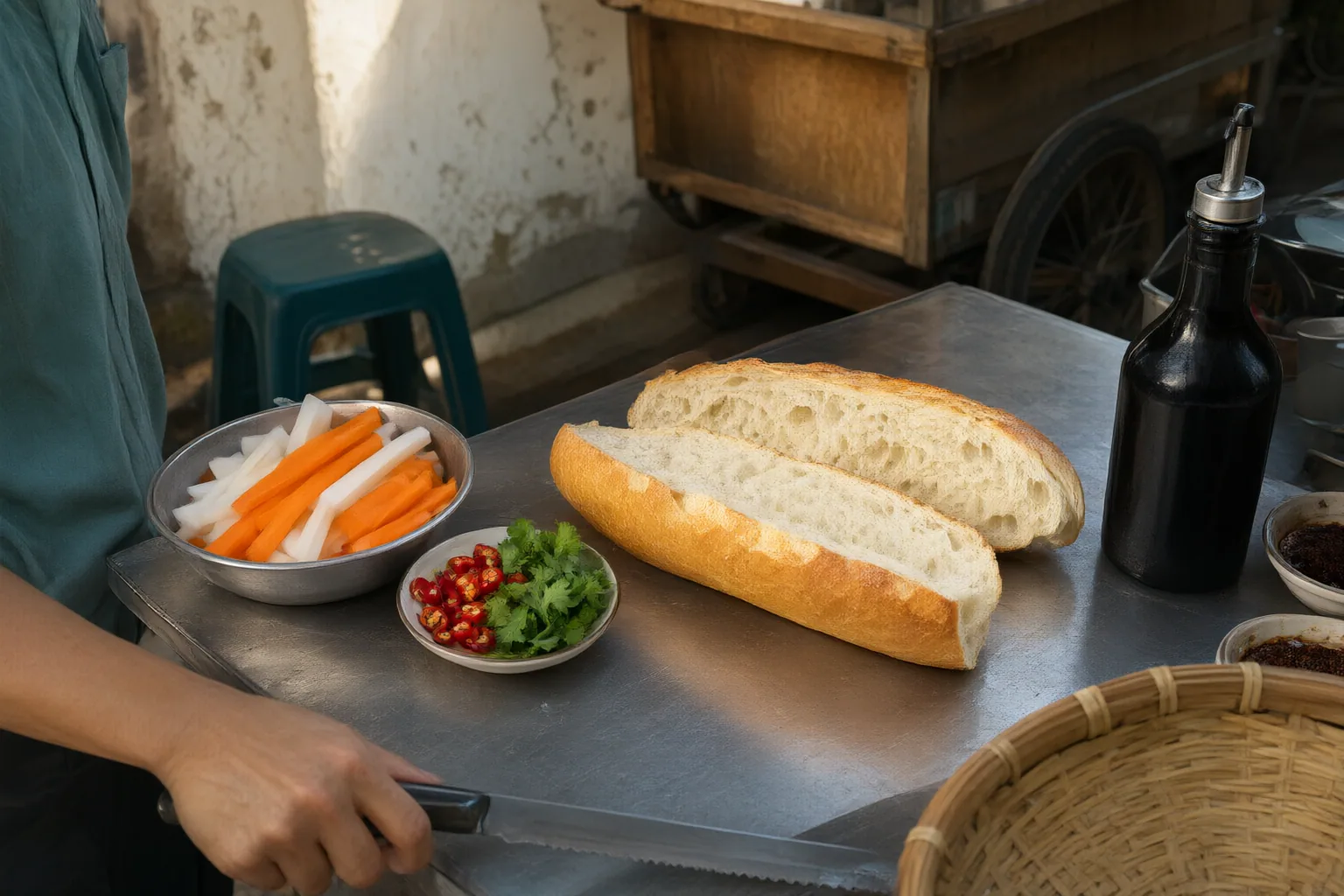
The history presented by the sources begins with the baguette’s introduction during the French colonial period. The bread was subsequently adapted with Vietnamese ingredients, turning an imported form into food with distinctly local combinations and uses.
Saigon holds a specific place in that account. An English-language source says that a distinctly Vietnamese sandwich style developed there in the 1950s, while a Vietnamese-language source also associates the city especially closely with bánh mì’s adaptation and popularity. This supports treating Saigon as an important historical reference point, but it does not establish a ranking of present-day destinations or prove that one city now offers a definitive version.
For travelers, the history is most useful as context for variation. Bánh mì brings together a baguette form and an assortment of Vietnamese fillings, vegetables, pickles, spreads, and seasonings. Its development helps explain why exploring it is less about locating one fixed formula and more about observing how different combinations are assembled.
What to Compare and Ask for at Each Destination
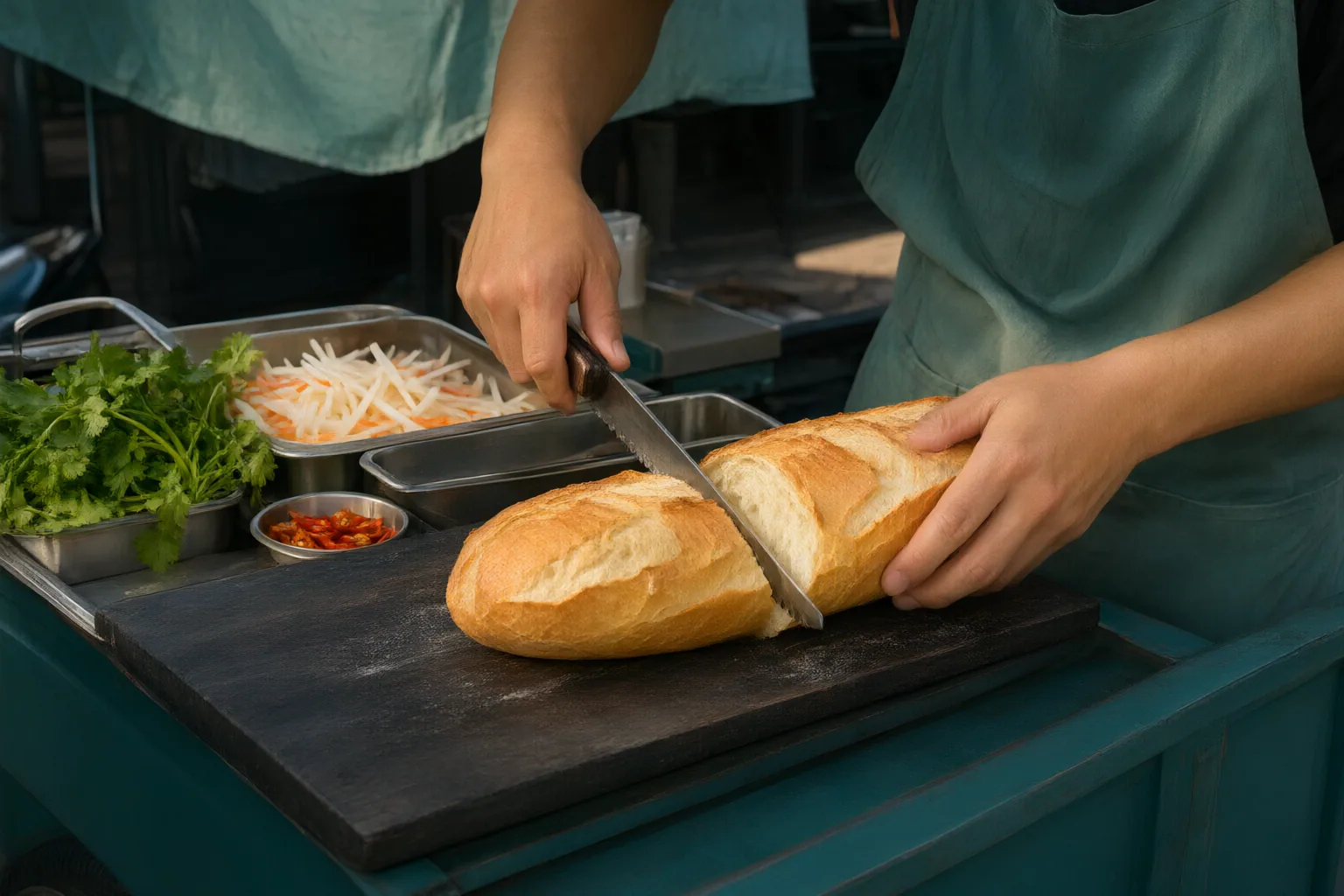
Start with the loaf. The sources repeatedly characterize Vietnamese bánh mì bread as crisp outside and soft and airy within. One recipe-focused source considers bread quality crucial and cautions that a dense baguette will not produce the same texture. That is the author’s guidance rather than a universal rule, but crust, density, and interior texture still provide a consistent framework for comparing what you encounter.
Next, ask what is inside. Documented fillings include chả lụa, grilled pork, pork belly, xá xíu, xíu mại, nem nướng, and tofu. Other commonly described components include cucumber, coriander, pickled carrot and daikon, pâté, mayonnaise, chili, and savory seasoning. These are examples, not a checklist that every sandwich will follow. Asking about the full combination is more reliable than assuming a named protein tells the entire story.
If you avoid meat, confirm both the main filling and the condiments. Tofu and other vegetarian fillings are documented, but pâté and meat also appear commonly, while mayonnaise may matter to people following particular diets. The evidence does not show that every tofu sandwich excludes those ingredients, so a direct question is appropriate.
Heat is another adjustable point. Chili or sliced jalapeño appears among common or default ingredients in the sources. If you prefer less heat—or specifically want it—state that before the sandwich is assembled. At each stop, compare the loaf, main filling, fresh vegetables, pickles, spreads, seasoning, and chili level as separate choices. This approach respects local variation without presenting any documented combination as the national standard.
Conclusion
A useful bánh mì exploration begins with four questions: Is this plain bread or a filled sandwich? What filling and condiments are included? How crisp and airy is the loaf? Is chili added by default? Record or remember the answers, then compare them with later encounters without treating any one combination as universal.
At your next food stop, ask what fillings and condiments are included, choose your preferred heat level, and notice how the bread and complete combination differ from what you find elsewhere.
Disclosures and limitations
- This article was prepared with AI assistance using only the supplied research package. Its factual boundaries come from source-500cfa4ef122295eecaed2c9, source-d7c249c984d323fbcd651311, and source-1bcb9947bc97ab0f970c3238.
- No current vendors, prices, addresses, or opening hours are recommended here; the supplied sources did not verify destination-by-destination listings. The recipe source’s texture guidance reflects its author’s preference rather than a universal standard.
Related reading
- Destinations for Curious Trips and Meaningful Stops
- How to Prepare for a Vietnam War History Trip: Health Planning and Regional Context
Sources
- Bánh mì – Wikipedia — en.wikipedia.org
- Bánh Mì Recipe – Vietnamese Sandwiches w/ Pork Belly – Hungry Huy — Hungry Huy
- Bánh mì Việt Nam – Wikipedia tiếng Việt — vi.wikipedia.org