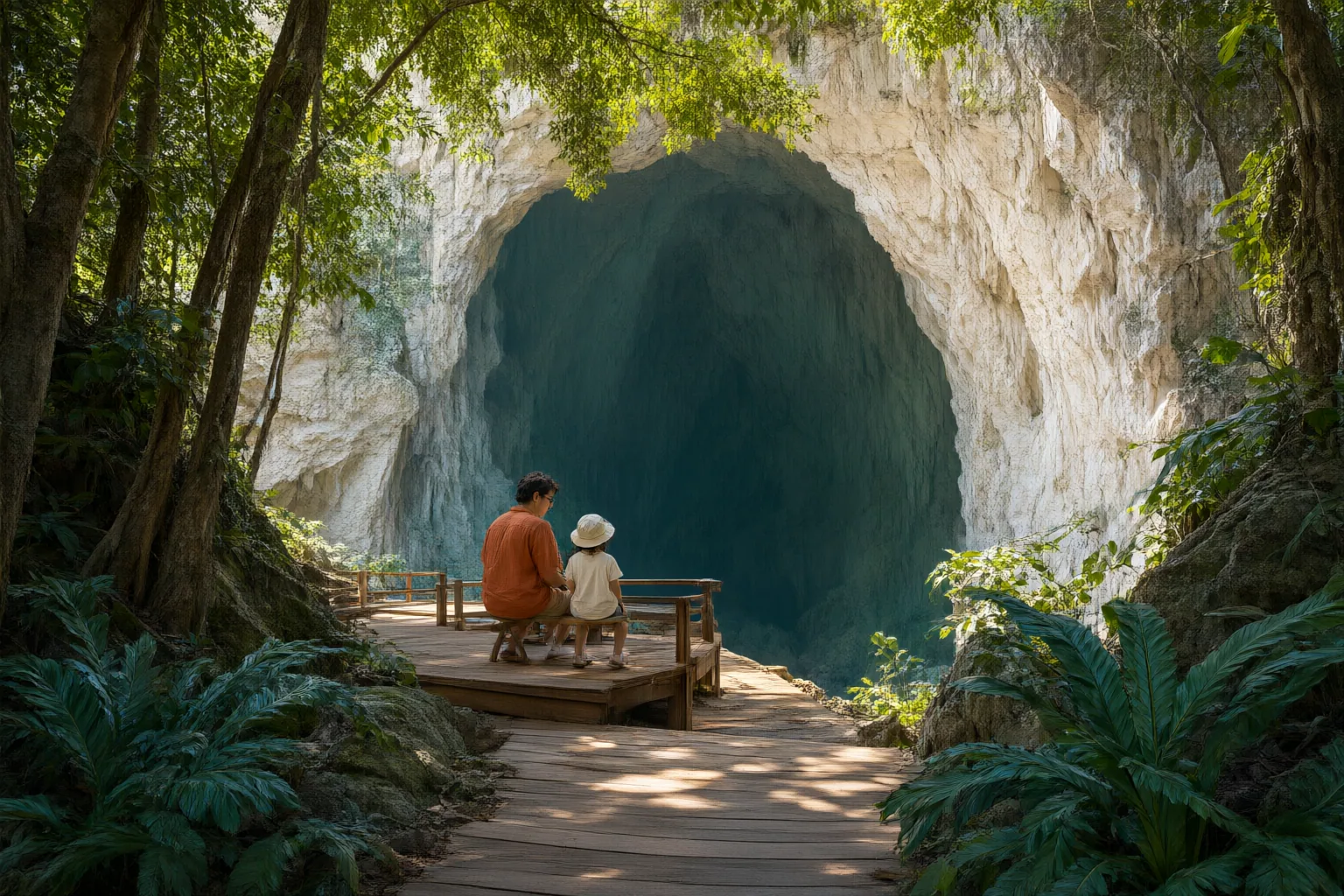
Choose a Vietnam cave experience by assessing the whole day—transfers, route demands, weather exposure, rest opportunities, and each child’s comfort—not simply the cave itself. Shortlist options that suit the family’s slowest pace, then verify current operator rules and conditions before booking.
Start With the Kind of Cave Day Your Family Can Comfortably Manage
Begin by picturing the experience from departure to return. Consider how long each child can travel, sit, walk, climb, or remain in a confined passage without becoming uncomfortable. Age matters, but it should be considered alongside mobility, preferred activity level, tolerance for uncertainty, and the amount of downtime a child needs. The supplied sources associate younger children with shorter travel days and more rest, while older children may be more interested in active exploration; these are planning tendencies, not eligibility rules.
Ninh Binh illustrates why the label “cave experience” is not specific enough. Reported activities include slow journeys in oar-powered, flat-bottomed boats through flooded karst scenery and cave passages, as well as the Mua Cave viewpoint, countryside cycling, Trang An boat tours, and Tam Coc exploration. Those options can place different demands on passengers: extended sitting is unlike climbing toward a viewpoint or cycling through the countryside.
For every option, write down the likely physical demands and possible discomforts. Judge the complete day according to the participant who has the greatest mobility constraints or lowest tolerance for long transfers, enclosed spaces, prolonged sitting, or sustained activity. Do not infer suitability from a destination’s family-oriented reputation alone.
Compare Route Demands, Pace, and Transport
Compare shortlisted experiences with the same practical questions. How much time is spent in a boat, vehicle, or cave passage? Does the day involve walking, steps, a steep viewpoint, cycling, or transitions between several activities? How easily can the family pause for food, a bathroom visit, or recovery? The research does not supply verified answers for individual routes, so these points should be confirmed rather than assumed.
Look beyond the scheduled activity duration. A manageable cave visit may still become exhausting when combined with a long transfer, delays, missed sleep, or too many stops on an itinerary. Sources recommend a slower family pace with fewer destinations, downtime, and schedule buffers. This can be especially useful for younger children, but the right pace depends on the individual child.
Transport can determine whether that buffer is realistic. One source says private transfers or dedicated vans may offer air conditioning, flexible stops, and room for a stroller or car seat. Another notes that car seats are not standard in urban transport and suggests bringing a portable seat for infants or toddlers. Families relying on either a stroller or car seat should confirm vehicle space and arrangements in advance. When comparing two experiences, favor the one whose transfers, breaks, activity demands, and recovery time fit the family’s actual routine.
Check Weather, Accessibility, and Operator Details Before Booking
Weather can alter both comfort and practicality. Vietnam’s conditions vary by region, and heat, humidity, rain, flooding, mosquitoes, and seasonal differences may affect an outdoor cave-area day. Allow for possible disruption when choosing dates, and keep a less weather-dependent alternative rather than building the trip around one inflexible activity.
Before paying, ask the relevant operator to confirm:
- current minimum-age rules and any other participation restrictions;
- the route’s duration, walking surfaces, steps, gradients, confined passages, and rest opportunities;
- accessibility for the family’s specific mobility needs;
- current cave, rain, or flooding conditions and the weather-change policy;
- boat safety requirements and applicable operating rules;
- toilet access and opportunities for food, water, or breaks;
- whether a stroller, portable car seat, or other necessary equipment can be transported.
These questions are essential because the supplied publications do not verify operator-level age limits, accessibility details, boat requirements, route conditions, or current rules. Prices, hours, and travel conditions can also change. Treat general travel articles as planning context and confirm decisive details directly with the relevant operator or another appropriate official or local source.
Conclusion
The best choice is the experience whose entire day fits the least mobile or least comfortable participant—not necessarily the option with the most activities. Compare route demands, transfer time, breaks, equipment needs, and weather exposure; leave buffer time and retain an alternative if conditions change.
Create a short list based on your family’s real pace. Then contact each relevant operator and ask for current age restrictions, accessibility information, safety requirements, route and weather conditions, transport arrangements, and change policies before paying.
Disclosures and limitations
- This article was prepared with AI assistance from the supplied travel publications and research summary. Operator-specific restrictions, accessibility, safety requirements, prices, hours, and conditions were not independently verified and should be confirmed before booking.
Related reading
- Travel Ideas for Meaningful Trips
- How to Verify Product Facts, Tradeoffs, and Long-Term Fit When Planning a Vietnam Trip
- Gardens to Visit in Vietnam: Ideas for a Meaningful Day Out
Sources
- Vietnam with Kids: Practical Family Travel Guide from Long-Term Expats (2026) — twopeasabroad.com
- Vietnam Family Travel: 7 Amazing Destinations Kids and Parents Will Love in 2026 – MaverickJourneys | Private Vietnam Tours & Local Experiences — Maverick
- Vietnam Itinerary with Kids: 2 Tested Routes for Families — roamingcrew.com
- Family Travel in Vietnam: Tips for Traveling with Kids | EnViet — EnViet