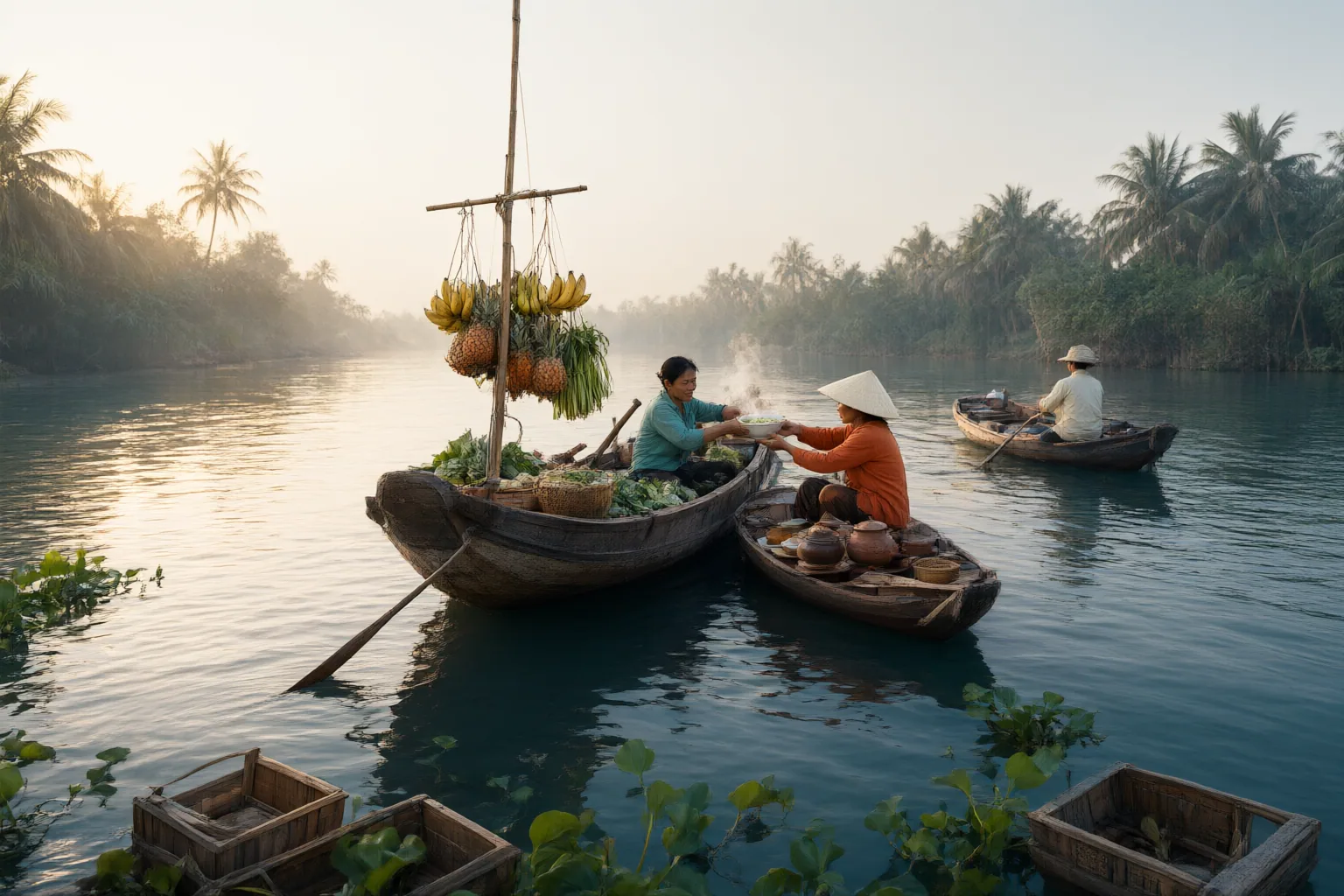
Floating markets in the Mekong Delta trade in a narrow pre-dawn window: sources describe activity beginning around 4:00-5:00 AM and peaking between roughly 5:30 and 7:30 AM before boats disperse by mid-morning, so the core experience belongs to travelers who leave before sunrise. Expect bamboo poles hung with sample goods, breakfast sampans serving coffee and noodle soups, and a market scene that has visibly shrunk. Cai Rang near Can Tho remains the most reliable visit, while sources conflict on whether several other markets still operate.
Why Floating Markets Start Before Dawn — and Why Timing Is Everything
Floating markets grew out of the Mekong Delta's dense web of rivers and canals, where a boat was the simplest way for farmers to move and sell their produce. Markets typically formed where rivers or canals met, and that river-born logic still sets the schedule: the day was built around wholesale trade rather than sightseeing.
The clock matters more than anything else you will plan. One source describes trading beginning as early as 4:00 AM and peaking between 5:30 and 7:30 AM, with commerce dispersing by mid-morning as the heat intensifies. Another source reports that Cai Rang Floating Market starts at 5 AM and is busy by 6 AM. Either way, the meaningful window is short and sits almost entirely before a normal breakfast time. Arriving at 9 or 10 AM means catching the tail end of the morning, with more tour boats than trading boats on the water, which is why sources point visitors toward pre-dawn departures to catch wholesale trading and the soft early light.
What You Will See and Eat on the Water
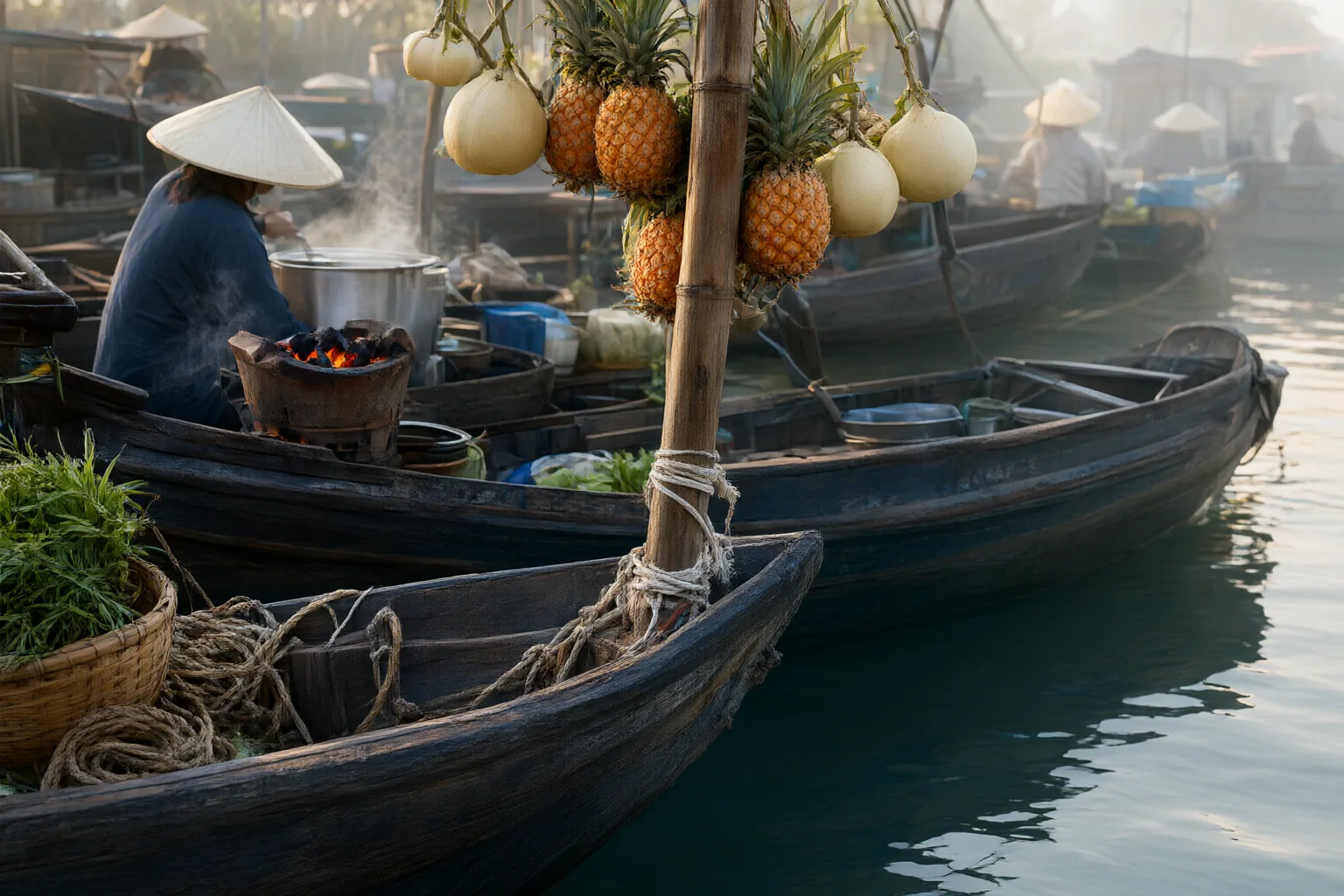
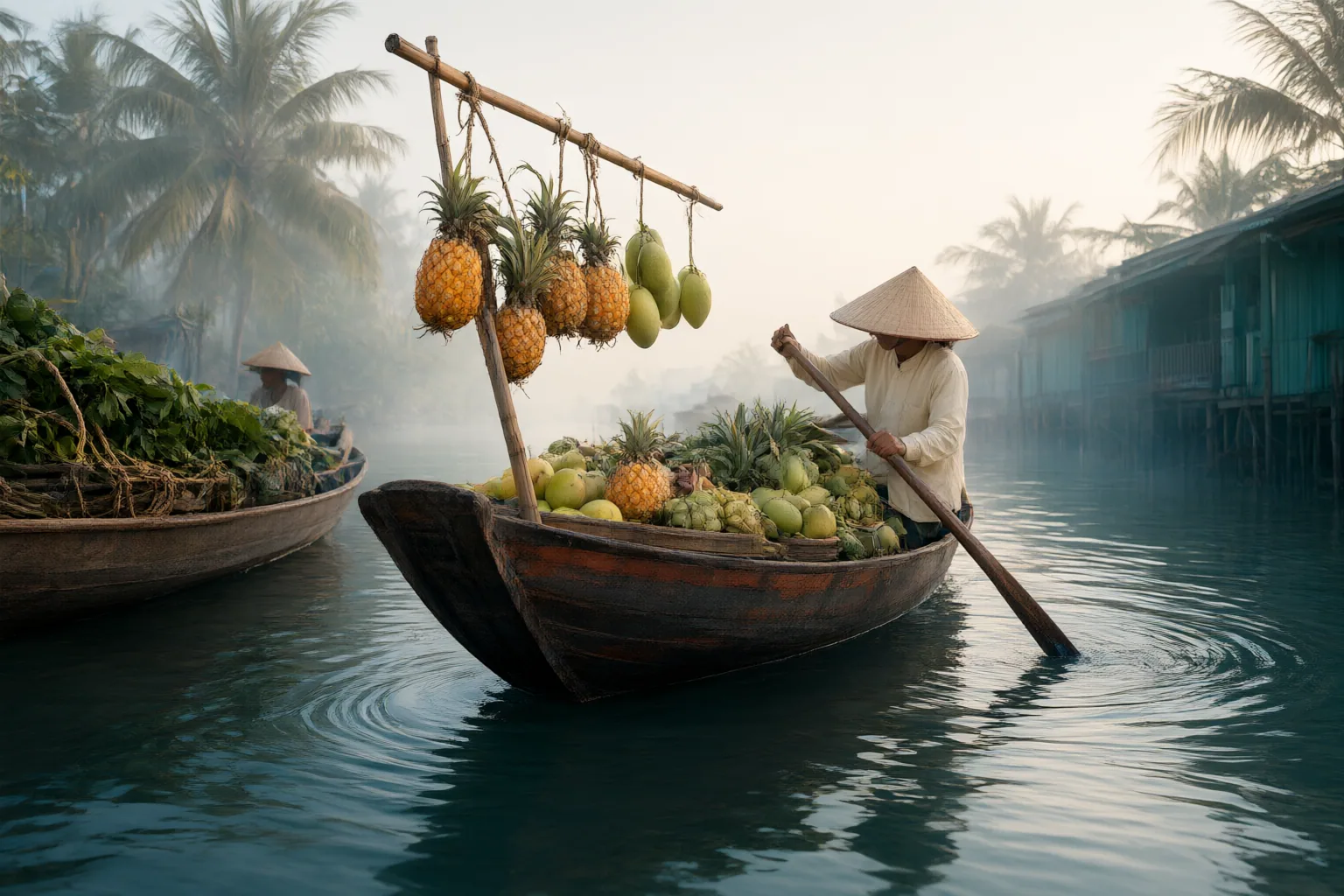
Once you are on the river, the signature sight is the cây bẹo: a tall bamboo pole fixed to the bow of a vendor's boat with a sample of the product hung on top. From a distance, buyers can read these poles to identify what each boat is selling in bulk. At Cai Rang, which specializes in fruit distribution — sources mention varieties such as Nam Roi grapefruit and Cai Mon durian — that means produce hoisted above the waterline.
Food is the other half of the experience. Small sampans work the market as mobile food stalls, selling coffee, hủ tiếu (pork and seafood noodle soup), bún riêu (crab noodle soup) and other breakfast dishes to traders and visitors alike. At Cai Rang, some boats are fitted with plastic seats that turn them into makeshift eateries, so breakfast on the water is a practical part of the visit rather than an add-on.
Which Markets You Can Actually Visit — and Where Sources Disagree
Cai Rang Floating Market in Can Tho is described as one of the largest in the delta and historically a wholesale hub for fruit, vegetables and rice; it remains the main stop for tours today. Can Tho authorities have recognized it as intangible cultural heritage and set up a management board, although river embankments built to prevent erosion have made it harder for trading boats to connect with the shore. Long Xuyen in An Giang is quieter: it mainly serves locals, is rarely advertised, and sells vegetables, pickles, squash, sweet potatoes, fruits and local West-Southern dishes; one status report describes it as sparse, with mainly local sellers.
Beyond those two, the picture is genuinely contested. A local report updated in September 2025 lists Phong Dien, Cai Be, Tra On, Nga Nam and Nga Bay as closed, reduced to a couple of boats, or moved onshore. Other sources still describe some of them as visitable: a tour-operator page calls Cai Be a goods-transport hub that stays open later for foreign visitors, and a separate source details Nga Nam's early-morning trade in rice, meat, fresh fruit and household goods. The same 2025 report attributes the broader two-decade decline to highways, bridges and container trucks, with COVID-19 accelerating it as many traders did not return to the river. Verify locally before committing to a long drive.
Conclusion
None of this argues against going — it argues for going prepared. Set your alarm for a pre-dawn departure, because trading between roughly 4:00 and 7:30 AM is the experience. Anchor your plans around Cai Rang near Can Tho, which sources describe as one of the largest markets and the main stop for tours, while holding realistic expectations: recent reporting suggests far fewer trading boats than older photographs imply, with tour boats making up much of the traffic. Frame the market as one stop in a broader morning river journey — breakfast on the water, back canals, orchards or a land market — rather than the sole purpose of your delta trip. Before you sleep, do one concrete thing: contact a local operator to confirm your chosen market's current status, then set the pre-dawn alarm and plan the rest of your morning on the river.
Disclosures and limitations
- This article was drafted with AI assistance and is based solely on the cited research sources; no prices, boat fares, or official opening hours beyond those sources have been added, and no Vietnamese-language primary or official government source was available for verification.
- Source accounts conflict on whether several markets currently operate, and that conflict is presented as-is rather than resolved. One cited source is a commercial tour-operator page and is attributed as promotional. This article recommends no products, tours, or bookings and has no affiliate or commercial relationships to disclose.
Related reading
- Travel Ideas for Meaningful Trips
- Rail Transport in Vietnam: When Train Travel Fits an Independent Trip
- How to Choose a Mekong Delta Boat Experience for a Single Day
Sources
- Floating Through the Vibrant Early Morning Markets of the Mekong Delta — Glamour Adventures
- Bangkok Floating Markets By Time: Dawn, Weekend & Evening Markets Guide 2025 — floating-market-bangkok.com
- Mekong Delta Floating Markets: 7 Best & Reality Today 2026 — Local Vietnam
- Tha Kha floating market: a local early morning floating market — Thailande et Asie
- Top 5 Must-Visit Floating Markets in Vietnam| — Lua Viet Tours
- Enjoy Nga Nam floating market in the early morning |Attractions — VietnamTourism.org.vn
- Bang Khu Wiang Floating Market: Bangkok's Dawn Market Experience — floating-market-bangkok.com