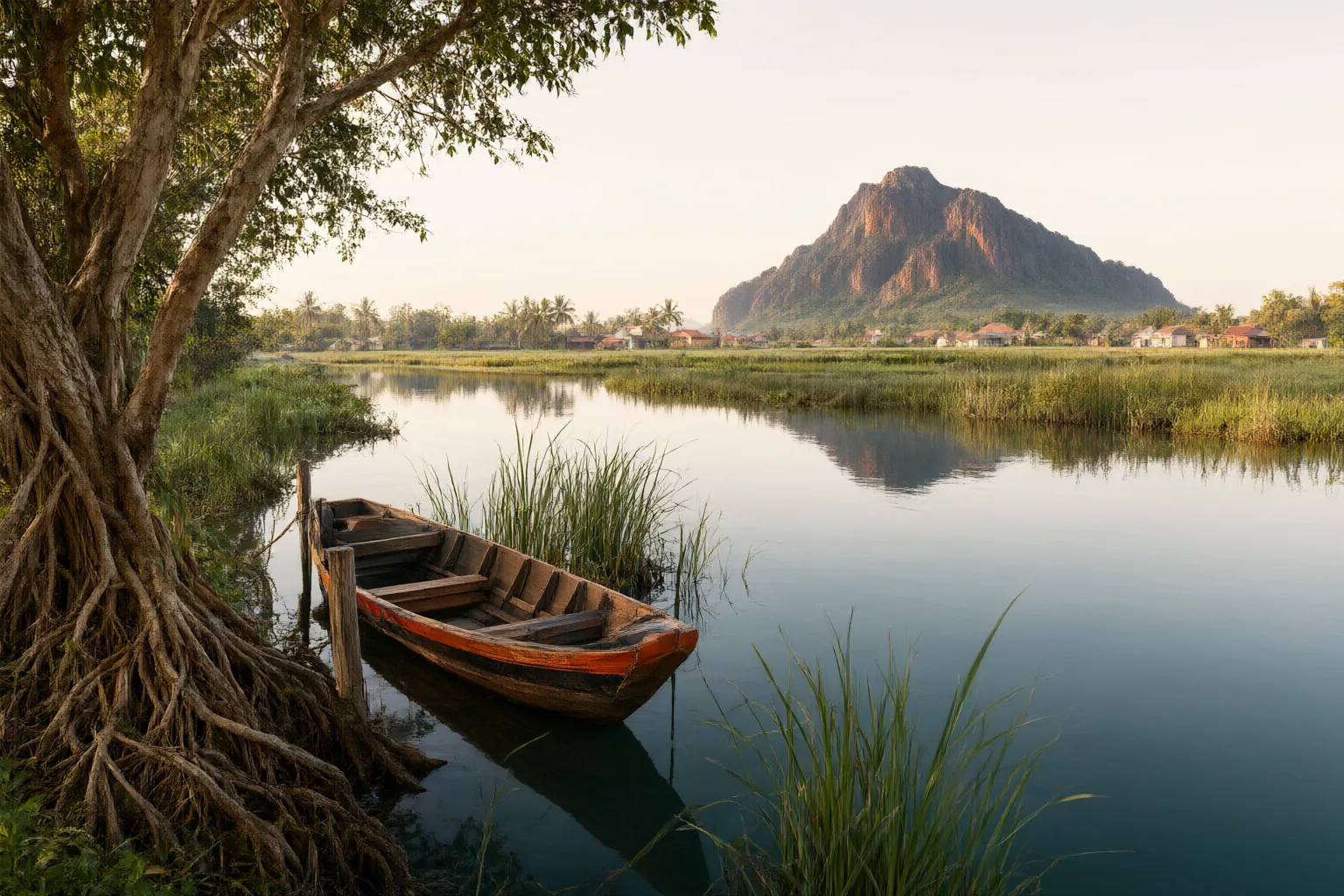
For a practical mainland An Giang trip, organize your time around Châu Đốc and Sam Mountain, Trà Sư Cajuput Forest, Long Xuyên, Tà Pạ, and Óc Eo. Choose dates according to seasonal scenery, group nearby stops, and verify weather, water, access, and operating conditions before departure.
Understanding An Giang and Choosing Where to Go
An Giang lies in southwestern Vietnam’s Mekong Delta and borders Cambodia. Its administrative meaning changed substantially in 2025, when Kiên Giang was merged into An Giang. Current official tourism material therefore includes Phú Quốc as well as mainland themes such as the Seven Mountains and the Lady of the Realm Festival at Sam Mountain. This guide concentrates on the mainland destinations named in the approved plan rather than attempting to cover the expanded province in one itinerary.
Châu Đốc is a useful base for a mainland route. Sources connect the city with river life, Cham communities, floating fish farms, markets, temples, regional food, and nearby Sam Mountain. From this cluster, travelers can consider Trà Sư Cajuput Forest and the Tà Pạ area as additional stops. Long Xuyên Floating Market forms a separate early-morning focus, while the Óc Eo archaeological site adds another possible destination.
These places are distributed across several areas, so treating An Giang as a single attraction hub can produce an impractical schedule. Start by deciding which cluster matters most: Châu Đốc and Sam Mountain for a broad mix of cultural and food experiences, Trà Sư for waterways and seasonal scenery, Long Xuyên for its floating market, or Tà Pạ for rice-field landscapes. Add Óc Eo only when the available time and route make it realistic.
When to Visit and How to Cluster the Route
Sources generally place An Giang’s rainy season around May to November and its dry season around December to April, although transition months vary slightly. Those broad labels do not identify one universally best period: the right travel window depends on the landscape and activities you prioritize.
Trà Sư Cajuput Forest is described as especially vivid during the floating-water season from September through November, when waterways and duckweed-covered surfaces become prominent. Around Tà Pạ, multiple sources associate late November to early December with golden or recently harvested rice-field scenery. Travelers prioritizing generally drier conditions may instead favor the approximate December-to-April period, accepting that it offers a different landscape from the floating season.
A workable plan groups destinations instead of crossing between every major stop in one day. Châu Đốc can anchor visits to Sam Mountain and provide access to river, market, religious, and food experiences. Trà Sư or Tà Pạ can then be added according to time and seasonal priorities. Long Xuyên is better treated as its own cluster because its floating market operates early in the morning; one source also notes that the market has diminished in size over time. An early start matters there, while arriving earlier at Trà Sư may help avoid busier periods later in the day.
General seasonal patterns are not a substitute for current information. The provincial portal publishes short-term hydrological and heavy-rain notices, and supplied travel guidance recommends checking weather before rainy-season journeys. Shortly before leaving, verify current forecasts, water conditions, access arrangements, and operating times rather than relying on an older itinerary.
Local Food and Cultural Context in Châu Đốc
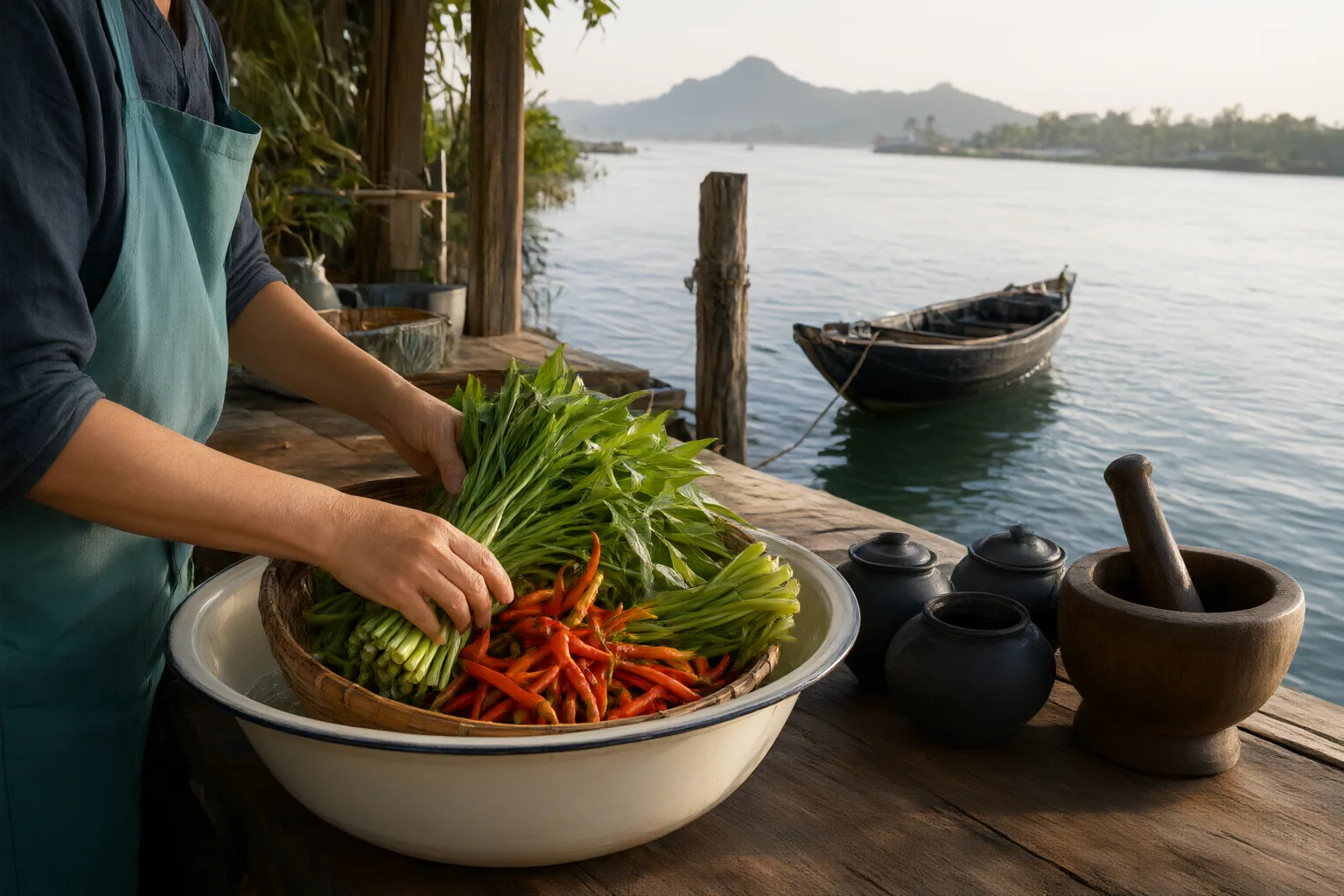
Châu Đốc offers a practical place to connect food with its local setting. The supplied sources associate the city particularly with markets, fermented fish products, and Mekong-style fish dishes. This is more precise than treating An Giang as one uniform dining destination: travelers seeking those specialties should focus their food planning on Châu Đốc and its markets.
The city also works as a base for understanding the area beyond individual dishes. Sources place nearby river life, Cham communities, floating fish farms, religious sites, and Sam Mountain within the Châu Đốc experience. Across An Giang, the cultural landscape is associated with Kinh, Khmer, Cham, and Chinese communities, with this diversity reflected in religious places, festivals, architecture, crafts, and cuisine.
Approach markets and food stops as part of that broader context. Allow time to observe what is sold locally, while avoiding assumptions that every dish or tradition represents the entire province. The evidence supports a strong connection between Châu Đốc and fermented fish and fish dishes, but it does not establish a single definitive menu, restaurant ranking, or province-wide dining pattern.
Conclusion
Begin with one clear mainland route. Use Châu Đốc as a base if you want to combine markets, regional food, river life, religious sites, and Sam Mountain. Add Trà Sư for floating-season scenery, Tà Pạ for seasonally changing rice fields, or Long Xuyên when an early-morning market visit fits your schedule. Keep Óc Eo as another option when time and routing allow.
Once you have selected your route and travel window, check current weather and hydrological notices, access conditions, and operating times shortly before departure. That final check is especially important during rainy conditions and for visits that depend on water levels or early timing.
Disclosures and limitations
- This article was prepared with AI assistance from the supplied research package and its cited official and travel-publisher sources.
- No products are recommended here. Time-sensitive details such as weather, water conditions, access, schedules, festival dates, and operating times should be independently confirmed before travel.
Related reading
- Destinations for Curious Trips and Meaningful Stops
- What “Biển Đông” Means When Planning a Vietnam Coastal Trip
- Bánh Mì in Vietnam: A Practical Guide to Exploring It Across Different Destinations
Sources
- An Giang province – Wikipedia — en.wikipedia.org
- Trang Chủ — Cổng thông tin điện tử tỉnh An Giang
- An Giang Travel Guide: Things To Do, Tips & Itinerary 2026/2027 | ORIGIN VIETNAM — ORIGIN VIETNAM
- An Giang – Travel Guide 2026 & 6 best things to do — Local Vietnam
- An Giang, Vietnam: Into the wonders of the Mekong Delta – VinWonders — VinWonders
- Cẩm nang du lịch An Giang 2026 với 18 điểm đến nổi tiếng — mia.vn
- A Complete Travel Plan to Discover An Giang Province — asiakingtravel.com
- Home — An Giang Province's Portal
- An Giang – Wikipedia tiếng Việt — vi.wikipedia.org