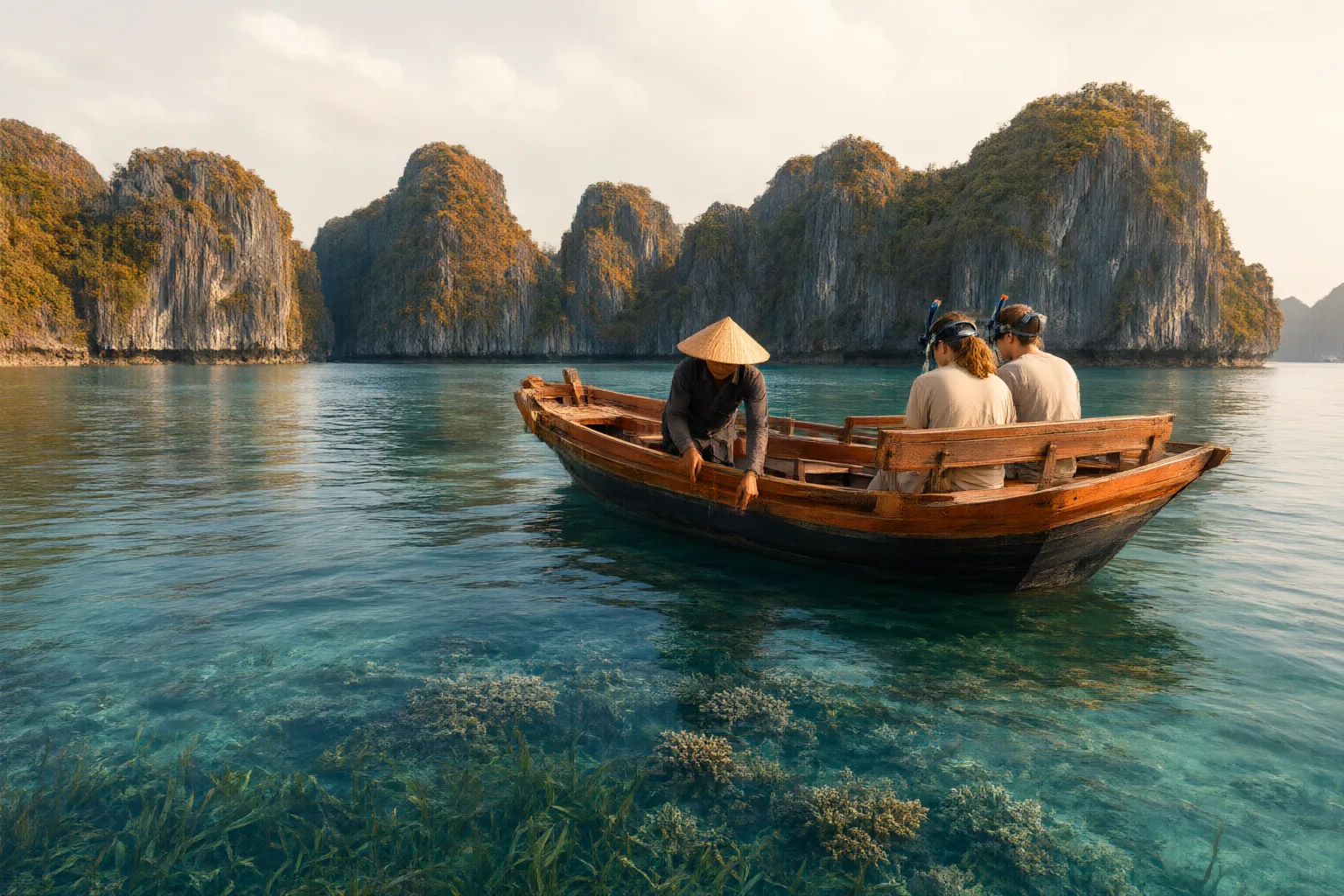
Choose a responsible marine excursion by checking current local rules, operator authorization, habitat safeguards, beginner guidance, and wildlife-viewing practices before booking. Favor operators that set realistic expectations and explain how they minimize disturbance rather than promising guaranteed sightings or unusually close encounters.
Start With Rules, Authorization, and Conditions
Begin with the requirements for the specific destination rather than assuming that one set of practices applies everywhere in Vietnam. Before departure, check the weather forecast, relevant marine zones, protected-area requirements, and any local or ranger guidance. Confirm that the proposed activity is permitted and that the operator is authorized to conduct it.
This matters in sensitive destinations such as Cham Islands and Con Dao, where marine encounters may be governed by conservation or ranger rules. Guidance for Con Dao favors operators that follow ranger protocols over unlicensed, crowd-heavy beach approaches. Conditions and access requirements can change, so information seen when planning should be verified again shortly before the trip.
Ask the operator which current rules apply, who oversees the area, and how the itinerary changes if weather or local restrictions make the planned activity unsuitable. General marine-recreation guidance also recommends reviewing local rules, remaining aware of designated zones, avoiding sensitive habitats, and checking forecasts. However, such general guidance is not a substitute for current Vietnamese requirements at the destination.

Questions to Ask the Operator Before Booking
A responsible-sounding description is not enough, particularly in Phu Quoc, where a Vietnam travel guide reports that snorkeling operators do not all follow reef-safe practices. Ask direct questions and look for specific, understandable answers:
- What local, protected-area, or ranger rules govern this trip, and how does the operator comply with them?
- Is the operator authorized for the departure point and planned activity?
- What distance must guests maintain from wildlife, and how do guides prevent chasing, touching, feeding, or otherwise interacting with animals?
- Are guests told never to stand on coral and to keep their fins above coral heads?
- What instruction is provided to beginners before they enter the water?
- How are groups managed to reduce crowding and accidental contact with sensitive habitat?
- Does the operator clearly state that wildlife sightings cannot be guaranteed?
Detailed answers about briefings, respectful observation, habitat protection, and ranger procedures are more useful than broad conservation language. Beginners should favor an excursion that teaches safe snorkeling behavior instead of assuming everyone already knows how to control their fins and avoid reef contact. The operator should also explain what happens when wildlife remains distant or absent, since realistic expectations are part of responsible viewing.
Warning Signs and Low-Impact Conduct
Treat guaranteed sightings and promises of unusually close encounters as warning signs. Wild animals may be distant, hidden, or absent, and the available Vietnam-focused guidance states that sightings are never guaranteed. Marketing centered on interaction, close photographs, or crowd-heavy approaches may conflict with the principles of observing wildlife, minimizing disturbance, and respecting protected-area rules.
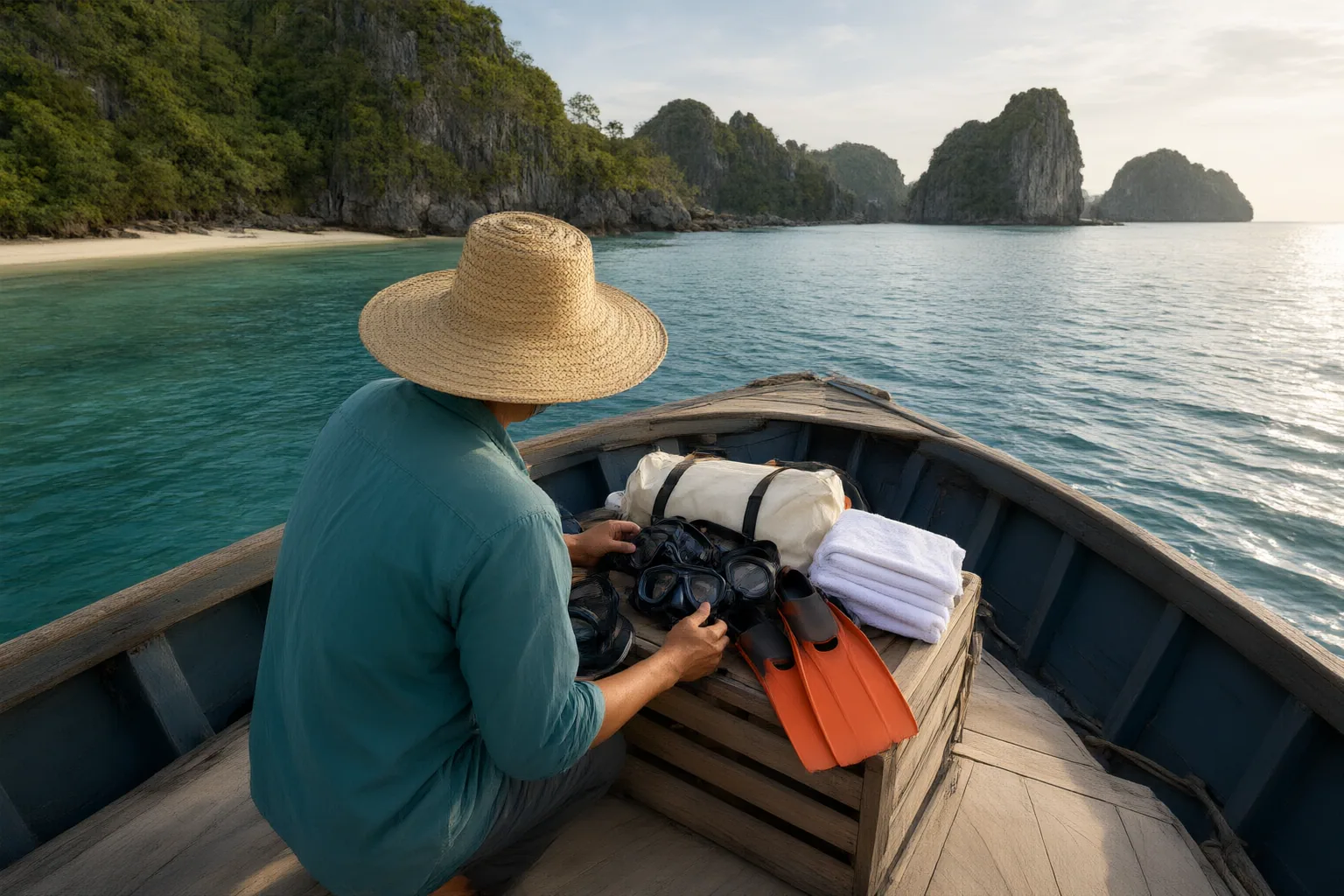
Weak habitat guidance is another concern. A snorkeling operator should be able to explain how guests avoid touching reefs, standing on coral heads, or striking coral with their fins. If the operator cannot describe applicable rules, respectful viewing distances, or beginner preparation, its use of phrases such as “eco-friendly” or “responsible” provides little practical information.
Travelers also share responsibility once the excursion begins. Observe wildlife rather than trying to interact with it, keep a safe and respectful distance, and follow the guide’s wildlife-viewing instructions. Stay away from sensitive habitat, keep fins above coral, and never stand on coral. Remain aware of marine zones and follow current local or ranger directions even if doing so limits a photograph or encounter. Low-impact conduct protects habitat and reduces disturbance; it does not depend on getting close enough for a particular image.
Conclusion
A stronger booking choice is an operator that can clearly explain its authorization, the current rules for the destination, weather and safety preparation, reef protections, wildlife-viewing distance, and support for beginners. It should acknowledge that sightings are uncertain and show how guides will respond without pressuring animals or entering sensitive habitat.
No supplied evidence supports endorsing a particular operator, price, certification, or excursion. Local conditions, access rules, and wildlife presence may also change. Before paying or departing, verify current guidance for the destination and ask the operator how it follows local or ranger rules, protects reefs and wildlife, prepares beginners, and handles a trip when conditions or sightings differ from expectations.
Disclosures and limitations
- This article was prepared with AI assistance using only the supplied research package; Vietnam-specific commercial travel and tour-provider claims should be checked against current local or protected-area guidance before publication.
- No operator or product was supplied for comparison or endorsement, and no affiliate offer is presented. Any future commercial or affiliate relationship should be disclosed clearly.
Related reading
- Destinations for Curious Trips and Meaningful Stops
- How to Choose a Vietnam Beach Destination for a Multigenerational Family Trip
- Ferry Routes vs Speedboat Transfers for Vietnamese Island Trips
Sources
- Visit | Office of National Marine Sanctuaries — sanctuaries.noaa.gov
- Vietnam Marine Wildlife: The Best Islands to Explore — Sun Getaways
- Vietnam Wildlife Encounters 2026: Ethical Viewing from Gibbons to Sea — Vietnam eVisa Assistance
- Responsible Wildlife Tourism In Vietnam: How To Travel Without Harming Wildlife — WANEE Go-Wild: Vietnam wildlife, photography tour, wild harmony excursion