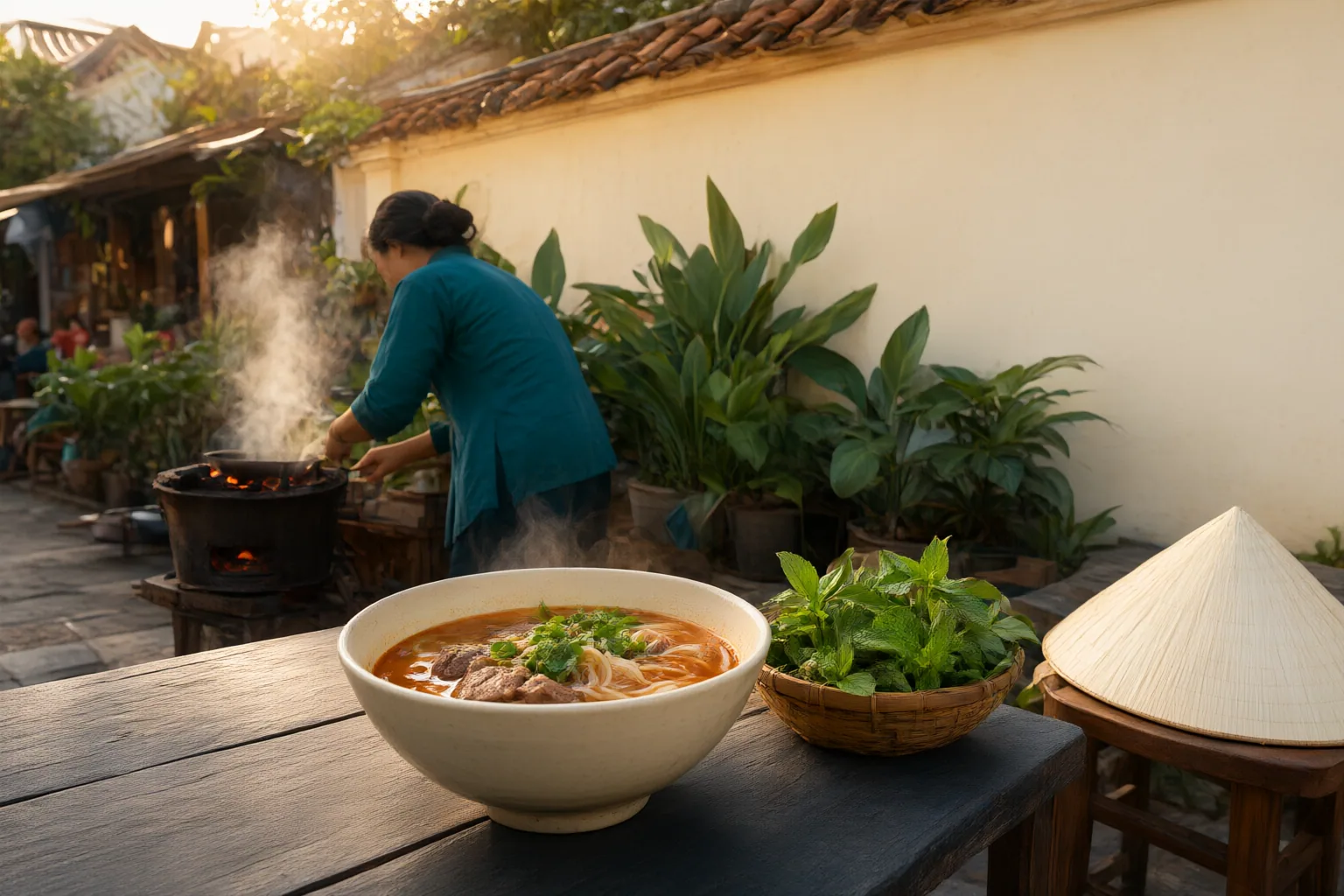
On a north-to-south journey, look for bún chả in Hanoi, bún bò Huế in Huế, cao lầu in Hội An, and bánh xèo in Ho Chi Minh City. These destination-linked dishes offer a practical starting point for exploring a cuisine that varies across Vietnam. Farther south, a possible visit to Cái Răng floating market can add a Mekong Delta setting to the route, while local menus should guide what is actually available.
Hanoi: Begin with bún chả and northern food traditions
Vietnam Tourism presents Vietnamese tastes and dishes as changing from North to South, so a multi-region journey is easier to plan when food priorities are organized by destination. In Hanoi, the clearly supported regional example is bún chả. Make it the first entry on a route-based food list rather than treating one national checklist as equally applicable everywhere.
The broader dining context can also shape the search. Vietnam Tourism describes food choices ranging from home cooking and street food to modern Vietnamese dining, while the documented north-to-south route includes opportunities to seek out street foods such as phở, bún bò, rice dishes, and fresh rolls. These broader categories are possibilities rather than exclusive Hanoi specialties in the supplied material. For a focused start, associate bún chả with Hanoi, then use menus and local availability to decide where and how to try it.
Central Vietnam: Look for bún bò Huế and cao lầu in Hội An
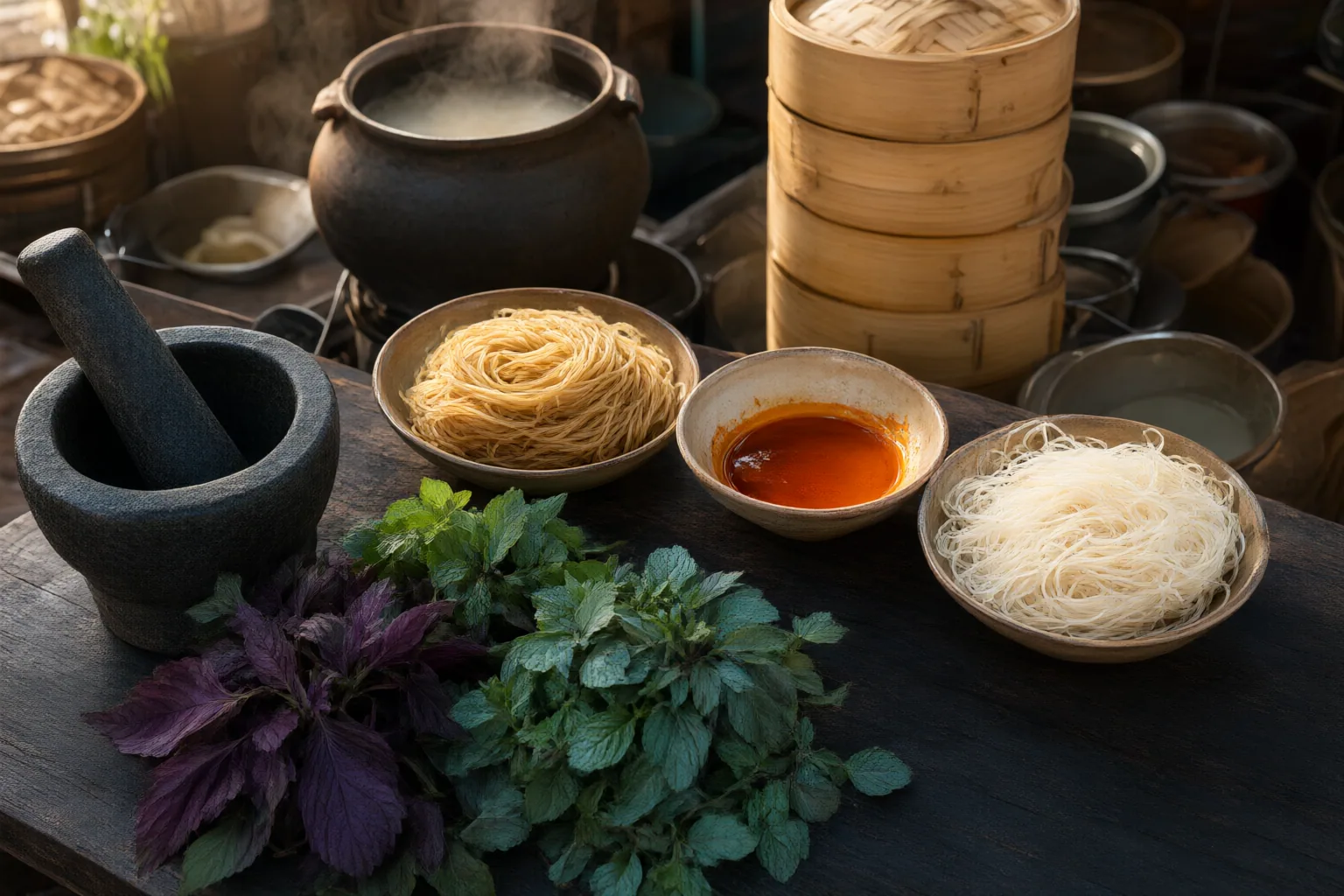
The central portion of the journey offers two direct destination-and-dish pairings. Vietnam Tourism highlights bún bò Huế in Huế and cao lầu in Hội An, and both cities appear on the documented route linking Hanoi with Ho Chi Minh City and the Mekong Delta. That makes them useful anchors for planning meals around actual stops.
In Huế, add bún bò Huế to the destination notes. In Hội An, create a separate entry for cao lầu. Keeping the two pairings distinct preserves the regional variation emphasized by Vietnam Tourism and prevents a general list of Vietnamese foods from obscuring where the sources place each example.
The route also allows room for broader options. Street food, rice dishes, and fresh rolls are among the possibilities mentioned for travel in Vietnam, but the sources do not assign every one of those categories to a particular central-city stop. Treat bún bò Huế and cao lầu as the established priorities, then confirm specific menus and availability locally instead of assuming that every venue will serve them.
Southern stops: Bánh xèo in Ho Chi Minh City and a Mekong Delta market visit
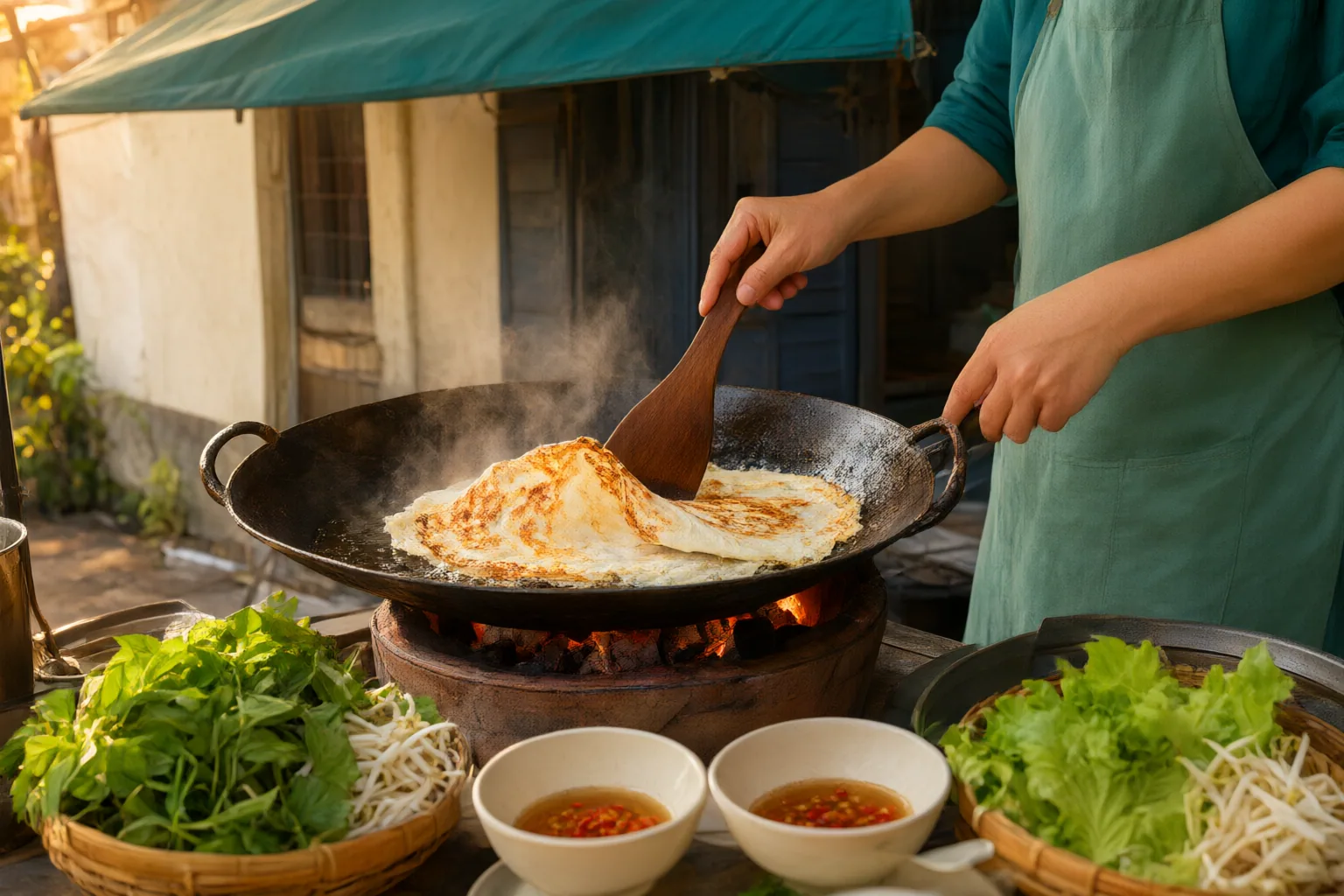
For the southern city stop, Vietnam Tourism identifies bánh xèo with Saigon, the name commonly used in the source-supported dish pairing for the Ho Chi Minh City stage of this itinerary. Add bánh xèo to the city’s food notes while remembering that the available evidence identifies a regional example, not a particular restaurant, vendor, price, or serving schedule.
The journey can then continue toward the Mekong Delta. CK Kudrna identifies Cái Răng floating market in Cần Thơ Province as a possible stop, giving travelers a specific place to consider within this part of the route. The market should be treated as a potential travel experience rather than evidence for any particular dish or vendor. The supplied material does not establish a named Mekong Delta specialty, so food choices there should be based on what can be confirmed during the visit.
This distinction keeps the plan useful: bánh xèo is the supported dish to look for in Ho Chi Minh City, while Cái Răng is a possible market stop whose current offerings and availability require local confirmation.
Conclusion
A practical north-to-south list has four firm destination pairings: bún chả in Hanoi, bún bò Huế in Huế, cao lầu in Hội An, and bánh xèo in Ho Chi Minh City. Together, they illustrate the regional changes in Vietnamese food highlighted by Vietnam Tourism and align with a route that continues into the Mekong Delta.
Other street foods, including phở and bún bò, plus rice dishes and fresh rolls, remain broader possibilities along the journey. Cái Răng floating market in Cần Thơ Province can also be considered as a Delta stop, without assuming particular foods will be available there. Save the four named dishes under their respective destinations, add the market as an optional stop, and confirm local menus and availability as the trip unfolds.
Disclosures and limitations
- This article was prepared with AI assistance from the supplied Vietnam Tourism and CK Kudrna research materials; destination pairings and travel suggestions are limited to those sources.
- No products, restaurants, or vendors are recommended, and no affiliate relationship is represented. Confirm menus, market conditions, and availability locally.
Related reading
Sources
- Poznávací zájezdy: Vietnam | CK Kudrna — kudrna.cz
- Travel bans under the Trump administrations – Wikipedia — en.wikipedia.org
- Vietnam přímým letem: dovolená 2026 – FISCHER — fischer.cz
- Food — Vietnam Tourism
- Family-Friendly Hotels in Da Nang, Vietnam | 4200 Options… — agoda.com
- Vietnam – Wikipedia — en.wikipedia.org