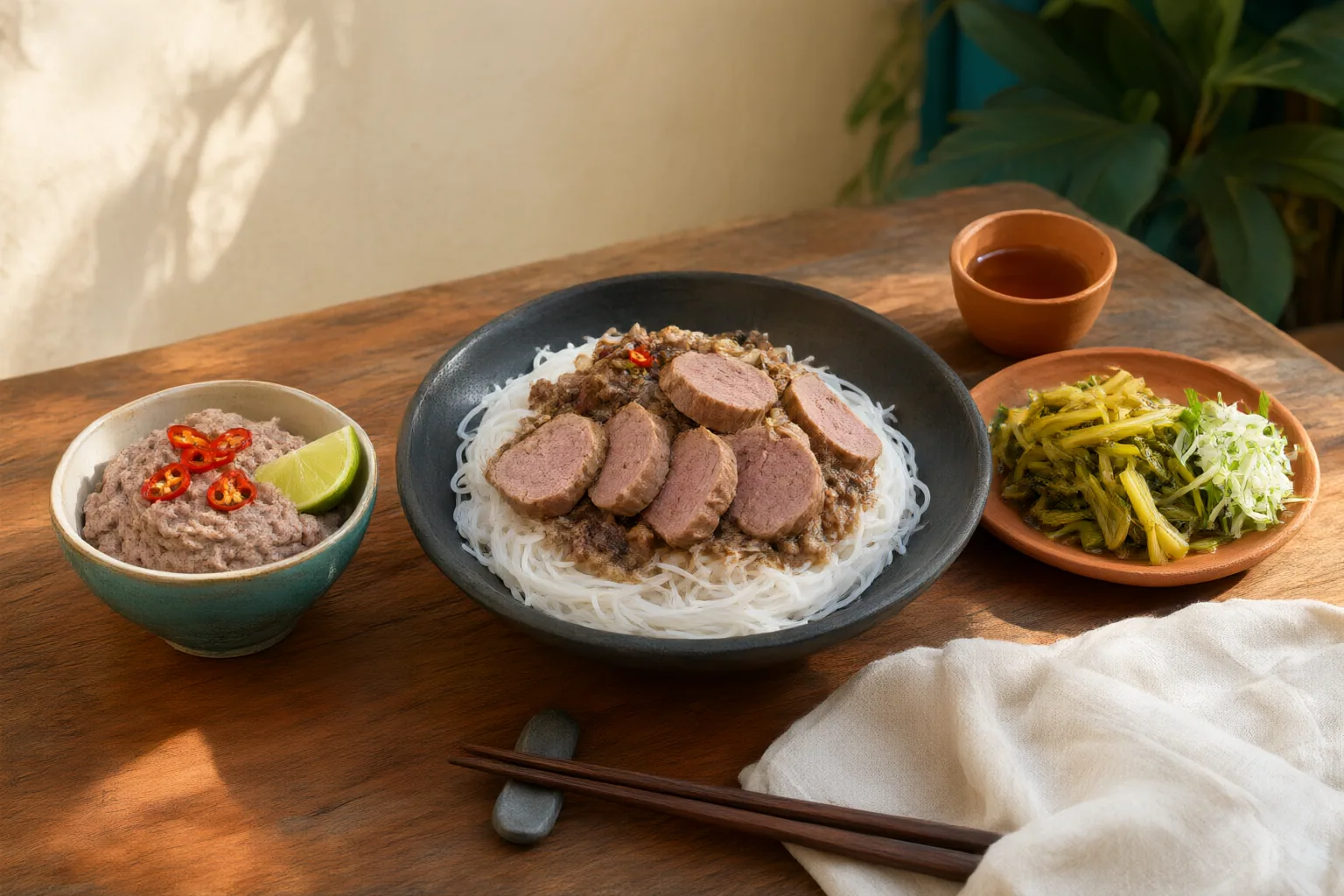
Travelers can make sense of Vietnam’s fermented foods by looking beyond aroma and identifying each ingredient’s role. Ask whether it is mixed into a dish, used as a sauce or soup base, served as a dip, or offered on the side. Fish sauce illustrates why context matters: it can season bánh mì or form the base of the nước chấm served with bánh xèo.
Understand What Fermentation Contributes Beyond Preservation
Fermentation is associated with preservation, but its culinary contribution is broader. A fermented ingredient can bring umami, depth, aroma, acidity, or texture. This means a strong or unfamiliar smell is only one part of the experience: it does not, by itself, explain why the ingredient is present or how the finished food will taste.
Instead of treating aroma as a warning or a complete flavor description, consider the other qualities the fermented element may add. It might deepen a sauce, sharpen a dish with acidity, alter texture, or supply savory intensity. The relevant question is not simply, “How does this smell?” but “What function does it perform in this dish?”
It is also important not to use “fermented” and “probiotic” as interchangeable labels. The general food guide explicitly distinguishes those categories, so fermentation alone does not establish that a food should be described as probiotic. For travelers, that boundary helps keep a meal-focused explanation separate from unsupported health assumptions.
Identify the Ingredient’s Role Before You Taste
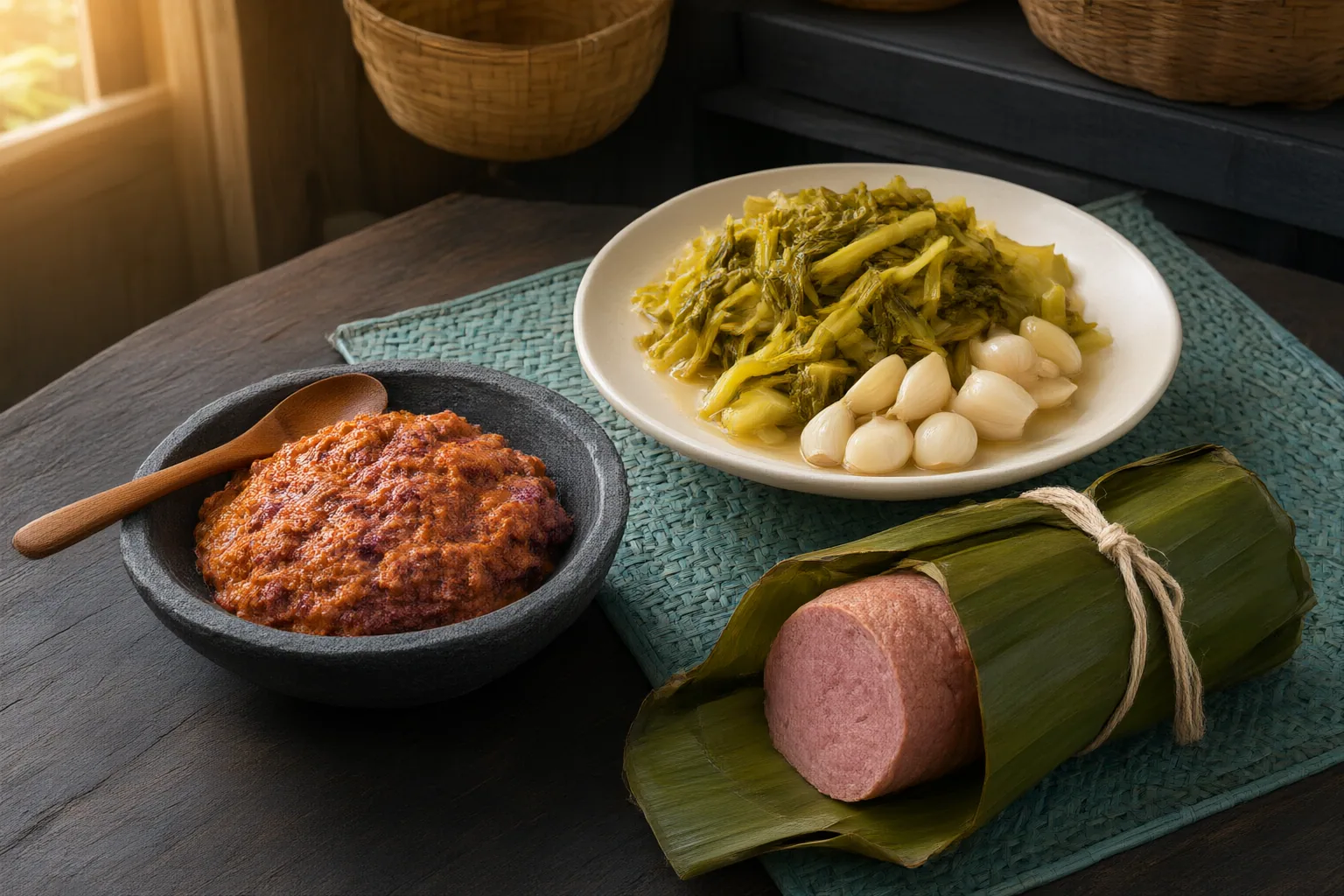
A useful first step is to determine where the fermented element sits within the meal. The available guidance distinguishes fermented foods eaten as side dishes from fermented bases used in sauces and soups. That role-based distinction can help travelers interpret an unfamiliar item without assuming that every ferment should be eaten in the same way.
Start by asking whether the ingredient is incorporated into the food or served separately. If it is already mixed in, it may be contributing seasoning, depth, acidity, aroma, or texture across the dish. If it forms part of a sauce or soup base, its flavor may be distributed among several ingredients. If it arrives as a condiment or side dish, diners can more easily control how much accompanies each bite.
This framework is not a list of Vietnamese fermentation traditions, and it should not be used to invent one. It is simply a practical way to distinguish serving roles supported by the general fermentation source. When a menu description is unclear, asking whether an item is a seasoning, base, dip, or side can provide more useful context than judging it from smell alone.
Recognize Fish Sauce in Vietnamese Serving Contexts
Fish sauce demonstrates how one fermented ingredient can appear in different serving contexts. Rough Guides says bánh mì fillings vary and may include fish sauce or soy sauce alongside pâté, pickled vegetables, herbs, chili, and meat or cold cuts. In that setting, fish sauce may be one element within a layered combination rather than a separate item on the table.
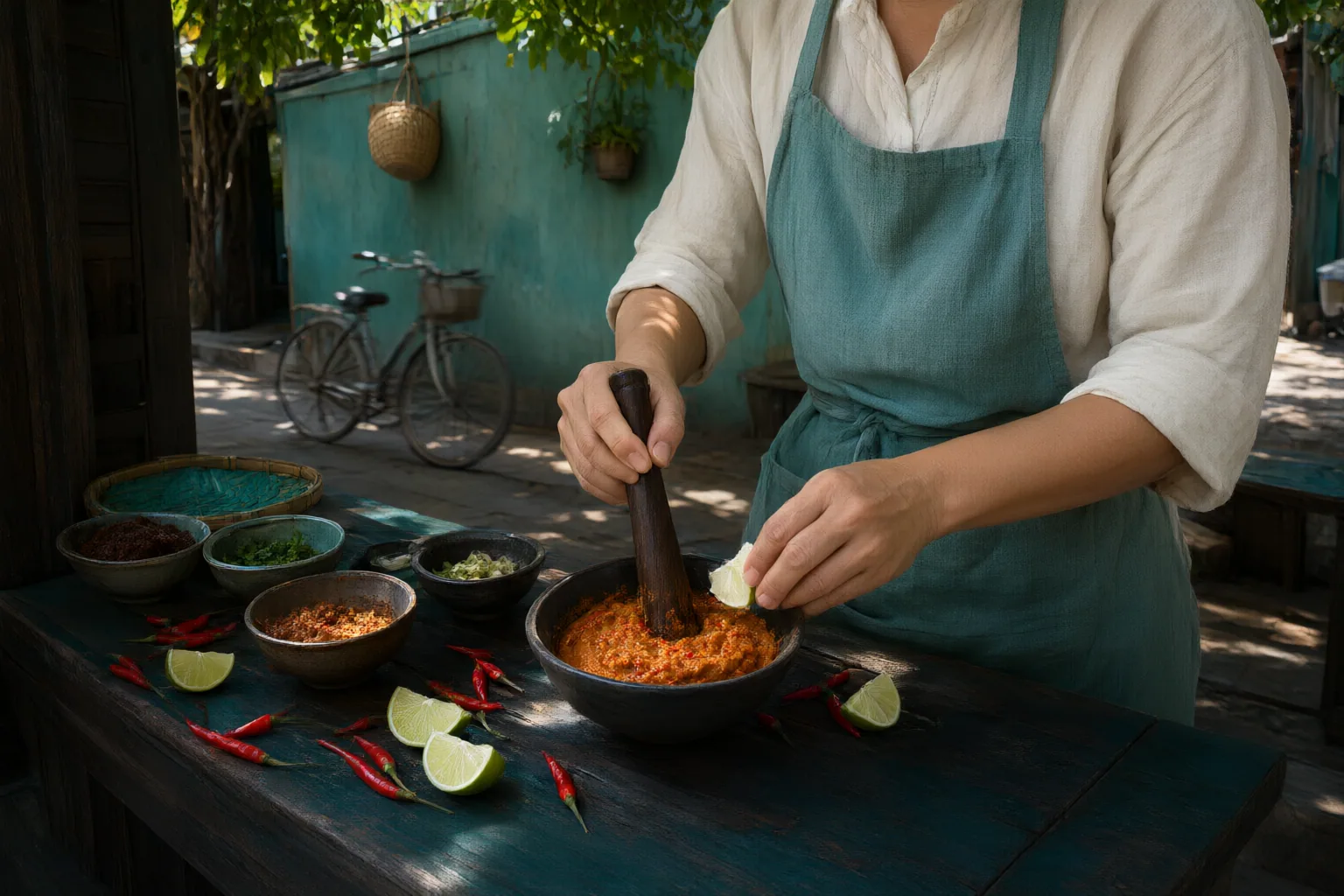
Bánh xèo presents a different context. Rough Guides describes the dish as being eaten with nước chấm made with fish sauce, lime, garlic, and chili. Here, fish sauce is the base of an accompanying dip, combined with other ingredients and encountered alongside the main dish. Recognizing that distinction—incorporated seasoning versus the foundation of a dip—helps explain why asking about serving role is more informative than relying on aroma.
The wider meal context also matters. Vietnamese meals are commonly shared and organized around rice, herbs, and fresh components. Rough Guides additionally describes regional variation: northern food tends toward subtler flavors, central food is associated with bolder and spicier flavors, and southern food uses more herbs, sugar, and coconut milk. These broad patterns do not establish a detailed regional map of fermented foods, but they do caution against expecting every meal in Vietnam to use ingredients or balance flavors in exactly the same way.
When ordering, ask where the fish sauce appears and whether a dip is intended for each bite. The answer can clarify how the components are meant to work together without requiring you to infer the ingredient’s purpose from scent.
Conclusion
Approach an unfamiliar fermented food by identifying its role first: Is it mixed into the dish, used as a sauce or soup base, served as a dip, or offered on the side? Then consider what it may contribute beyond aroma, including umami, depth, acidity, or texture. Do not assume that fermentation automatically makes a food probiotic.
Fish sauce shows why this method is useful. It may be included among bánh mì seasonings or used as the base of the nước chấm accompanying bánh xèo. When you order, ask how the fermented element is served and how it is intended to be eaten, then try a small amount with the dish in that intended context.
Disclosures and limitations
- This article was prepared with AI assistance from the supplied research package and is based on an Asian fermentation guide and a Rough Guides overview of Vietnamese food.
- No products are recommended and no affiliate relationship is represented. The supplied sources offer limited Vietnam-specific coverage, so the article does not claim to document every Vietnamese ferment, production method, or regional aroma.
Related reading
- Food & Drink Guides for Curious Travelers
- How to Plan Vietnam Food Stops Around Meal Times and Busy Queues
- How to Customize Vietnamese Noodle Soups with Herbs, Lime, Chili, and Condiments
Sources
- Fermented Foods — wisechoicemarket.com
- Fermented Foods and Probiotics | Asian Food Guide — www.asianfoodshop.eu
- Best 19 foods of Vietnam | Our top picks | Rough Guides — Rough Guides