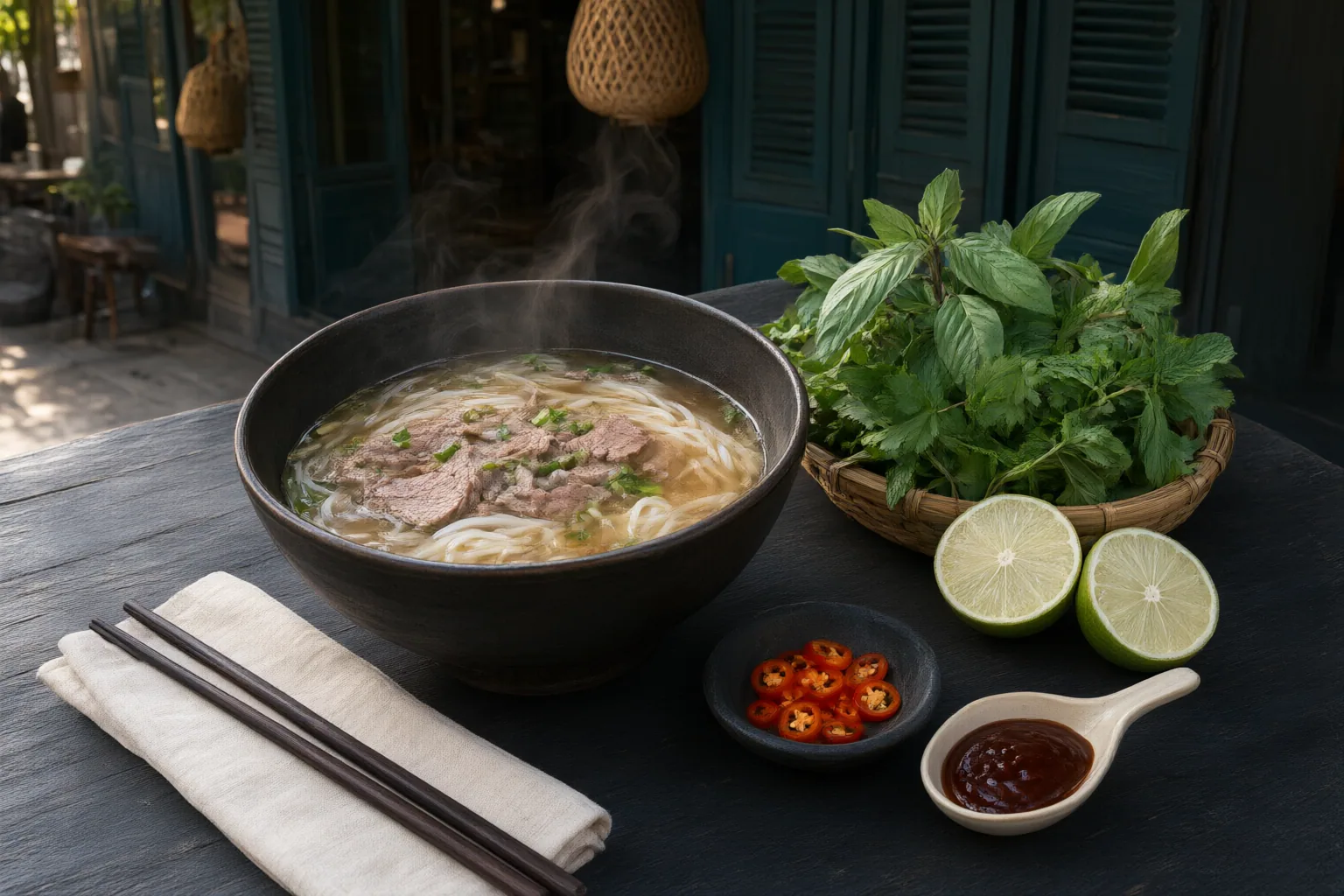
Taste the broth first, then decide what you want to change. Herbs can add aromatic freshness, lime can brighten the bowl, chili or sriracha can increase heat, fish sauce can adjust seasoning, and hoisin can add umami. Make one small addition at a time and taste again before adding anything else.
Taste the Broth Before Adding Anything
The broth is the flavor base of the bowl, while herbs, citrus, chili, and table sauces are finishing adjustments. Begin by tasting a spoonful before reaching for any garnish or condiment. This gives you a reference point and helps you decide whether the bowl needs more aromatic freshness, brightness, heat, seasoning, or umami.
There is no need to treat one sequence of additions as a universal dining rule. The available evidence consists of pho-focused recipe and serving guidance, not a mandatory custom followed for every Vietnamese noodle soup. A more useful approach is to identify one quality you would like to change, make a small adjustment, and taste again.
This gradual method matters because several strong additions made together can obscure their individual effects. If lime, chili, hoisin, and fish sauce all go in at once, it becomes harder to tell which addition improved the bowl or pushed it beyond your preference. Tasting between changes keeps the broth recognizable and puts you in control of the result.
Use Herbs and Lime for Freshness and Brightness
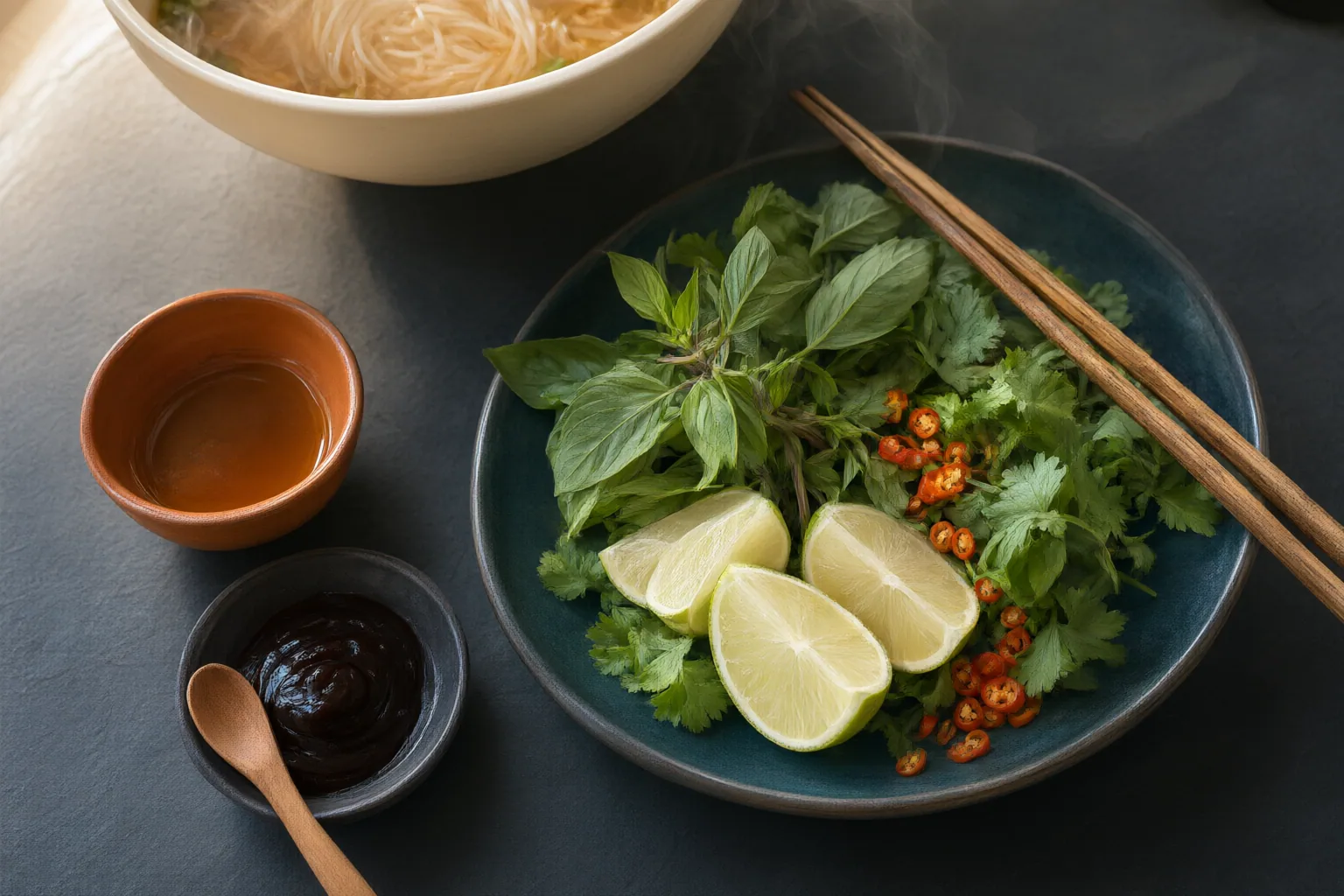
Choose herbs when you want to adjust the bowl’s aroma and fresh character. Both sources identify cilantro as a finishing ingredient, and the AnSoup guide also recommends basil. Add a modest amount first so you can notice how the herbs interact with the existing broth rather than immediately dominating it.
Lime serves a different purpose. Fine Dining Lovers describes fresh lime as a way to brighten pho and presents a lime wedge on the side. Squeeze in a little juice, stir, and taste before adding more. This makes the change easier to judge and avoids assuming that every bowl needs the same amount of acidity.
Herbs and lime can also be considered separately. If the broth already seems bright but could use more aromatic freshness, try herbs without citrus. If its aroma suits you but you want a brighter finish, try lime alone. Using one addition at a time makes the contrast clearer.
These suggestions are best understood as guidance for pho and closely related serving contexts. The research does not establish that cilantro, basil, or lime is supplied with every Vietnamese noodle soup, or that garnish practices are identical across restaurants and regions.
Adjust Heat, Saltiness, and Umami with Condiments
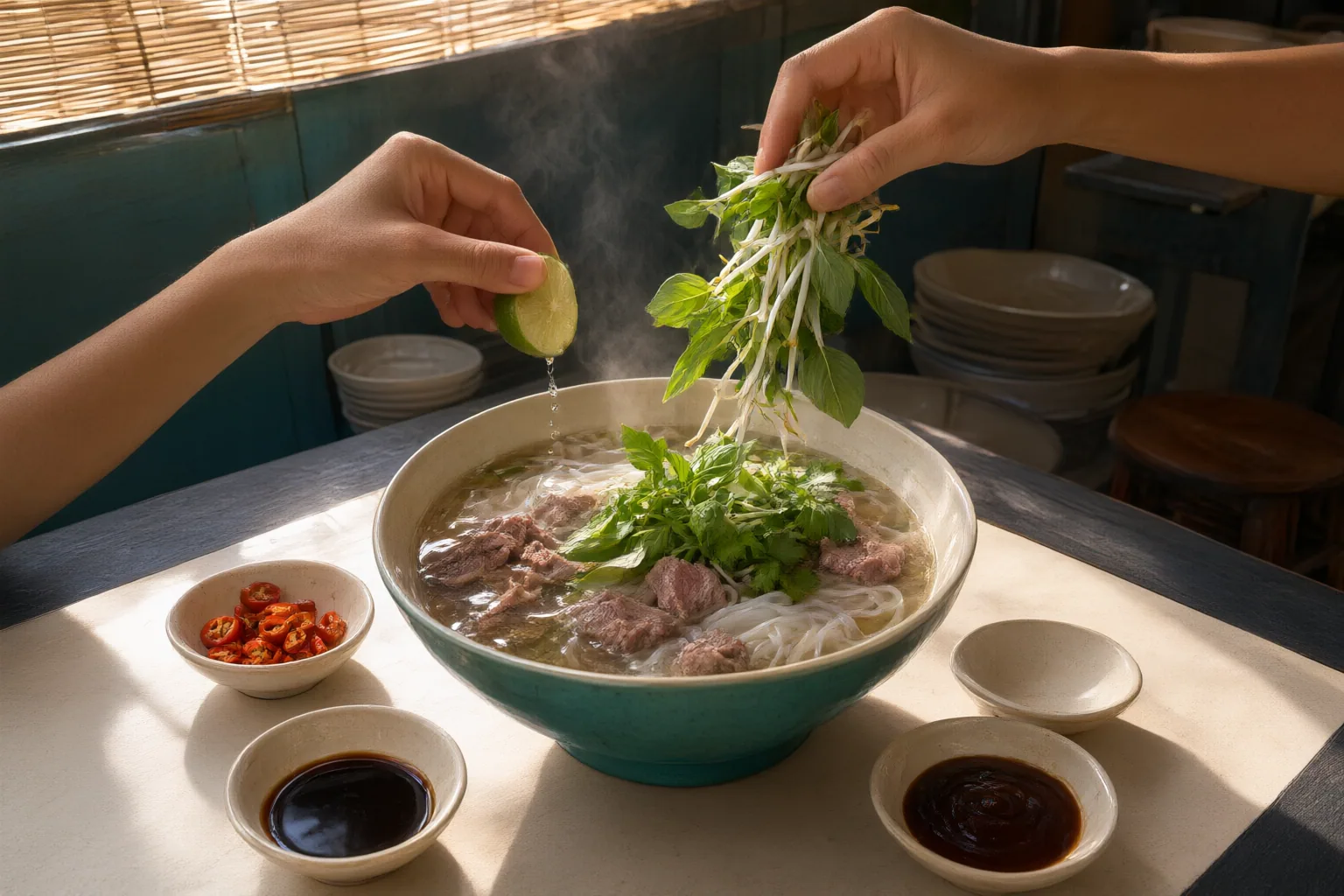
For more heat, the supported options are sliced red chili and sriracha. Fine Dining Lovers includes sliced red chili among pho toppings and describes sriracha as a way to increase heat. Start with a small amount, particularly when you do not know the strength of the chili or how prominently the broth will carry it. Stir, taste, and add more only if the bowl still needs heat.
Fish sauce and hoisin change different dimensions of the soup. The AnSoup guide recommends fish sauce as a finishing seasoning, while Fine Dining Lovers says hoisin can add umami. Because these are distinct effects, choose according to what you noticed in the first taste. Fish sauce is the relevant option when you want to adjust seasoning; hoisin is the supported choice when you want additional umami.
Avoid treating all table condiments as a single package. Adding chili, sriracha, fish sauce, and hoisin together would make it difficult to understand what each one contributed. Instead, select the single quality you want to alter and use the corresponding condiment sparingly. Fine Dining Lovers explicitly advises tasting while adjusting seasoning, which supports this incremental method.
Remember that the aim is to finish the broth to your preference, not replace its underlying flavor. The sources characterize the broth as the base and the condiments as adjustments. What is available at the table may also vary, so work with the garnishes and sauces actually served with your bowl.
Conclusion
A practical customization routine begins with the broth. Taste it, decide which single quality you want to change, and then choose an addition with a supported role: cilantro or basil for aromatic freshness, lime for brightness, sliced chili or sriracha for heat, fish sauce for seasoning, or hoisin for umami. Add only a little, mix it through the bowl, and taste again before making another change.
This is a flexible tasting method rather than a claim about a universal Vietnamese dining custom. The underlying sources focus mainly on pho, and they do not show that every noodle soup, restaurant, or region uses the same garnishes or serving practices.
With your next bowl, pause before reaching for everything on the table. Taste the broth, choose the one quality you most want to adjust, add a small amount of the relevant garnish or condiment, and taste once more before deciding on the next step.
Disclosures and limitations
- This article was prepared with AI assistance using only the supplied research from AnSoup and Fine Dining Lovers. The evidence is primarily about pho and should not be treated as proof of universal practices for all Vietnamese noodle soups or regions.
Related reading
- Food & Drink Guides for Curious Travelers
- Walking vs Motorbike vs Private-Car Food Tours in a Vietnamese City
- Food Allergy in Vietnam: How to Communicate and Check for Cross-Contact
Sources
- Mastering The Art Of Vietnamese Noodle Soup: A Beginner's Guide | AnSoup — ansoup.com
- Pho Soup — Fine Dining Lovers