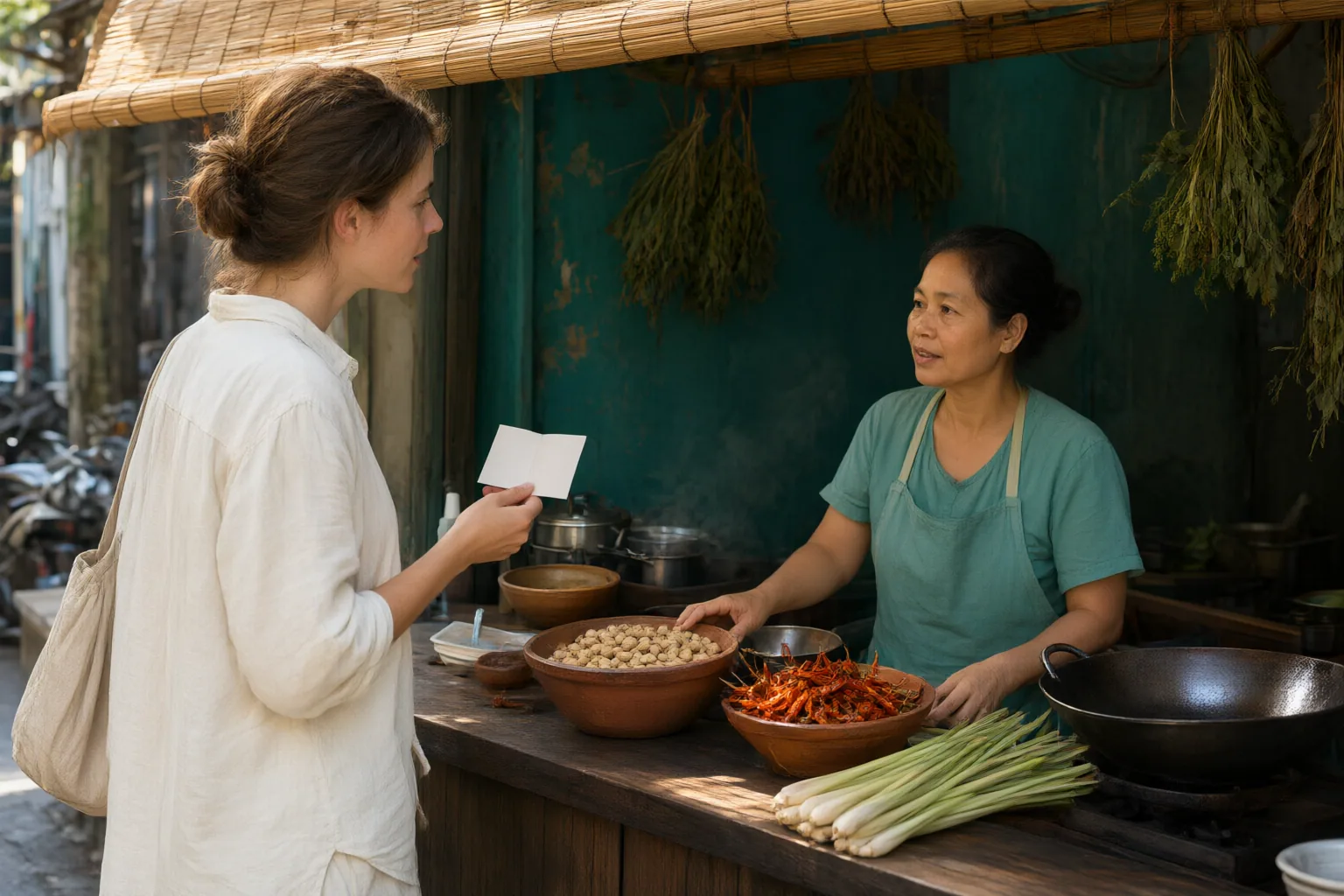
When eating in Vietnam with a food allergy, use a written Vietnamese message, ask about the exact recipe and preparation process, and choose another meal whenever staff cannot give clear answers about ingredients or cross-contact.
Prepare Before You Eat
Prepare a written Vietnamese allergy note or translation card before dining, and show it before you order. A written message can reduce misunderstandings caused by language barriers or noisy surroundings, but it should support a conversation rather than replace one. Ask for the message to reach the person preparing the food, then continue with questions about ingredients and preparation.
If a tour, cooking activity, or other organized experience includes food, inform the operator about the allergy in advance. This gives the operator an opportunity to explain whether the experience can accommodate it before you arrive. Carry any prescribed allergy medication throughout the trip.
Make medical and emergency planning part of your preparation as well. The available material comes from travel and private-provider guides, not official Vietnamese public-health guidance. Before traveling, confirm your medication plan and other medical precautions with a qualified healthcare professional, and check current official resources for emergency information.
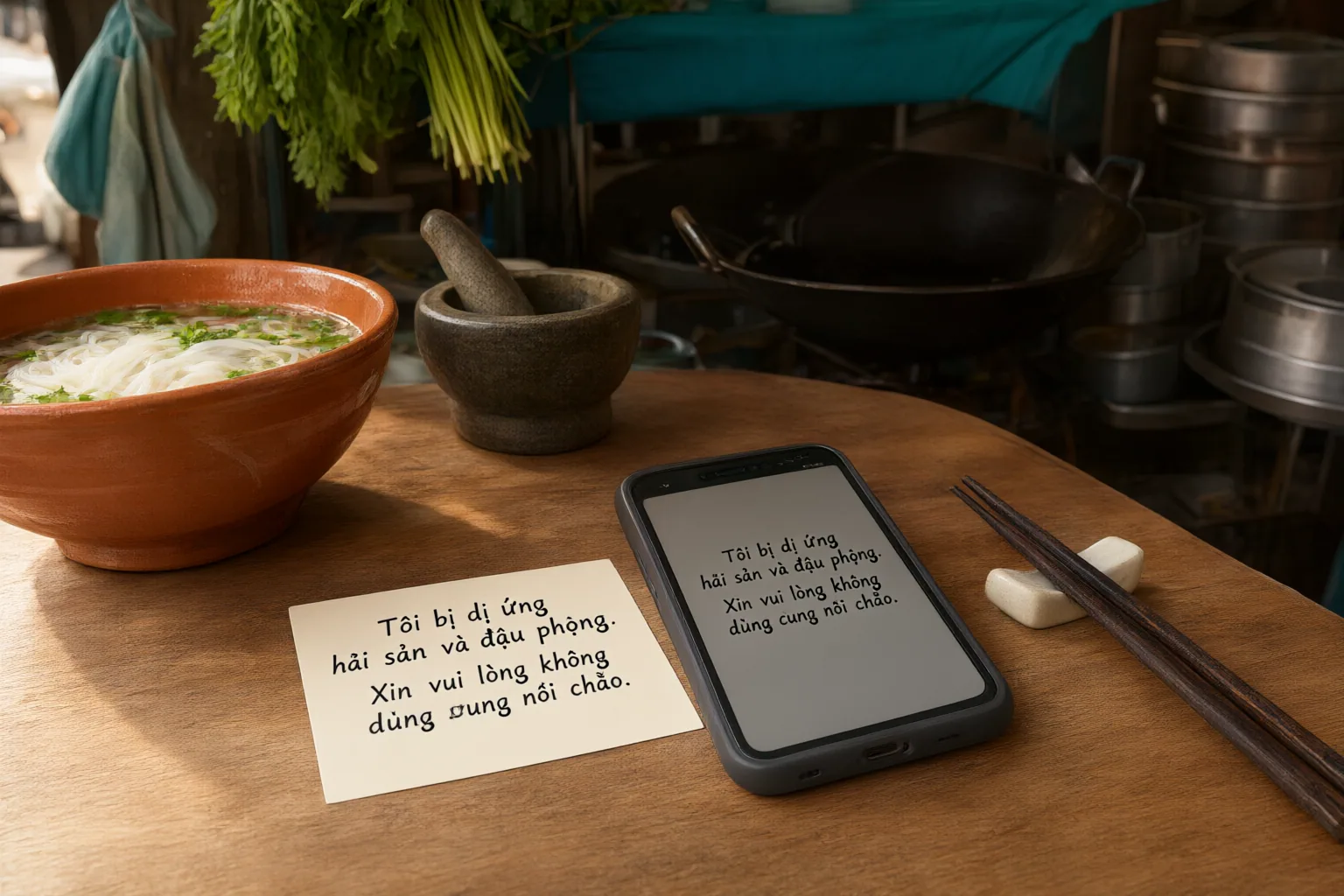
Ask About the Specific Recipe, Not Just the Dish Name
Do not assume that a familiar dish name guarantees a familiar recipe. Preparation can differ by region and from one vendor to another, so ask about the exact version being served. Useful questions should cover the broth, marinade, sauce, condiments, garnish, dipping sauce, and any premixed ingredients.
When relevant to your allergy, ask directly whether the dish or its accompaniments contain fish sauce, fermented shrimp products, peanuts, soy sauce, or hoisin. These ingredients can appear in broths, marinades, condiments, garnishes, or dipping sauces and may not be visually obvious in the finished food. A main ingredient may appear suitable while a seasoning or prepared sauce introduces the allergen.
Try to establish more than whether staff can leave out a visible topping. Ask whether the broth, marinade, or sauce was prepared earlier and whether the allergen is already incorporated. At a street-food stall, assess that vendor’s ingredients and working method rather than relying on a general description of the dish. The evidence supports case-by-case assessment; it does not establish that every stall is safe or that every street-food meal must be avoided.
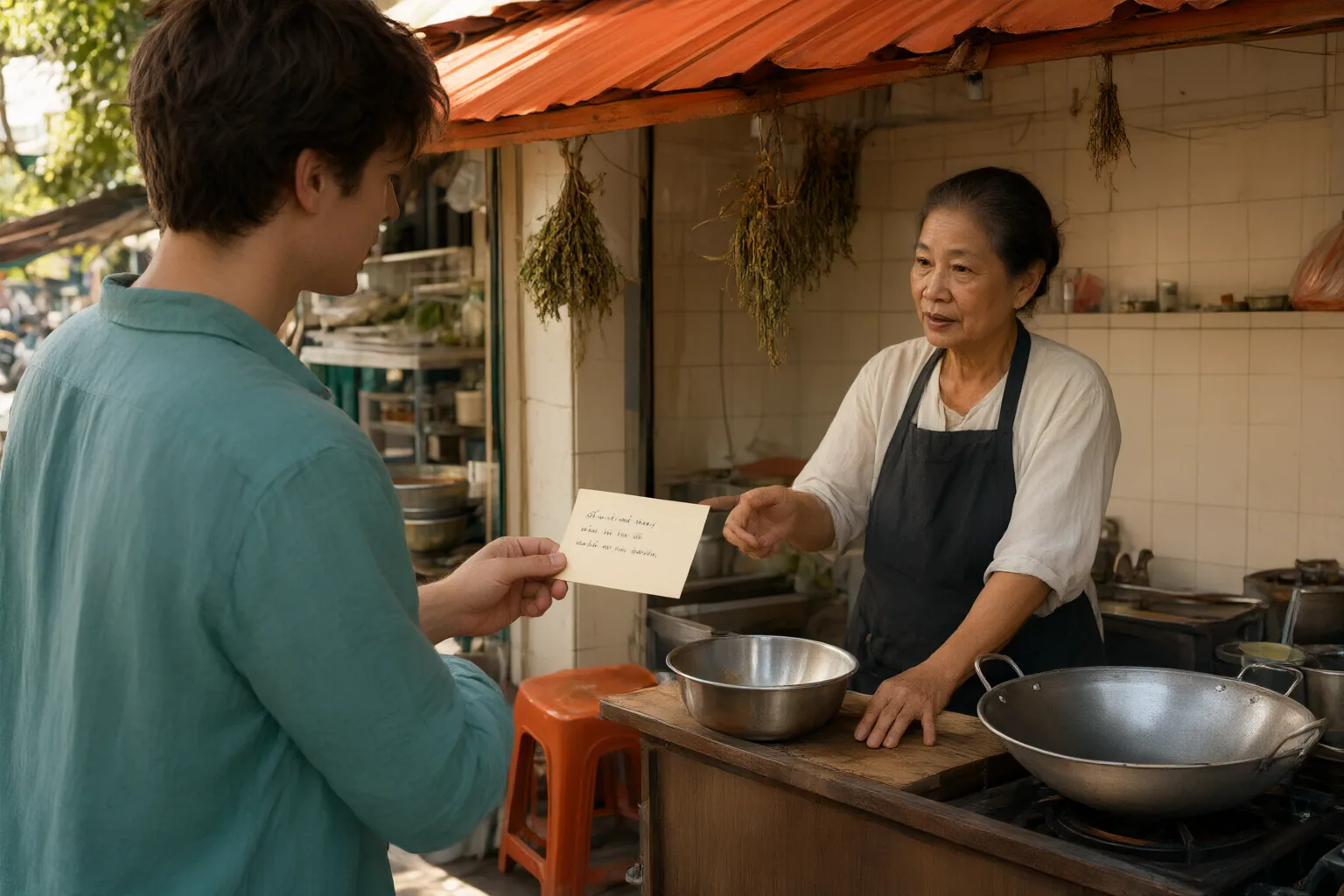
Check Cross-Contact Risks and Know When to Decline
An order can omit the named allergen and still present a cross-contact risk. Ask whether the kitchen shares woks, pots, cooking oil, broth, utensils, cutting boards, preparation surfaces, garnish or condiment containers, and serving items between dishes. The relevant question is not only “Can you leave it out?” but also “Could the food or equipment already have touched it?”
Removing a garnish at the table may be insufficient. Exposure may already have occurred through a shared spoon or board, or through a broth, marinade, or sauce made in advance. The same concern applies when an ingredient is picked off after serving: removing the visible item does not reverse earlier contact.
Consider both the answers and the kitchen’s ability to act on them. A busy or small vendor may not be able to identify every ingredient, separate equipment, or change a premixed preparation. That limitation is not proof that a meal is safe or unsafe, but it leaves an important question unresolved. If staff cannot clearly confirm what the specific dish contains or explain how it will be prepared, choose another dish or meal. Clear uncertainty is enough reason to decline; you do not need to resolve it at the table.
Conclusion
Use a short routine before every meal: show the written Vietnamese allergy message to someone who can relay it to the cook; verify the particular broth, marinade, sauce, condiments, and garnish; ask about shared cookware, oil, utensils, boards, containers, and serving items; and check whether any relevant component was prepared in advance. If the answers are incomplete or unclear, select another dish or leave and find another meal.
Two cited travel guides list 115 as Vietnam’s ambulance emergency number. Because emergency information and medical needs can change, verify that number and your response plan through current official resources and a qualified healthcare professional before departure. Before your next meal, present your written message, ask how that exact dish is made, and walk away if the risk cannot be clearly explained.
Disclosures and limitations
- This article was prepared with AI assistance from the supplied travel and private-provider sources. It is general travel information, not medical advice; verify medical and emergency plans with qualified healthcare professionals and current official resources.
Related reading
- Food & Drink Guides for Curious Travelers
- Vietnamese Coffee Styles: How to Choose the Right Sweetness and Strength
- How to Compare Vietnamese Sauces, Spices, and Pantry Souvenirs
Sources
- Traveling with Food Allergies in Vietnam – 10 Travel Tips — Local Vietnam
- Traveling with food Allergies in Vietnam: What You Need to Know — CuriousAboutVietnam
- Food Allergies in Vietnam: Hidden Ingredients, Allergy Cards & Emergencies — Viet Home Doctor
- Vietnam Street Food Allergy Guide: Eating Safely at Stalls and Markets | AllergyPass — allergypass.me
- Vietnamese Allergy Card | Printable Card for Vietnam | AllergyPass — allergypass.me