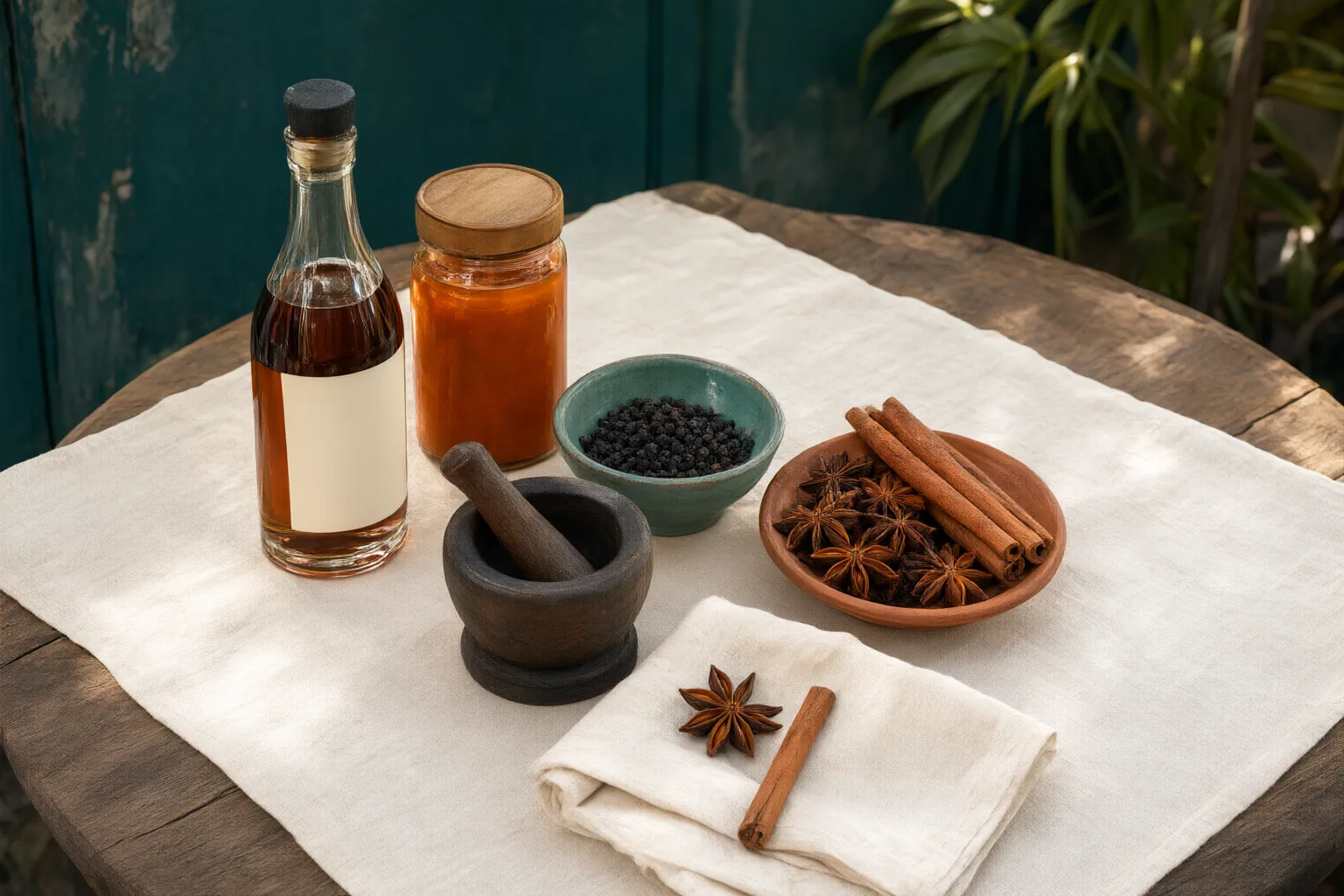
Compare Vietnamese food souvenirs by intended use, complete ingredient list, label details, package condition, transport needs, and the official import rules for every destination or transit country on your journey.
Choose by Flavor and Intended Use
Start with how the product will be used rather than treating all Vietnamese sauces as interchangeable. Sauces can be based on fish, shrimp, anchovy, soybeans, peanuts, chili, or other ingredients, creating significant differences in flavor, aroma, and suitability for particular dishes.
Consider the recipient’s preferences and likely cooking habits. Examples in the source material pair nước chấm with spring rolls, ginger fish sauce with poultry or duck, fermented shrimp sauce with bún đậu or fried fish, and salt-pepper-lime sauce with seafood and meats. These pairings are useful clues, not universal rules: the label’s directions and ingredient list remain important.
Flavor intensity also matters. Fermented sauces and pastes can have especially strong aromas and tastes, which may not suit every recipient or travel situation. Before choosing one, ask whether the buyer or recipient is comfortable with fermented flavors and has a realistic use for the product. A familiar-looking bottle should not be assumed to taste or function like another condiment.

Read the Label Before You Buy
Check the ingredient list, producer information, origin, production or expiry date, net weight, storage instructions, directions for use, and physical condition of the package. A supermarket can make fixed prices, labels, and packaged goods easier to compare, while a specialist food shop may be preferable when origin and packaging are priorities.
Useful Vietnamese terms include:
- Thành phần: ingredients
- Ngày sản xuất or NSX: production date
- Hạn sử dụng or HSD: expiry or use-by date
- Khối lượng tịnh: net weight
- Bảo quản: storage instructions
- Xuất xứ: origin
Do not guess when a date format or abbreviated label is ambiguous. Compare net weight as well as the outer dimensions, since a large decorative box can contain relatively little product. Reject packaging that is damaged or otherwise unsuitable for the trip.
Dietary screening requires the full ingredient panel. Products that appear meat-free can still contain fish sauce, shrimp seasoning, meat stock, or other animal-derived flavoring. Potential allergens mentioned in the source material include peanuts, sesame, dairy, egg, wheat, soy, fish, and shrimp. The printed list is only a starting point: an imported sticker may obscure information, and a label may not provide assurance against cross-contact. Travelers with dietary restrictions should avoid relying on appearance or the product name alone.
Compare Packaging, Baggage, and Border Risks
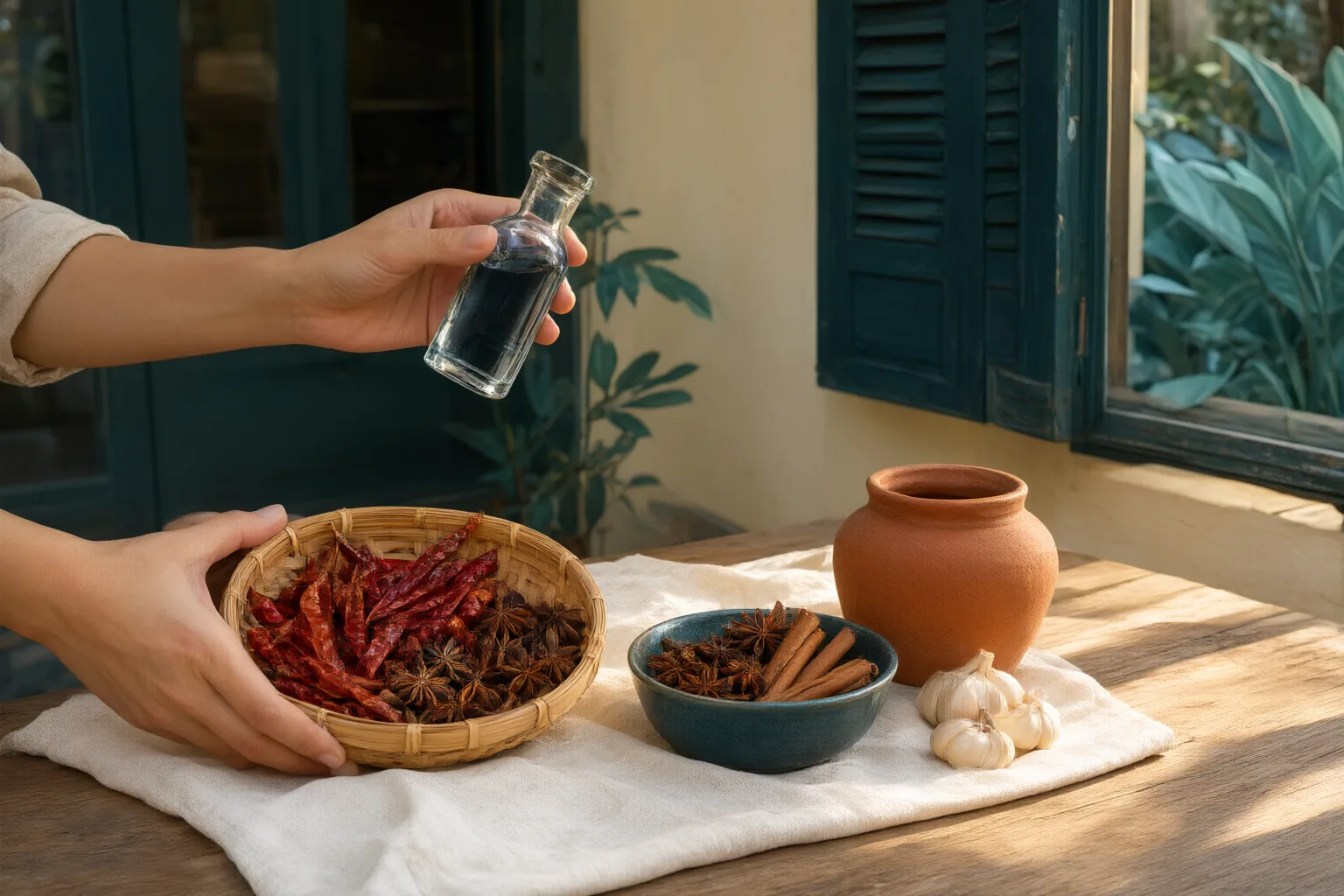
Sealed dry spices and seasoning mixes are generally easier to transport than liquid sauces, chili oils, glass bottles, or fermented products. Liquids can leak, glass can break, and strongly aromatic products can affect other luggage. Cabin-liquid restrictions may also apply, so baggage plans should be part of the purchase decision.
Keep liquid products factory-sealed and place them inside a secondary leak-proof bag. Protect glass containers from impact, and do not transfer food into an unmarked bottle. Retain the original labeled packaging and receipt so the product can be identified if questioned.
Local retail availability is not proof that a product can enter another country. Customs and biosecurity requirements depend on the destination and may also matter in transit countries. Packaging alone does not guarantee admission at the border, and the applicable rules can change. Before buying, consult the relevant official border or agriculture authorities for the destination and any transit point. Declare the goods when arrival rules require it.
The practical comparison is therefore broader than price or flavor. A compact dry product may be the simpler choice for a traveler with limited baggage, while a liquid or fermented sauce demands more protective packing and closer review of transport and border requirements.
Conclusion
Choose a pantry souvenir by matching its ingredients, flavor, and intended dishes to the recipient, then verify the producer, origin, dates, net weight, storage directions, and package condition. Favor a format that suits the journey, remembering that sealed dry seasonings are generally simpler to carry than liquid, glass, oily, or fermented products.
Before paying, photograph the label, check the complete ingredient list and dates, confirm current destination and transit requirements with official authorities, and select packaging that can travel safely in your planned baggage.
Disclosures and limitations
- This article was prepared with AI assistance using only the cited research sources; material claims are attributed through the source IDs attached to each section and FAQ.
- This guide does not rank or recommend individual products. If commercial or affiliate links are added later, their financial relationship should be disclosed clearly.
Related reading
- Food & Drink Guides for Curious Travelers
- How to Document Regional Food Discoveries Across Vietnam
- How to Order Shared Hotpot at a Vietnamese Restaurant: A First-Timer’s Guide
Sources
- 10 Popular Vietnamese Dipping Sauces – Vicky Pham — Vicky Pham
- North Vietnam Grocery Guide: Labels, Markets and Gifts | Hai Phong Tours — Hai Phong Tours
- Top 15 Vietnamese Dipping Sauces That Define the Local Taste — VniFood
- North Vietnam Pantry and Kitchen Souvenirs | Hai Phong Tours — Hai Phong Tours