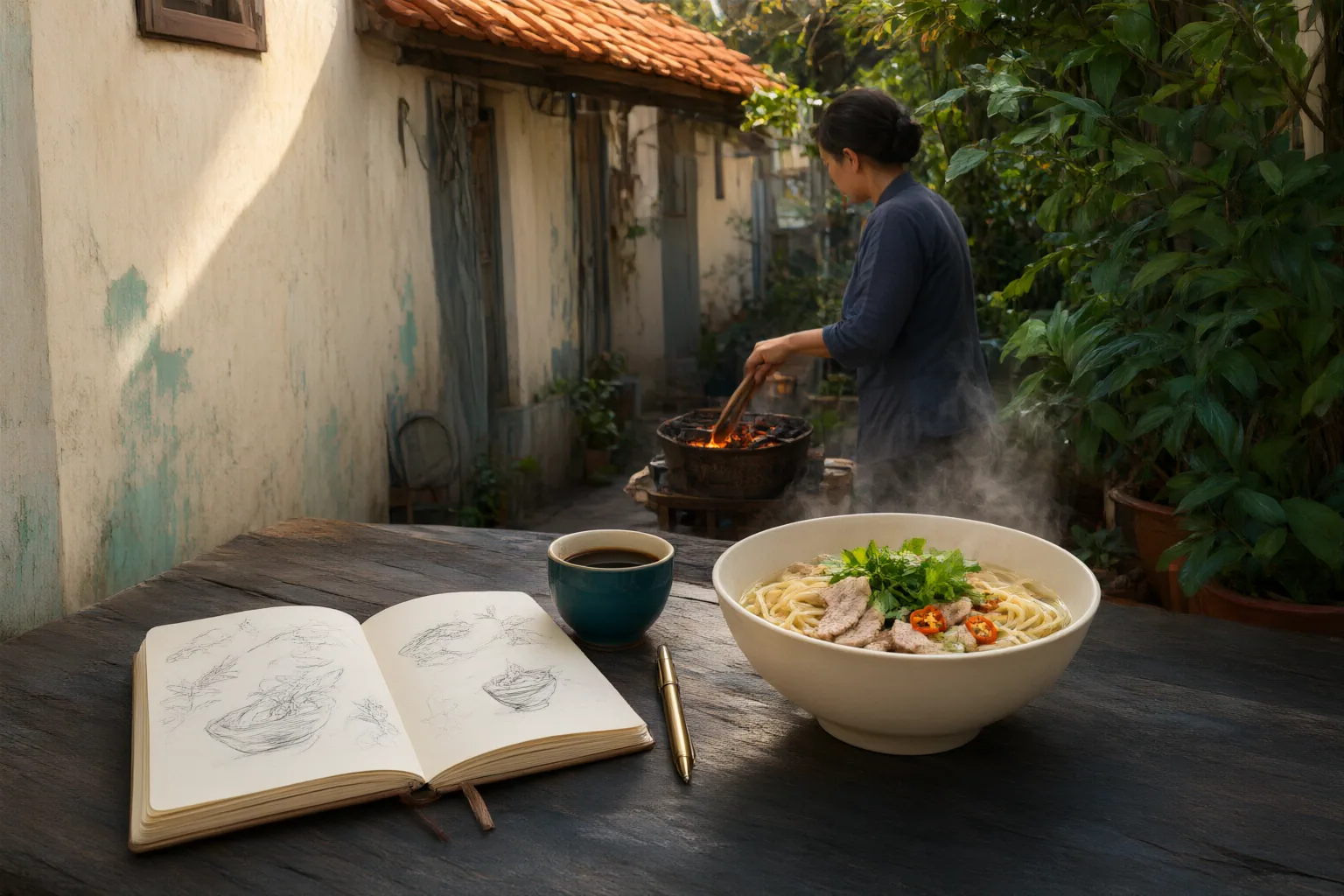
Treat every meal as a place-specific encounter, not a summary of Vietnamese cuisine. A useful food travel journal records where, when, and how a dish was served, then adds carefully attributed local context about ingredients, techniques, history, and community traditions.
Begin With Place, Time, and Scope
Vietnam’s differing landscapes and climatic zones contribute to food traditions that vary significantly by region. Broad patterns described in the sources include subtler, balanced flavors in northern cooking; bold seasoning and imperial culinary heritage in Central Vietnam; and sweeter flavors, fresh produce, and the abundance of the Mekong Delta in southern cooking. These patterns are useful orientation points, not rules for judging every dish or cook.
Start each entry with the most specific location available: restaurant or market, city, and region. Add the date or season, the type of setting, the occasion, and any available information about who prepared the food. Record the dish as “the version served here” rather than writing that Vietnamese people, or even an entire region, always make it that way.
Scope labels keep observations honest. Separate what you saw, smelled, tasted, or were told during this encounter from conclusions that would require broader comparison. If a detail is unknown—such as whether an ingredient changes seasonally—mark it as unknown instead of filling the gap with an assumption.
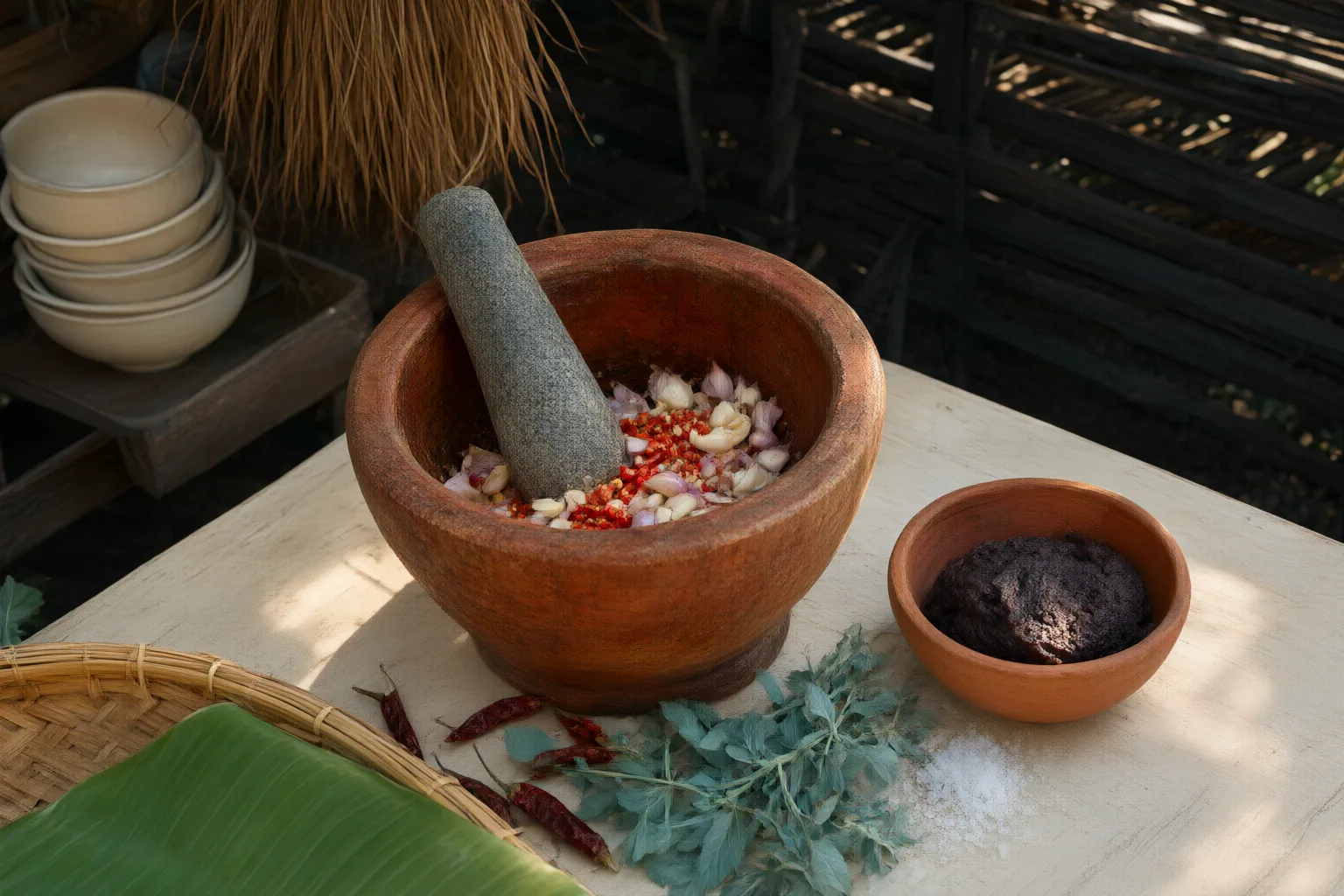
Record More Than Flavor
A strong entry preserves the dish’s context as well as its taste. Use distinct fields so that direct observations do not blur into information learned from another person or source:
- Dish and setting: Note the name provided, location, date, occasion, and how the food was presented.
- Ingredients: List ingredients you can identify or that a local source names. Give fresh herbs their own line: in many Vietnamese dishes they are essential components rather than decorative garnishes, and varieties can differ by region.
- Technique: Record visible or explained preparation methods, while making clear who supplied any details you did not observe.
- Place and environment: Ask how local produce, landscape, or climatic conditions relate to the dish.
- History and movement: Note attributed explanations involving historical exchange, migration, or an origin story. Do not present an account as settled fact merely because you heard it once.
- Culture and community: Record any described rituals, occasions, heritage, or community associations.
Label statements as observation, interpretation, or attributed context. For example, the herbs placed beside a bowl are observable; their regional significance may require explanation from a guide, cook, market vendor, or researched source. This structure preserves uncertainty while showing how geographic specificity, ingredients, history, cultural heritage, and community identity can help connect a specialty to its place.
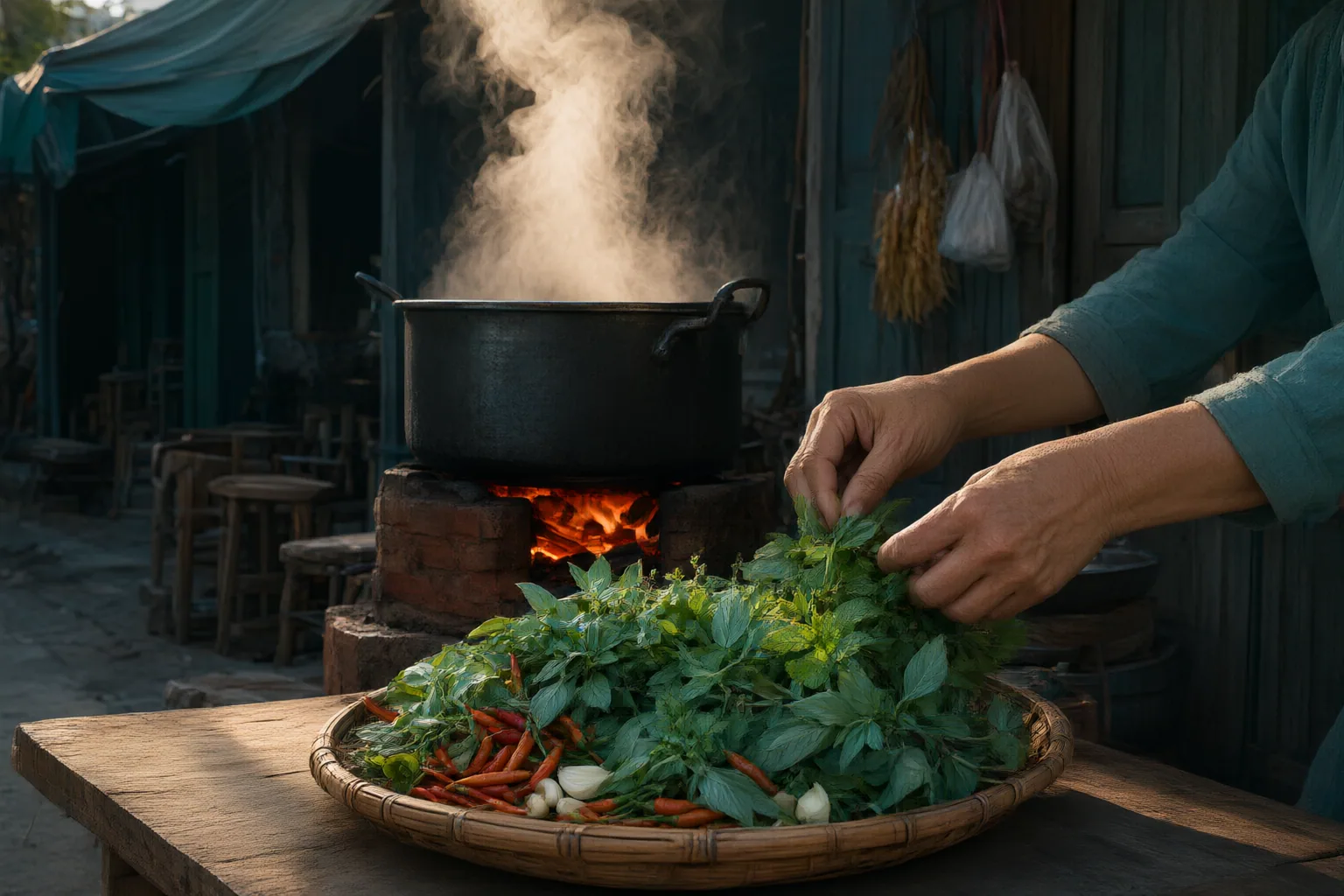
Add Local Context and Compare Carefully
An isolated tasting becomes more informative when you add perspectives from people and places involved in local food traditions. Markets may clarify which ingredients are locally available. Cooking classes can introduce preparation techniques. Street-food tours, community-hosted meals, and conversations with chefs, farmers, artisans, guides, or community groups can supply historical, environmental, and cultural context.
Attribute each explanation in your notes. Record who provided it and where the conversation occurred, rather than converting one person’s account into a claim about a whole city or region. When possible, compare several encounters: the same named dish in different settings, related dishes in nearby places, or how ingredients and herbs change from one preparation to another.
Use broad regional descriptions as questions to investigate, not templates that predetermine your findings. A northern meal may be considered alongside descriptions of subtlety and balance, a Central Vietnamese dish alongside bold seasoning or imperial heritage, and a southern dish alongside Mekong Delta produce and sweeter flavors. But one example cannot establish a universal regional rule. Comparison should reveal variation—including differences among cooks, settings, and occasions—rather than erase it.
Conclusion
For each regional food discovery, use this reusable checklist:
- Identify the place, date or season, setting, cook when known, and occasion.
- Describe the meal as one specific version.
- Separate direct observation from interpretation and attributed context.
- Record important ingredients, fresh herbs, and preparation techniques.
- Investigate environmental, historical, and community connections through local sources.
- Compare multiple encounters before suggesting a broader pattern.
At your next meal, apply the checklist while the details are fresh. Label every observation by place and context, add local perspectives with attribution, and avoid turning a single memorable plate into a conclusion about all Vietnamese cuisine.
Disclosures and limitations
- This article was prepared with AI assistance from the supplied research package and reviewed within its stated evidence boundaries.
- Factual claims are synthesized from the three sources identified by the accompanying source IDs; no firsthand purchase, tasting, interview, or product-testing claim is made.
Related reading
- Food & Drink Guides for Curious Travelers
- How to Order Shared Hotpot at a Vietnamese Restaurant: A First-Timer’s Guide
- Vietnamese Chè: A Practical Guide to Ingredients, Textures, and Serving Styles
Sources
- Vietnamese Cuisine: Regional Flavours Explained — Footprint Travel
- Regional Food: Discover Local Flavors and Global Delights — I Love Wine
- 25 Surprising Regional Food Favorites You May Not Know — Chef Standards
- Uncovering Regional Food Stories: The Cultural Significance Behind Local Dishes – Food Lexicon — Food Lexicon
- Vietnam Food Guide: Regional Dishes for Travelers — Enjoy Vietnam Travel