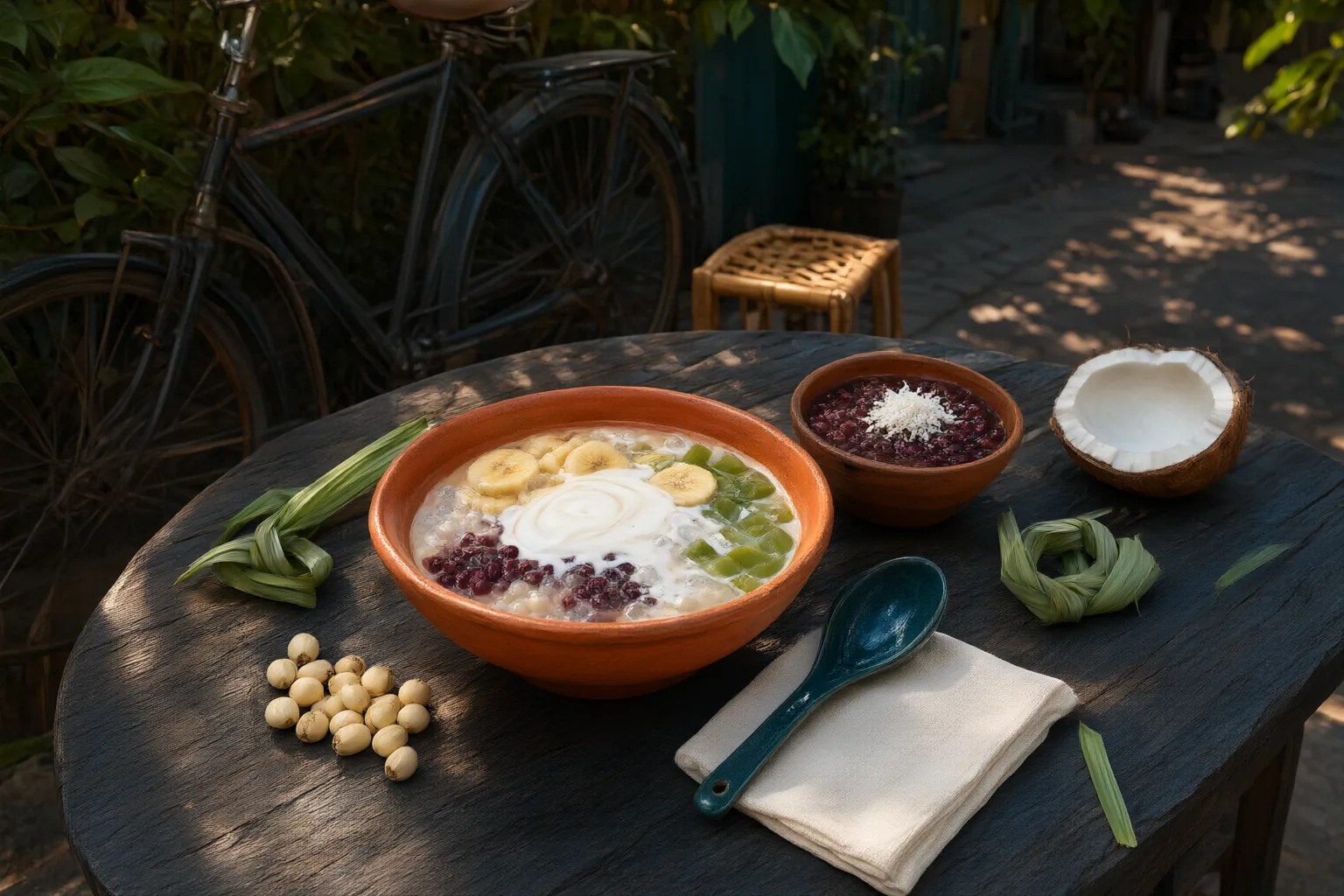
Vietnamese chè is not one standardized dish but a broad family of sweet drinks, puddings, soups, and desserts. To choose confidently, use the variety’s name as a clue, then ask the vendor about its ingredients, texture, temperature, sweetness, and use of coconut milk or cream.
What Vietnamese Chè Can Be
Chè is an umbrella term in Vietnamese cuisine, so its appearance and consistency can change substantially from one order to another. Depending on the variety, it may resemble a drinkable dessert, a thick pudding, a sweet soup, or a mixture built around fruit and jelly. It may be served hot or cold, presented in a bowl with a spoon, or poured into a glass.
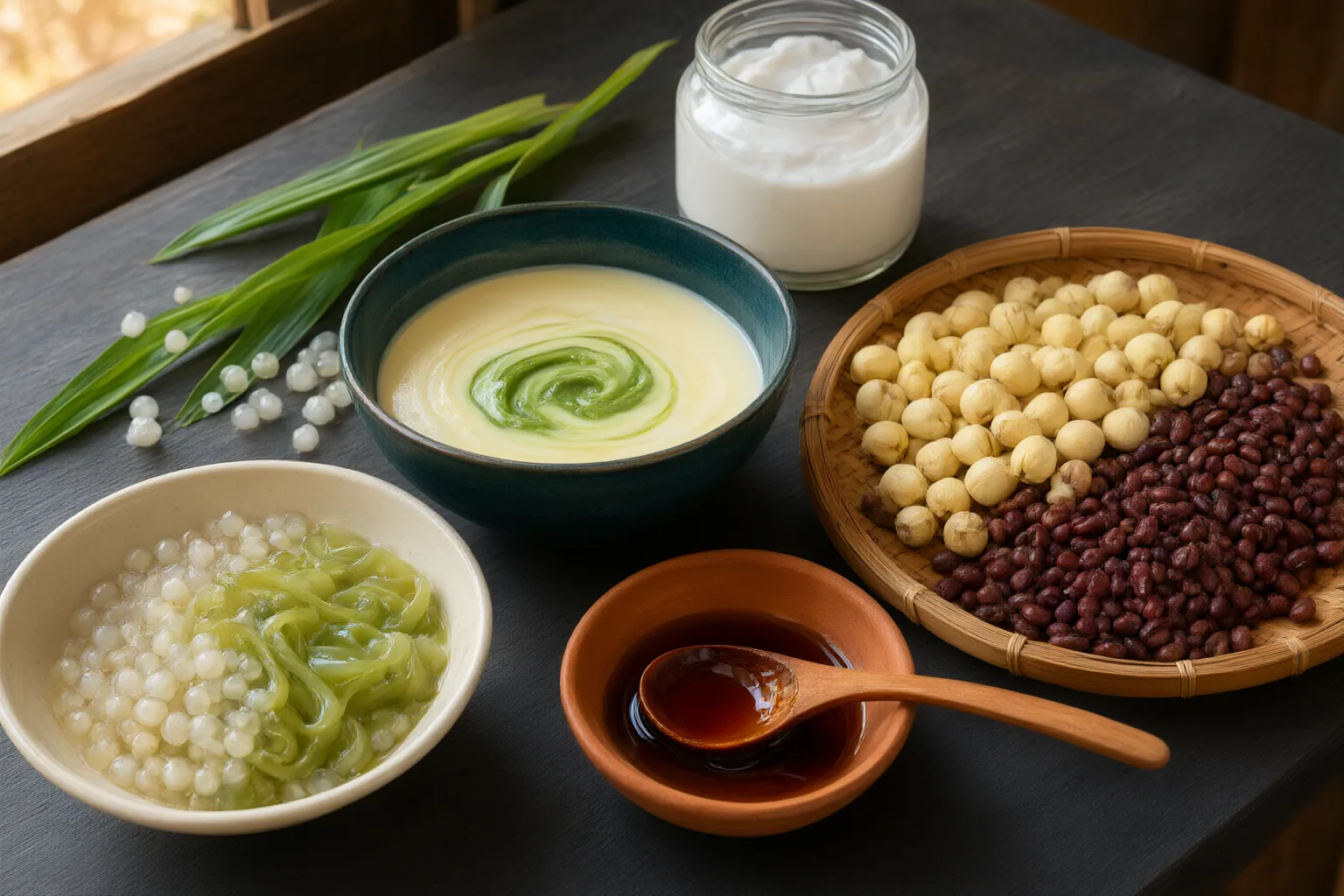
That range comes from the many possible ingredients. Beans, glutinous rice, tubers, tapioca, jelly, fruit, lotus seeds, cassava, taro, pandan, and coconut cream can all appear in different preparations. These are examples, not a universal recipe: an individual vendor may use a different combination or presentation.
Chè is prepared at home and sold through grocery stores, street stalls, local markets, and dessert shops. Because the category is so broad, it is more useful to identify the specific variety than to assume every serving will be alike. Before ordering, check what the name describes and whether the dish is hot, cold, spoonable, or intended to be enjoyed from a glass.
Use the Name to Choose a Variety
The words following “chè” often point to a defining ingredient or preparation style. This makes the menu name a practical starting point when the number of choices feels overwhelming. Chè đậu đen centers on black beans, chè bắp on corn, and chè đậu xanh on mung beans. Chè trôi nước takes a different form, featuring filled glutinous-rice balls in ginger syrup.
Some names describe more elaborate combinations. Chè ba màu is presented in the sources as a layered dessert that can combine beans or mung-bean paste, pandan jelly, ice, syrup, and coconut cream. A single serving can therefore bring together creamy, chewy, and refreshing elements.
Chè Thái may combine tropical fruit, jellies, coconut milk, and water-chestnut or tapioca-based components. Its precise fruit and additions can be customized. One documented preparation coats water-chestnut pieces in tapioca starch, creating a chewy exterior around a crunchy center. That example shows why an ingredient list alone may not fully predict the eating experience: preparation changes texture too.
Treat these descriptions as useful orientation rather than fixed formulas. Once a name suggests the main ingredient or style, ask the vendor what is included in that particular version.
Ask About Texture, Temperature, and Sweetness
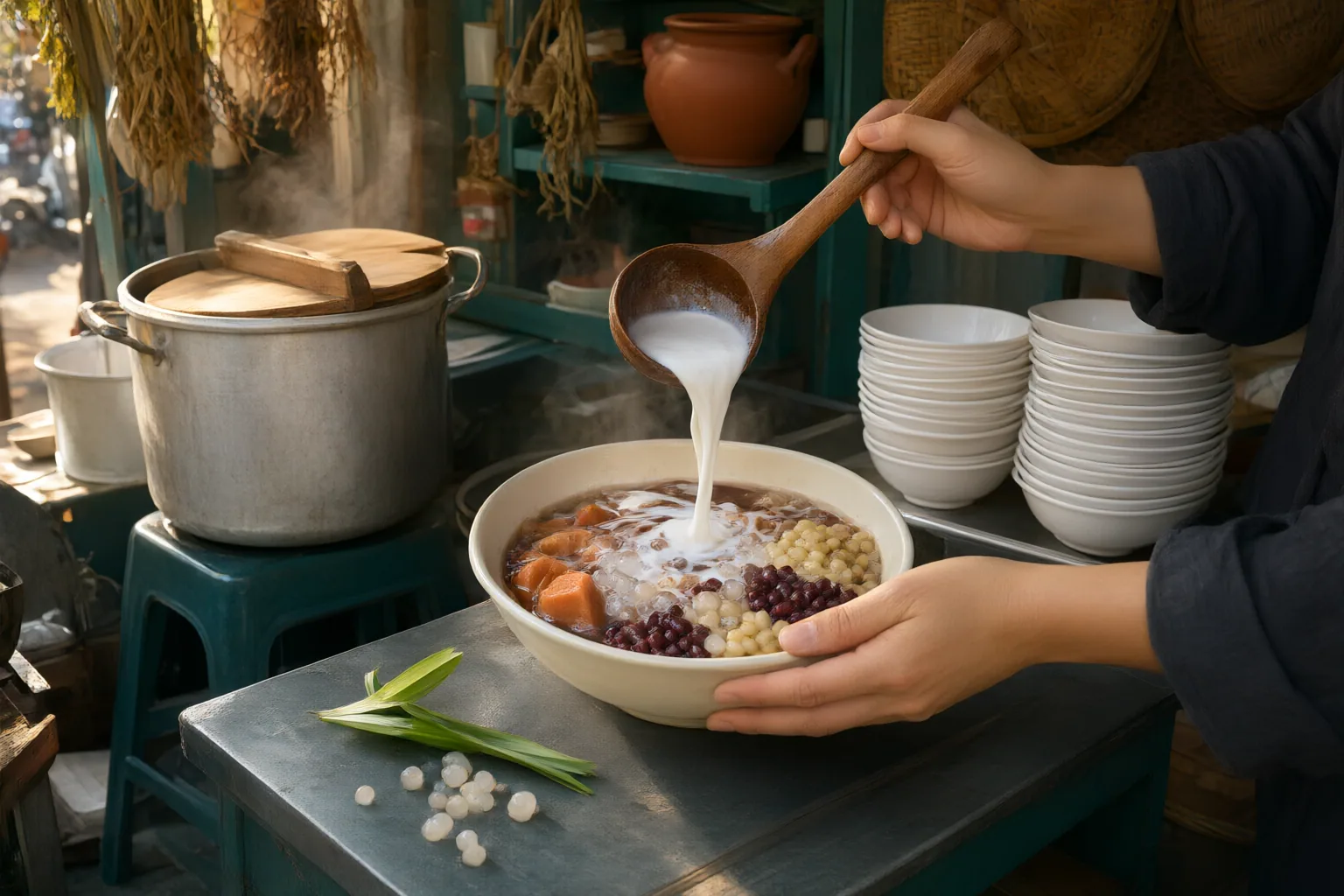
A short ordering checklist can help match a serving to your preferences. Begin with texture. Ask whether the chè contains soft beans, chewy tapioca, glutinous-rice dough, firm jelly, crunchy water chestnuts, or pieces of fruit. Some varieties combine several of these, while coconut milk or cream can add richness. Coconut is recurring—particularly in descriptions of southern-style chè—but it is not present in every variety.
Next, confirm the serving temperature. Chè is not automatically an iced dessert: sources document both hot and cold preparations, with the appropriate choice depending on the variety. If it is served cold, ask whether ice is already included or can be added.
Finally, consider sweetness and richness. These can vary by region, recipe, personal taste, and vendor. At modern dessert shops, customers may be able to request less sugar or add more ice. Before relying on that option, ask whether adjustments are available for the specific serving. It can also be useful to clarify whether its richness comes from coconut milk or cream, condensed milk, or syrup.
A compact question—what is in it, is it hot or cold, and is it especially chewy, creamy, or sweet?—covers the main variables without assuming that one vendor’s version represents every recipe.
Conclusion
Exploring chè becomes simpler when you treat it as a diverse dessert category rather than a single dish. Start by reading the words after “chè” for a clue to the defining ingredient or style. Then confirm whether the vendor serves that variety hot or cold and whether it comes in a bowl or glass. Ask about its most noticeable textures and whether coconut milk or cream contributes to its richness.
This approach leaves room for recipes and presentations to vary while still giving you a reliable way to choose. For your next order, select one clearly named variety—such as a black-bean, corn, or mung-bean chè—and ask about temperature, texture, sweetness, and coconut before committing. On a later visit, try a differently named variety and compare how its format and ingredients change the experience.
Disclosures and limitations
- This article was prepared with AI assistance using only the supplied research sources. Chè ingredients, sweetness, textures, and presentations can vary by recipe and vendor; no products or affiliate offers are recommended here.
Related reading
- Food & Drink Guides for Curious Travelers
- How to Choose Edible Souvenirs from Vietnam for a Long Journey
Sources
- 15 Delicious Vietnamese Chè Desserts – HowdyKitchen — HowdyKitchen
- Chè – Wikipedia — en.wikipedia.org
- Chè Thái Recipe (Vietnamese Fruit Cocktail) – Hungry Huy — Hungry Huy
- Vietnamese Sweet Soup: A Sweet Dessert Journey in Vietnam — https://vietpowertravel.com/blog/vietnamese-sweet-soup.html