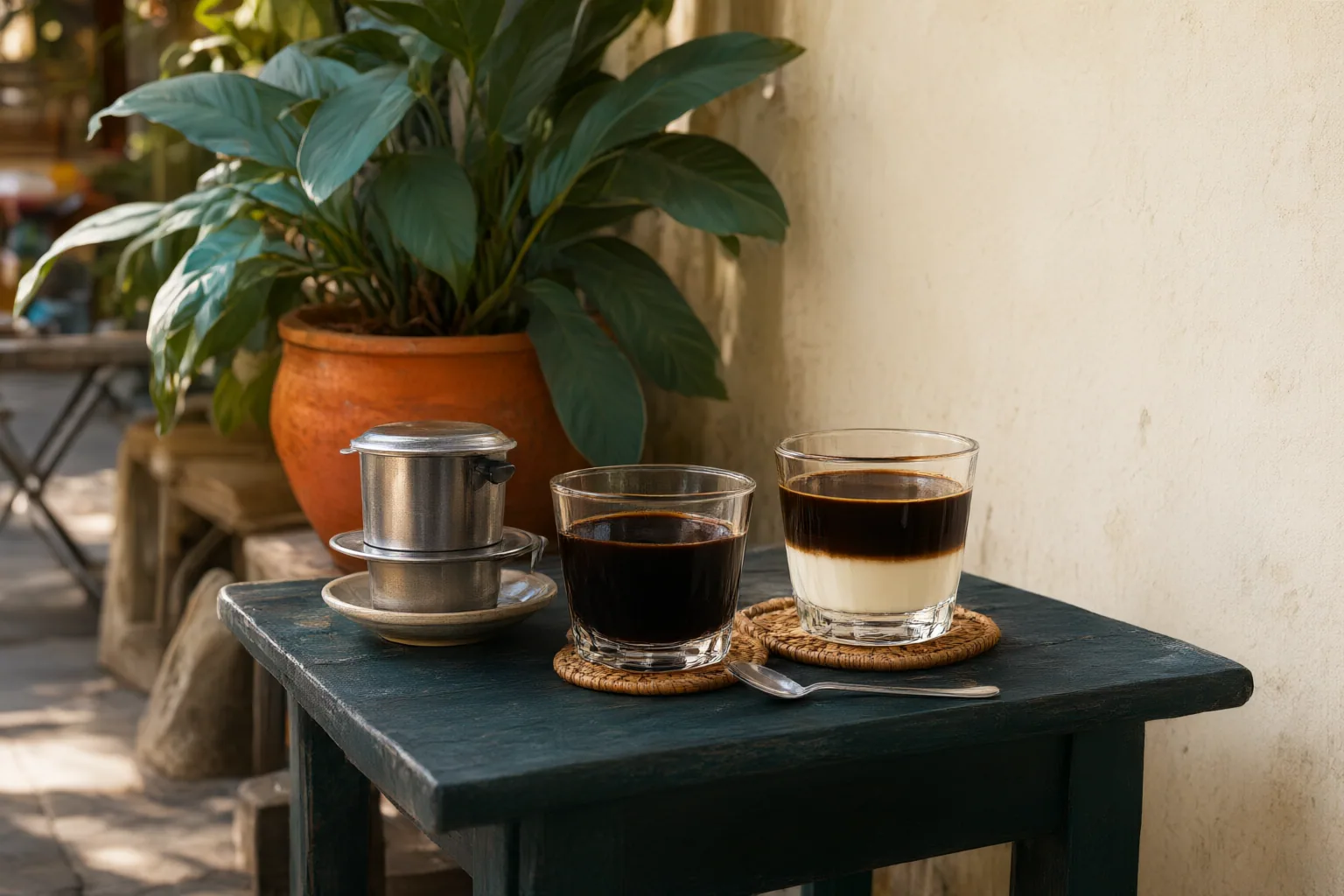
Vietnamese coffee ranges from bold black brews to milk-forward, creamy, and dessert-like drinks. Choose by coffee intensity, sweetness, texture, and temperature, then confirm sweetening and available adjustments with the café before ordering.
Start with the phin and the basic coffee choices
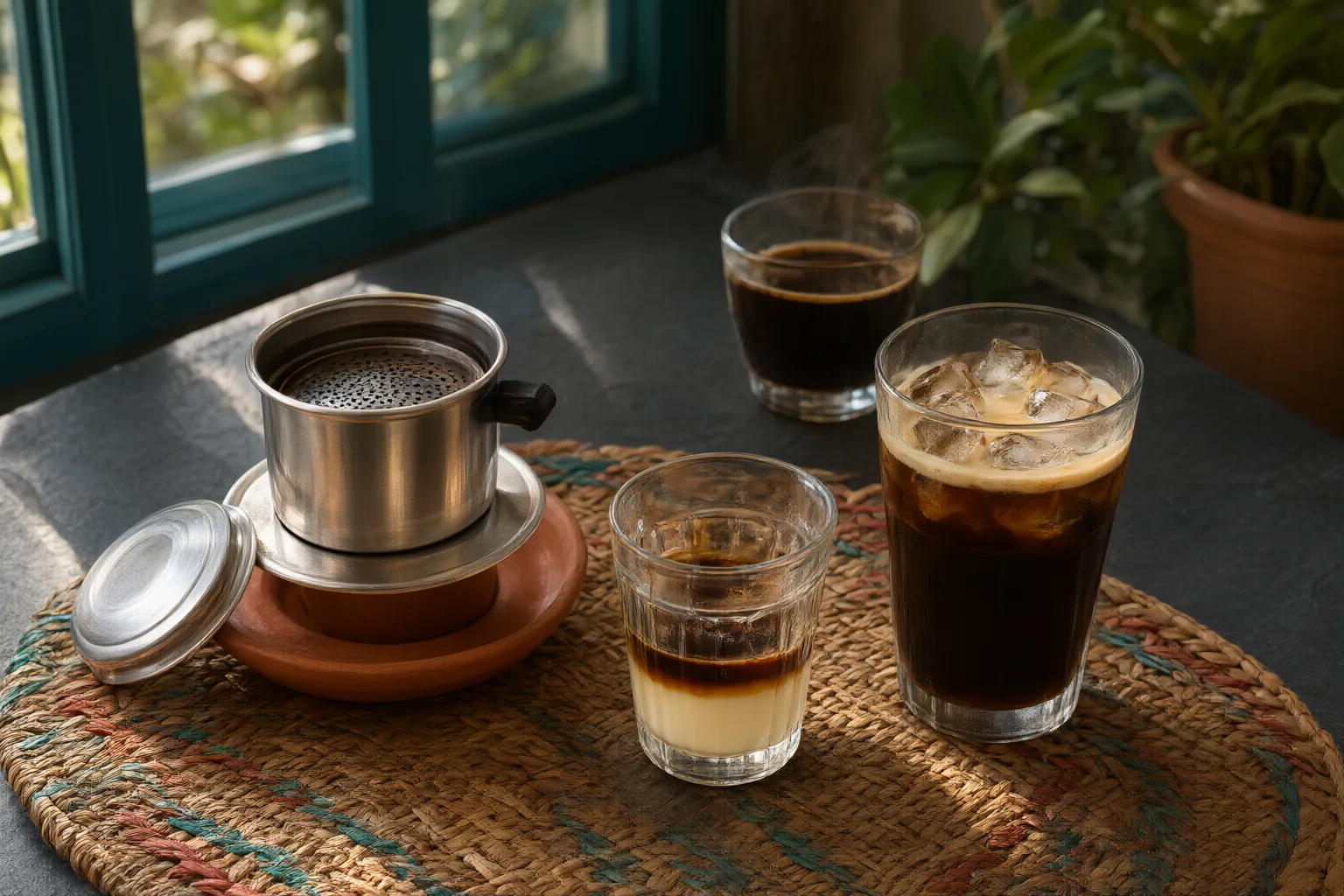
A useful starting point is the phin, a small metal filter placed over a cup. Coffee passes through it slowly, producing a concentrated brew that forms the base of several Vietnamese coffee styles.
For a direct, coffee-forward drink, consider cà phê đen đá, or iced black coffee. Vietnamese black coffee can taste bold, bitter, aromatic, and straightforward, making it a possible match for people who already enjoy espresso, strong cold brew, or unsweetened coffee. However, “black” does not necessarily mean sugar-free: iced black coffee is commonly sweetened in at least some settings. If you want no sweetness, confirm this when ordering.
Cà phê sữa đá combines strong coffee, sweetened condensed milk, and ice. It retains a pronounced coffee flavor while adding substantial sweetness and a milkier finish. The condensed milk contributes much of the sweetness, so this style suits travelers who want intensity softened by a sweet, creamy component rather than removed entirely.
Match each Vietnamese coffee style to your taste
Think of the menu as a spectrum rather than assuming every Vietnamese coffee will be equally bitter or powerful.
- Cà phê đen đá: The clearest choice for a bold, uncomplicated coffee profile served over ice. Because it may include sugar, check before ordering if you prefer it unsweetened.
- Cà phê sữa đá: Strong coffee remains noticeable, but condensed milk brings sweetness and richness. Choose it when you want both a distinct coffee taste and a sweet, chilled drink.
- Bạc xỉu: Made with more milk and less coffee intensity than conventional Vietnamese milk coffee, this is the milder and sweeter option. It can suit people who are sensitive to bitterness or prefer the milk component to lead.
- Egg coffee: A thick mixture based on egg yolk, sugar, and condensed milk sits over strong coffee. Its custard-like richness makes it closer to a dessert-style drink than a light refreshment.
- Coconut coffee: Coffee is combined with coconut milk or cream and is often served cold or blended. Creamy, sweet coconut flavor softens the perceived coffee intensity.
- Salt coffee: Strong coffee is paired with a salted creamy component. The salt is described as balancing bitterness and enhancing sweetness, rather than making the drink taste merely salty.
Texture matters as much as strength. Black coffee is the most straightforward; condensed-milk coffee is sweet and creamy; bạc xỉu shifts further toward milk; and egg, coconut, and salt versions introduce richer, more distinctive creamy profiles. Someone looking for a light drink should be especially aware that egg coffee can be notably rich and sweet.

How to order the sweetness and strength you prefer
Begin by choosing the style closest to your taste. If you want maximum coffee intensity, start with black coffee. For strong coffee balanced by sweetness, choose cà phê sữa đá. If you prefer less coffee intensity and more milk, bạc xỉu is the clearer fit. Egg, coconut, and salt coffee are better starting points when creaminess or dessert-like character matters more than a plain coffee profile.
Next, confirm sweetness instead of relying on the drink’s name. This is particularly important with cà phê đen đá because black iced coffee may still contain sugar. In prepared milk coffee, the amount of condensed milk determines much of the sweetness, and the available evidence recommends adjusting it to taste. Ask the individual café whether it can change the condensed milk amount or coffee intensity before you order.
The supplied sources do not establish a universal Vietnamese phrase or standardized café procedure for requesting exact sweetness or strength levels. Availability and wording may therefore differ by café, so a direct confirmation is safer than assuming every venue handles adjustments identically.
For ordering a named drink, “Cho tôi một ly cà phê sữa đá” is presented as a request for one iced milk coffee. “Cho tôi một ly cà phê muối” requests one salt coffee. If you want takeaway service, “mang đi” is identified as the relevant term. These examples identify drinks or takeaway service; they should not be treated as evidence of a universal formula for precise customization.
Conclusion
Choose Vietnamese coffee along a taste spectrum: bold black coffee for the most direct profile, cà phê sữa đá for strength plus condensed-milk sweetness, and bạc xỉu for a gentler, milkier drink. Egg, coconut, and salt coffee add richer creamy textures and distinctive flavor balances. Before paying, select the closest base style, confirm whether it is sweetened, and ask the café directly whether it can adjust condensed milk or coffee strength.
Disclosures and limitations
- This article was prepared with AI assistance from the supplied research package and its attributed travel and recipe sources; no personal tasting, purchase, interview, or café visit is claimed.
- No specific product or venue is recommended, and no affiliate relationship is represented. Readers should confirm preparation and available adjustments with the individual café.
Related reading
- Food & Drink Guides for Curious Travelers
- How to Compare Vietnamese Sauces, Spices, and Pantry Souvenirs
- How to Document Regional Food Discoveries Across Vietnam
Sources
- Which Vietnamese Coffee Is Right for First-Time Visitors? — Tonkin Coffee
- Vietnamese Coffee Styles: A Traveler's Guide — Enjoy Vietnam Travel
- Vietnamese Coffee Decoded: Ca Phe Sua Da, Egg Coffee, Coconut & Salt Coffee — vietnamtourism.com
- 7 Types of Vietnamese Coffee You Need to Try — From Egg Coffee to Salt Coffee – AN Tours Vietnam — AN Tours Vietnam
- Vietnamese Coffee Taste: A Definitive Guide — Coffee Talkies
- Vietnamese Coffee: The Complete Guide (Phin, Condensed Milk, and All Styles) — Barista At Home
- Vietnamese Coffee Culture: Drinks, Phin & Ordering Tips — Indochina Travel Group