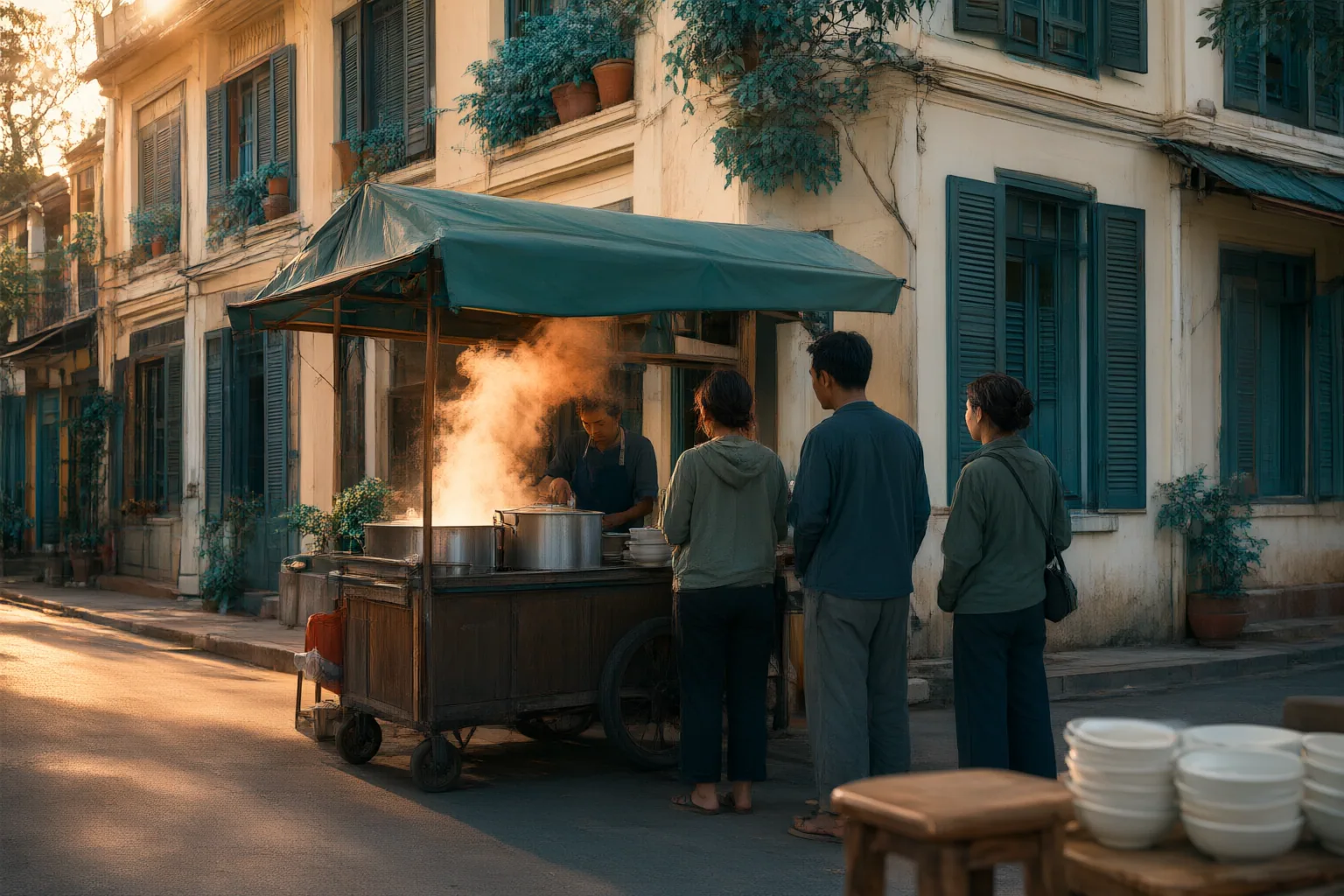
Plan food stops by matching each destination with locally associated meal periods, then leave room for queues and last-minute changes. Hanoi phở fits an early-day plan, while cơm tấm in Ho Chi Minh City can anchor breakfast or lunch. Because the available sources do not establish exact hours, stock levels, or routine sell-outs, confirm current details locally before setting out.
Start With Place and Meal Period
Begin with geography rather than a single nationwide list. Street food is ready-to-eat food or drink sold by vendors in public places, often from portable stalls, and its forms vary across regions and cultures. Vietnam planning should therefore connect a dish to a destination before assigning it a place in the day.
Create a simple destination-by-destination list. For each city, note the dishes you most want to eat and whether the available local guidance associates them with breakfast, lunch, or another period. The supplied guide, for example, connects Hanoi phở with breakfast and cơm tấm in Ho Chi Minh City with breakfast and lunch. These patterns provide useful planning anchors, but they are not fixed serving schedules.
Keep vendor-specific information in a separate column marked for verification. The sources do not provide dependable opening hours, quantities, closing times, or evidence that particular dishes routinely sell out early. Check current local information shortly before visiting rather than treating a general meal-time association as a guarantee. This place-first approach also leaves room to appreciate regional differences; a broad description of Vietnamese street food emphasizes fresh, relatively light preparations and substantial use of herbs, chile peppers, and lime, but individual dishes and local traditions still differ.
Schedule Breakfast and Lunch Priorities
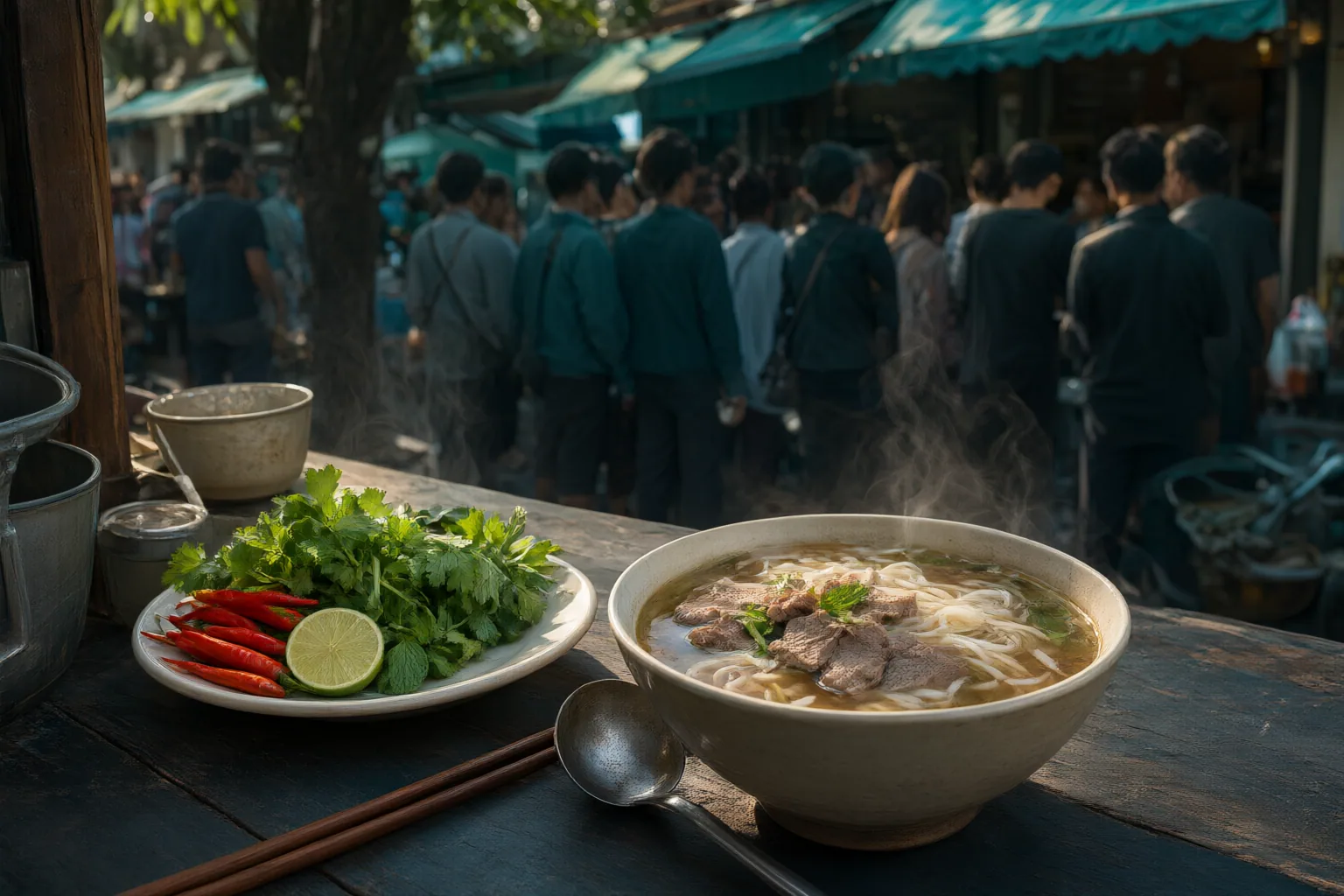
Use the strongest meal-period evidence to build the first version of each day. The Vietnam-focused guide calls phở a Hanoi breakfast staple and depicts locals eating it at 6:30 a.m. That supports putting a desired phở stop early in a Hanoi itinerary. It does not establish that every shop opens at that time, follows the same schedule, or has guaranteed availability.
In Ho Chi Minh City, the same guide describes cơm tấm as a working-class breakfast and lunch staple. Travelers can therefore give it either the morning or midday slot. That flexibility is useful: if another priority already occupies breakfast, cơm tấm can become the lunch plan without departing from the meal periods described by the source.
For families or groups, agree on one priority meal and one optional stop each day. Put the less flexible, meal-associated dish first, then arrange sightseeing around it with realistic travel time. Avoid packing consecutive food stops so tightly that one delay disrupts the entire day. Before departure, confirm the chosen vendor’s current hours and availability through current local information. If details cannot be confirmed, preserve the meal period but keep the exact vendor flexible. This method uses supported eating patterns without turning them into unsupported promises about service times or stock.
Build Flexibility Around Popular Stops
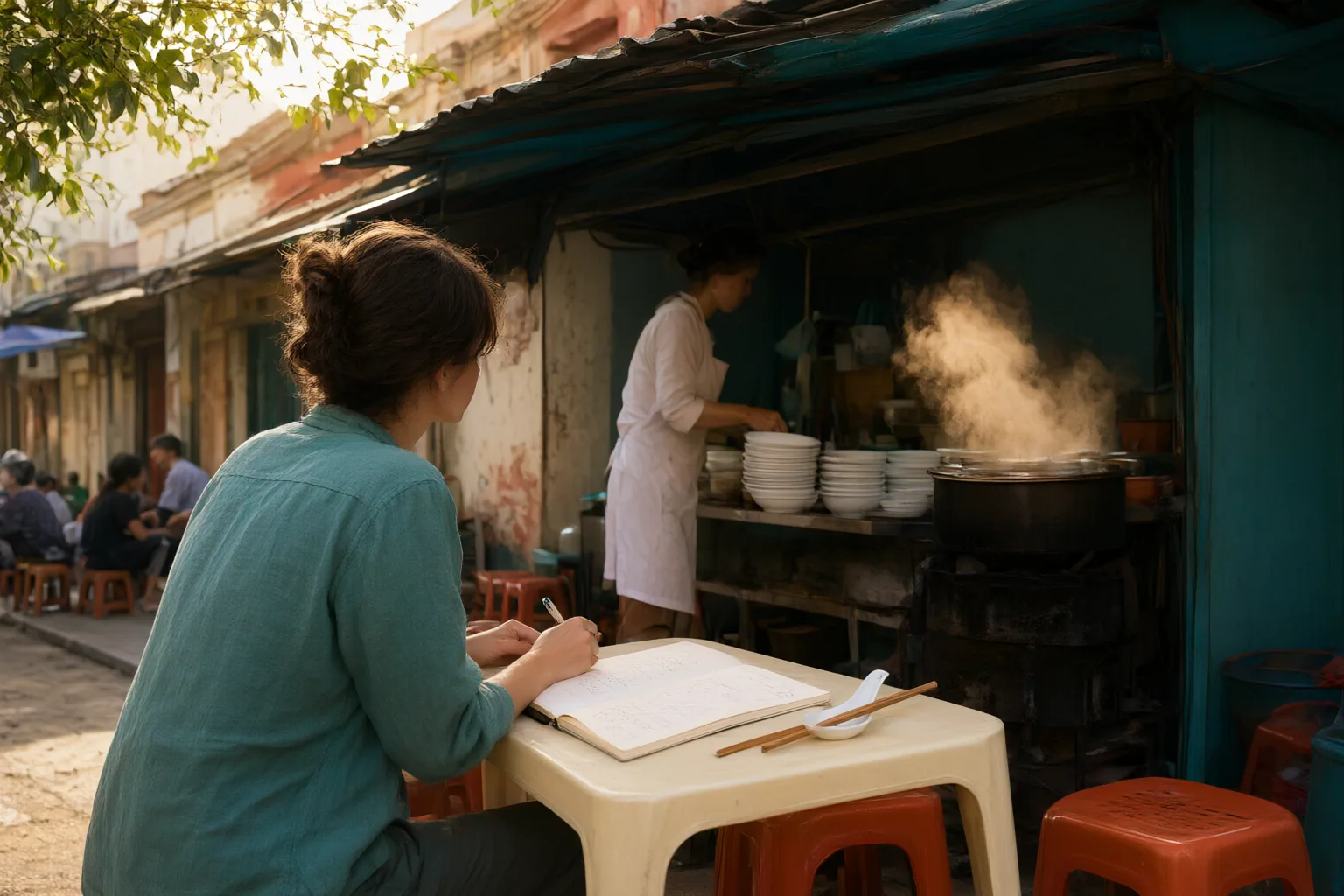
Queues deserve their own time allowance. The supplied guide reports that locals queue at smaller bún chả stalls in Hanoi’s Old Quarter around lunchtime. It also says Bánh Mì Phượng has a queue every day. These examples show why a food itinerary needs slack, although they do not establish wait lengths, sell-out times, or what conditions will be like on a particular visit.
Place a buffer after a priority stop instead of scheduling a timed attraction immediately afterward. A practical plan can include three outcomes: join the queue, return later if current service information makes that sensible, or choose a nearby alternative. Select the alternative in advance by dish category or meal need rather than assuming a particular unnamed vendor will be open.
Make a same-day check before crossing a city solely for one meal. Verify current hours and availability locally, and reconsider the stop if the information is unclear or the queue would compromise a more important commitment. If you encounter a line, decide using the itinerary in front of you rather than an assumed wait time. Groups should also choose a meeting point before anyone investigates alternatives.
Most importantly, do not interpret a reported queue as evidence of an early sell-out. Popularity, waiting, operating hours, and remaining stock are separate questions. The research supports planning for possible congestion at the named examples, while current vendor conditions still require local confirmation.
Conclusion
A resilient Vietnam food plan starts with destination, then meal period, and only then a specific vendor. Use Hanoi phở as an early-day priority and place Ho Chi Minh City cơm tấm at breakfast or lunch. Allow extra time where the guide reports queues, including lunchtime at smaller Old Quarter bún chả stalls and daily at Bánh Mì Phượng, but do not assume a particular wait or sell-out.
Now map your priority dishes for each destination, assign them only to supported meal periods, add a queue buffer and an alternative, and confirm current hours and availability shortly before you go.
Disclosures and limitations
- This article was prepared with AI assistance and is based only on the two research sources identified by the attached source IDs. Meal-period associations and reported queues were paraphrased; current hours, availability, stock, and wait times should be verified locally.
Related reading
- Food & Drink Guides for Curious Travelers
- How to Customize Vietnamese Noodle Soups with Herbs, Lime, Chili, and Condiments
- Walking vs Motorbike vs Private-Car Food Tours in a Vietnamese City
Sources
- Vietnamese Food Guide: What to Eat City by City (2026) | Day Trips Vietnam — Day Trips Vietnam
- Regional street food – Wikipedia — en.wikipedia.org
- Things to know before visiting Japan — booking.com