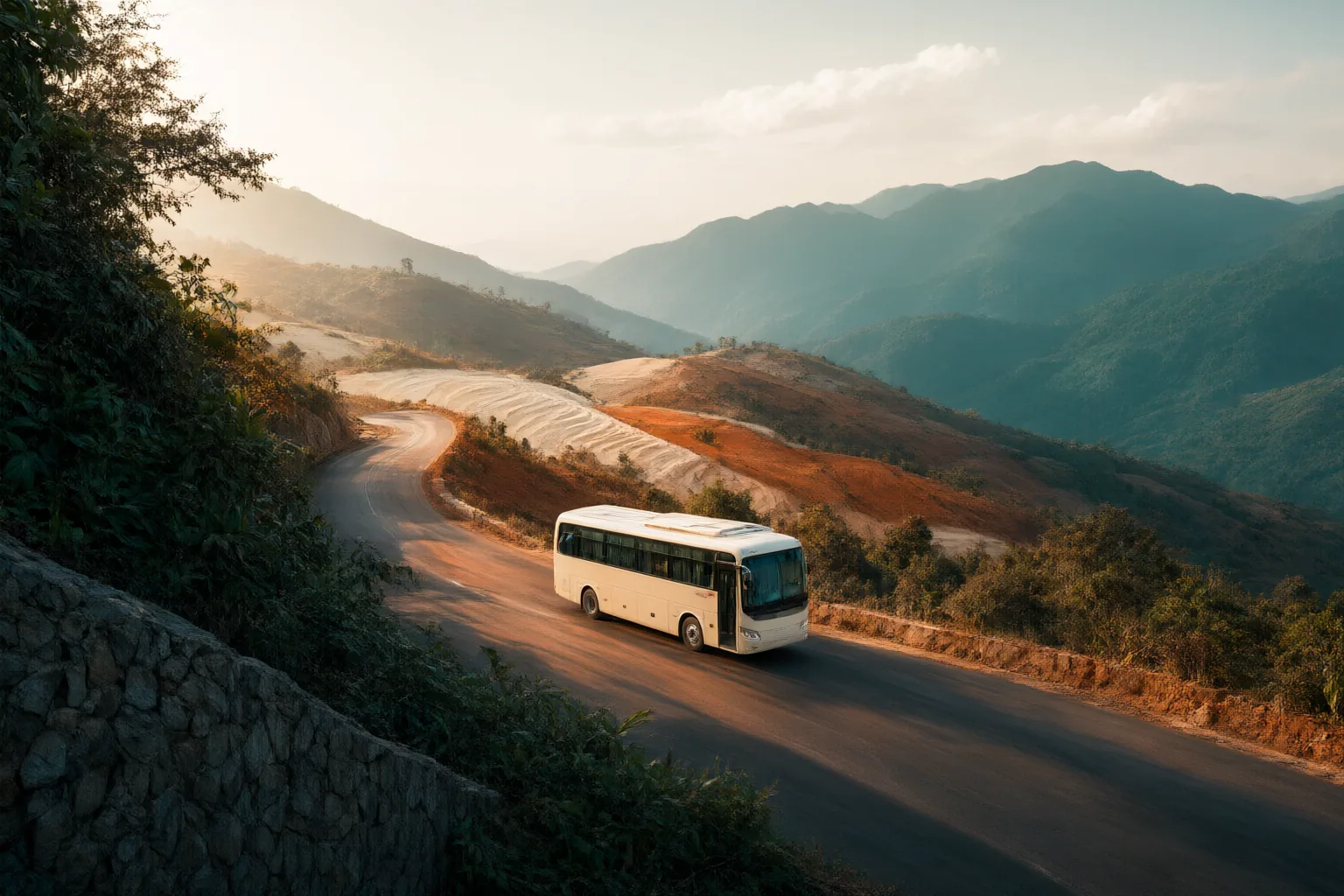
For long journeys within Vietnam, domestic flights are the clearest time-saving choice in the available evidence, while open-tour buses provide regular overland connections between major destinations. Compare the complete journey for your route, including road conditions and airport transfers, before booking.
The practical choice: save time or travel overland
Start with your main constraint. Vietnam Tourism describes flying as the most convenient option for travelers short on time, noting that a lengthy overland journey may become a one- or two-hour flight. Open-tour buses, meanwhile, regularly connect major destinations such as Ha Noi, Hue, Hoi An, Nha Trang, Da Lat, Mui Ne, and Ho Chi Minh City.
The trade-off is not simply flight duration versus a published bus schedule. The transport overview characterizes major roads as potentially slow and dangerous because of outdated design and mixed traffic, and it reports an average speed of 50 kilometres per hour on national roads. Travelers can therefore underestimate how distance and road conditions affect an overland day or night.
The supplied evidence does not provide comparable fares or route-specific, door-to-door journey times. It also does not account for airport transfers. Treat the documented flight duration as one part of the decision, then check the actual departure points, arrival points, and schedules available for your route.

Sleeper buses and daytime coaches: what the evidence supports
Open-tour buses are a documented option between several of Vietnam’s major destinations. Vietnam Tourism says most of these services are sleeper buses or use deeply reclining seats. That makes them a practical overland category to investigate when you have enough time for the road journey and want a direct connection between listed destinations.
Booking timing also matters. Under ordinary conditions, Vietnam Tourism recommends reserving an open-tour bus one or two days ahead. For Vietnamese holidays, it recommends booking at least two weeks in advance because availability can tighten.
Daytime coaches require more caution in this comparison. The research package does not separately establish their schedules, seating, comfort, fares, operators, or performance relative to sleeper buses. It would therefore be misleading to claim that a daytime coach is faster, safer, cheaper, or more comfortable. If a daytime service appears in your route search, verify its details directly and assess it as a specific journey rather than assuming the sleeper-bus evidence applies to it.
Domestic flights: when time matters most
The source-backed case for flying is strongest when preserving time is the priority. Vietnam Tourism says domestic flights can turn a long overland journey into a flight of one or two hours, and the broader transport overview identifies air travel as important for long-distance travel in Vietnam.
That evidence supports a general conclusion: on a sufficiently long route, flying can substantially reduce the time spent moving between regions. It does not establish the fastest door-to-door option for every city pair. The supplied sources contain no route-specific airport-transfer times, fares, check-in requirements, or like-for-like comparisons with individual bus services.
Use the flight duration as an initial filter rather than a complete calculation. Check whether your origin and destination are served by a suitable flight, then add the time needed to reach and leave the airports. Compare that total with the available overland itinerary before deciding whether the saved travel time justifies flying.
Conclusion
Choose in a clear sequence. First, decide how much of your trip you can devote to transport. If time is tight, investigate domestic flights because the available evidence identifies them as the convenient long-distance option. If you have time for an overland journey, check open-tour buses serving your destinations and confirm the specific departure and arrival arrangements.
Next, account for road conditions instead of judging distance alone. The cited transport overview’s 50-kilometre-per-hour national-road average, combined with its concerns about outdated road design and mixed traffic, shows why an overland itinerary may take longer than expected. Do not infer undocumented advantages for a daytime coach; verify each offered service on its own terms.
Finally, consider your travel date. Reserve an open-tour bus earlier during Vietnamese holidays, when the guidance calls for at least two weeks’ advance booking. Shortlist the options available for your route, calculate the complete journey rather than comparing headline durations, and confirm your chosen schedule before reserving.
Disclosures and limitations
- This article was prepared with AI assistance from the supplied research sources and was limited to claims supported by the listed source IDs.
- No operator, fare, product recommendation, or affiliate offer was evaluated; readers should confirm current route and booking details directly.
Related reading
- Travel Ideas for Meaningful Trips
- How to Choose a Hands-On Pottery Workshop in Vietnam
- Sea Turtle Observation in Vietnam: What to Know Before a Côn Đảo Experience
Sources
- Transport within Vietnam — Vietnam Tourism
- Transport in Vietnam – Wikipedia — en.wikipedia.org
- #vietnamairlines #cherisheverymile | Vietnam Airlines — LinkedIn