
A Côn Đảo sea turtle experience requires flexible expectations: nesting observation and hatchling release are different activities, reported seasons vary, and a nighttime visit may involve hours of quiet waiting without a guaranteed sighting. Visitors should confirm current arrangements locally and follow ranger instructions closely.
Choose between nesting observation and a hatchling release
Watching an adult turtle nest and attending a hatchling release are not interchangeable experiences. Nesting observation takes place at night, when an adult turtle may come ashore to lay eggs. A hatchling release involves young turtles after incubation and therefore follows a different schedule.
The reported seasons are useful for broad planning, but they should not be treated as guarantees. Across the supplied sources, nesting activity in Côn Đảo is generally placed somewhere between April or May and October or November, with disagreement about the precise opening, closing, and peak months. One source separates the cycles more specifically, describing nesting from April through October and hatching from May through December. It identifies May through September as the period when both activities most often overlap.
Before selecting dates, decide which experience matters to you and ask the local provider what is actually being offered. A reference to “turtle season” alone does not establish whether a particular departure concerns nesting adults, hatchlings, or either one. The supplied research also does not confirm current schedules, booking procedures, visitor limits, or access rules, so those details need to be checked directly rather than inferred from seasonal summaries.

Prepare for a long, uncertain night on the beach
Nesting observation is a nighttime wildlife activity conducted under ranger or guide oversight, not a scheduled performance. One visitor guide says an outing can involve three to five hours of walking and waiting on dark beaches. Turtles emerge unpredictably, so choosing a date within a commonly reported nesting period still does not guarantee an encounter.
That uncertainty should shape expectations for the entire evening. Participants may spend much of the experience moving carefully or waiting, with no certainty about when—or whether—a turtle will appear. Families should consider whether everyone in the group is comfortable with darkness, a late finish, prolonged waiting, and the possibility of returning without a sighting.
Hòn Bảy Cạnh is described by two sources as Côn Đảo’s largest or most important nesting site. However, their estimates of its share of nesting activity differ, at roughly 70% and 80%. Those figures are better understood as differing travel-source estimates than as a single settled official statistic. The prominence of a site also does not remove the unpredictability of an individual night.
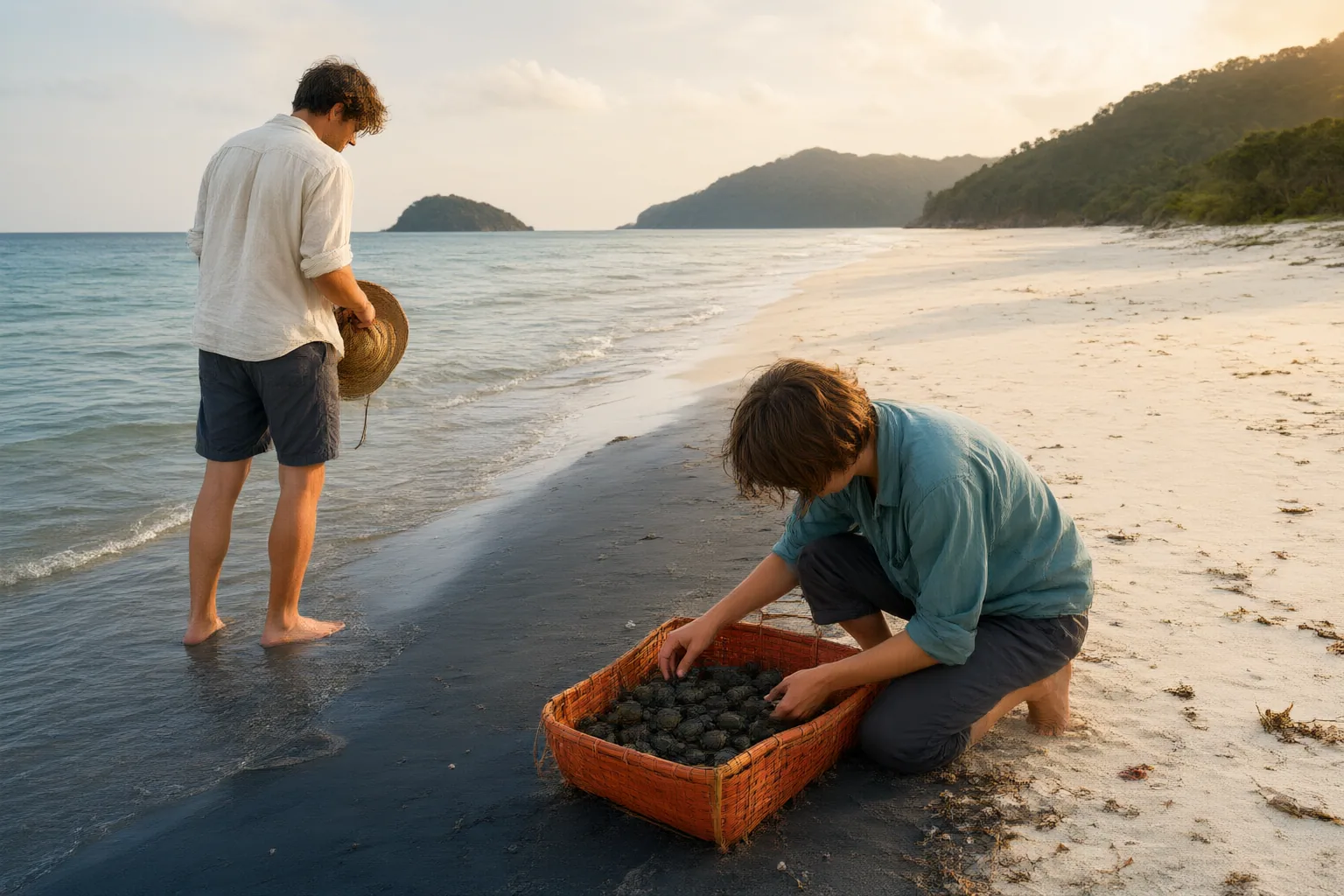
Follow wildlife-sensitive rules throughout the experience
The sources consistently describe sea turtles as sensitive to light and noise. Visitors are instructed to remain quiet, avoid flash photography, and avoid white light. Rangers may use specialized lighting, but that does not make visitors’ phone lights, camera flashes, or ordinary torches appropriate. Follow the ranger’s directions throughout the observation, including instructions about where to stand and when it is safe to watch.
These restrictions are part of a broader conservation process. The accounts describe rangers relocating eggs to managed incubation areas when necessary to protect nests from tides, predators, and human interference. An observation experience therefore takes place around active wildlife management, not simply beside it. Visitor behavior can either respect or disrupt that work.
If a live turtle is observed and the circumstances permit, the International Sea Turtle Observation Registry provides a way to record sightings. A SciStarter description says submitted observations are intended to help scientists and managers understand sea turtle distribution. Recording should never take priority over ranger instructions or justify using disruptive light. Any entry should reflect what was actually observed rather than assumptions about an unseen animal or an uncertain species.
Conclusion
Plan around five realities: nesting observation and hatchling release are different; published seasonal windows are approximate; nesting visits occur at night; walking and waiting may last for hours; and no sighting is guaranteed. Once on the beach, stay quiet, avoid flash and white light, and treat every ranger instruction as part of protecting sensitive wildlife.
Current booking methods, access conditions, availability, and visitor limits are not established by the supplied research. Before choosing dates, ask an authorized local operator which experience is offered, confirm the latest access arrangements, and prepare to participate without expecting a turtle to appear.
Disclosures and limitations
- This article was prepared with AI assistance from the supplied research package and approved content plan. Its factual claims are limited to the cited source IDs; current official booking, access, availability, and visitor-limit information was not provided and should be confirmed locally.
Related reading
- Travel Ideas for Meaningful Trips
- Riverfront Cycling in Vietnam: How to Decide Whether It Fits Your Waterway Day
- How to Compare Vietnamese Tea Tasting and Tea-Growing Experiences
Sources
- Con Dao Turtle Watching Season – A complete guide 2026 — Local Vietnam
- SEATURTLE.ORG – iSTOR — seaturtle.org
- The Complete Guide to Exploring Turtle Nesting Season Côn Đảo — Phu Quoc Speedboat
- Sea Turtle Conservancy — Sea Turtle Conservancy
- International Sea Turtle Observation Registry (iSTOR) – SciStarter — SciStarter
- Con Dao National Park: Turtles, Dugongs Habitat | Revitrip — revitrip.com