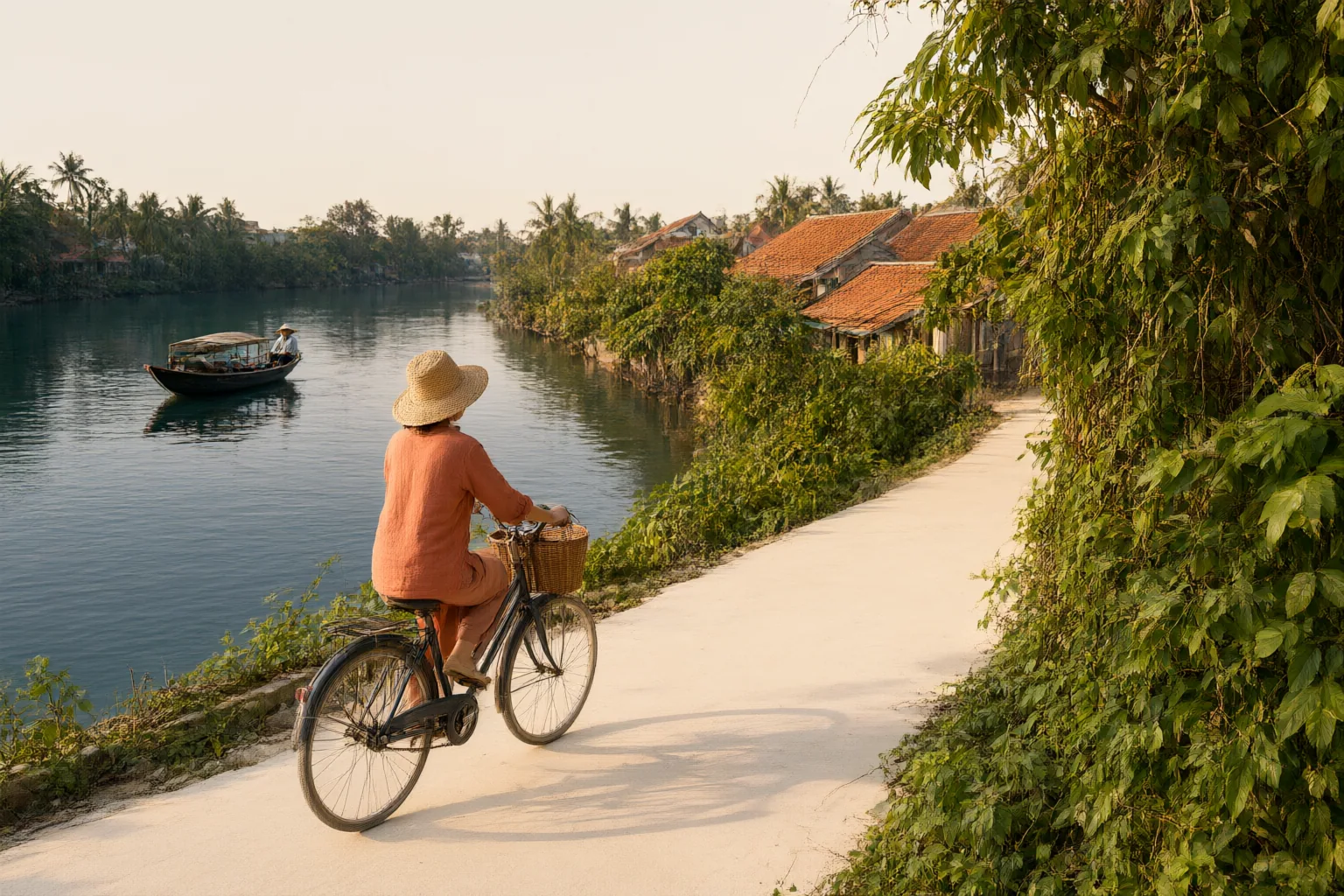
Riverfront cycling may fit your Vietnam waterway itinerary if your group wants an active, scenery-focused outing and can confirm an appropriate bicycle, manageable route, local access conditions, and applicable safety guidance before booking.
Picture the kind of riverfront cycling day you want
Start by defining the experience you want rather than assuming that any waterside ride will provide it. Consider whether your ideal day centers on steady movement through changing scenery, frequent stops, shared family time, or simply reaching a destination by bicycle.
One documented riverfront attraction illustrates the landscape-focused possibility: its route follows the Narmada stream and roads associated with the Sardar Sarovar Dam, with mountains, waterways, forests, and waterfalls among the described surroundings. This example is in India, not Vietnam, so it cannot establish what a Vietnamese route will look like or how it will operate. It is useful only as a prompt for questions. Ask a local operator what riders actually see, how long the outing lasts, whether stopping is practical, and how much of the route follows roads. If the answers match the pace and setting your group wants, cycling may deserve a place on the itinerary. If they do not, the supplied evidence does not support treating paddling or walking as proven alternatives.
Match the bicycle setup to your travel group
The cited Indian attraction describes itself as family-friendly and suitable for all ages. It lists children’s bicycles, solo adult bicycles, tandems, and electric cycles for rent. Those are features of that attraction only, not evidence that the same choices or suitability will be available at a Vietnam destination.
Use the example to build an equipment inquiry for a local operator. Ask which bicycle types are offered, whether appropriate sizes are available for each rider, and whether a tandem or electric option suits the group’s intended arrangement. Confirm the rental duration and booking process rather than assuming a bicycle will be available on arrival. At the Indian attraction, the stated two-hour prices are Rs. 250 for a children’s or solo adult cycle and Rs. 400 for a tandem or electric cycle, with advance online booking through the Statue of Unity ticket site. Those prices, currency, and booking arrangements do not apply to Vietnam; they show why destination-specific confirmation matters. Do not label a Vietnamese ride family-friendly until the relevant operator provides enough information for your particular group.
Check route demands, responsibilities, and safety guidance
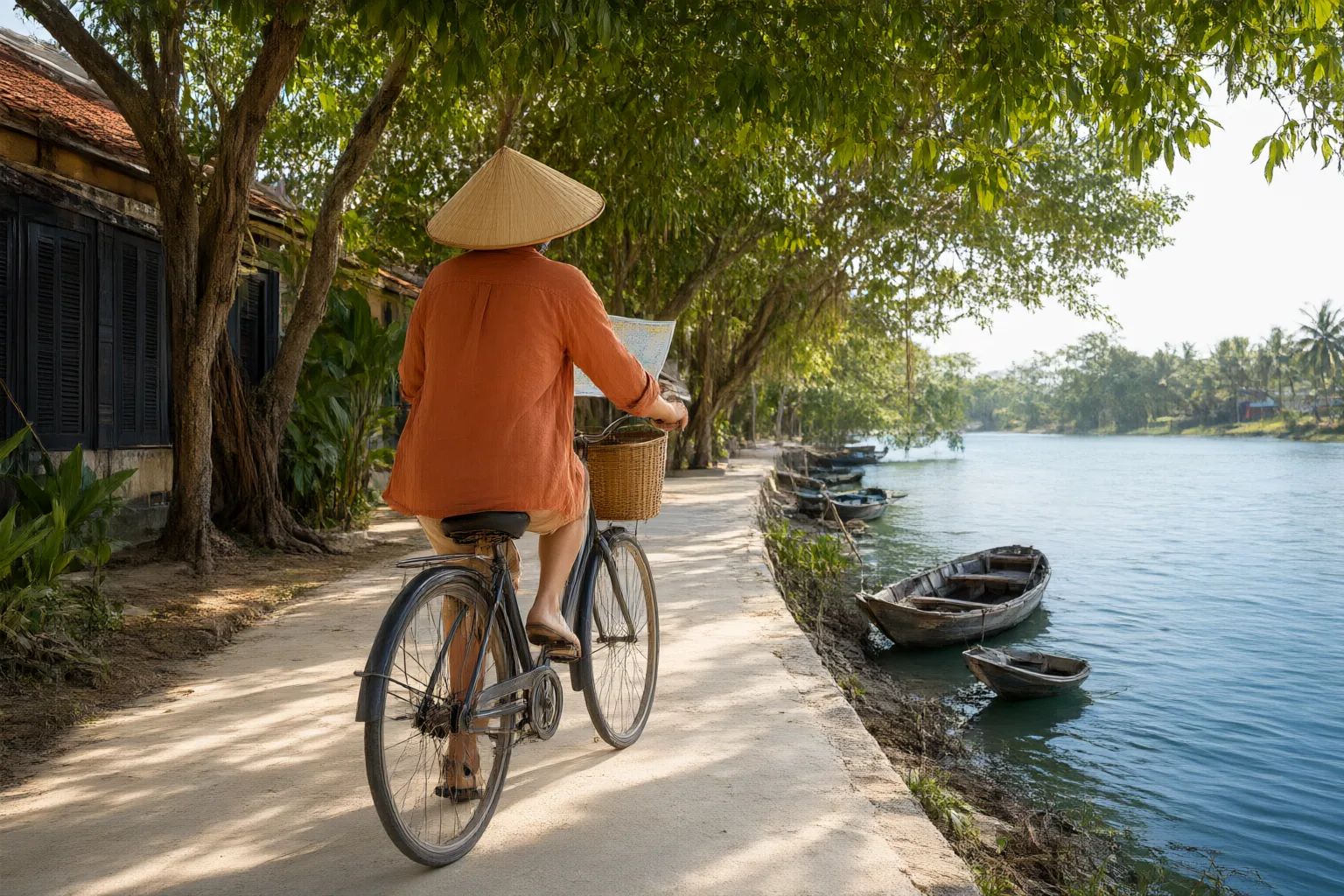
Treat route and safety information as a required part of the decision. The cited Santa Rosa Cycling Club event is a California ride titled “West Cotati • 2/A/25 • Petaluma Riverfront Cafe.” Its page links to club materials covering ride information, rider responsibilities, road rules, cycling etiquette, and safe cycling practices. The source does not provide rules or conditions for Vietnam, but its categories identify useful subjects to raise before committing to a route.
Request current information for the specific Vietnam outing: the route description, what riders are expected to do, which local road rules apply, what etiquette the operator expects, and what safety practices it communicates. Also clarify which parts of the route use roads and whether the stated demands align with every rider’s expectations. The supplied material does not establish local accessibility, seasonal conditions, operating details, or safety requirements, so none should be assumed. A vague route description or missing local guidance leaves an important part of the decision unresolved. Base the choice on information from the relevant destination or operator, not on the California example.
Conclusion
A practical decision follows four steps: define the kind of waterside experience your group wants, confirm suitable bicycle options, assess the described route demands, and obtain local access and safety information. The Indian attraction demonstrates that a riverfront ride can be presented as a leisure activity through varied scenery with several bicycle formats. The California club page shows that organized cycling information may address responsibilities, road rules, etiquette, and safe practices. Neither source establishes conditions in Vietnam.
The evidence also does not cover paddling or walking, so it cannot support a reliable three-way comparison. Make the cycling decision on its own merits and leave unsupported comparisons aside. Shortlist a suitable waterway destination, then confirm its local route, bicycle options, access conditions, booking arrangements, and safety requirements before committing to a cycling day.
Disclosures and limitations
- This article was prepared with AI assistance using only the supplied research package. The cited examples concern India and California, not Vietnam, and no product recommendation or affiliate relationship is asserted.
Related reading
- Travel Ideas for Meaningful Trips
- How to Compare Vietnamese Tea Tasting and Tea-Growing Experiences
- Đồng Nai Weekend Trip Planning: A Practical Guide for Families and Independent Travelers
Sources
- Riverfront Cycling — Best Hotels Near Statue of Unity for a Memorable Stay |Brg Budget Stay
- Santa Rosa Cycling Club – West Cotati • 2/A/25 • Petaluma Riverfront Cafe — srcc.com