Plan Vietnam food experiences in two separate tracks: match supported dish suggestions to the destinations on your itinerary, then review current official health guidance with a clinician. Regional context, saved Vietnamese dish names, and venue-specific checks can make the dining plan more practical without turning travel-blog advice into certainty.
Choose Vietnamese dishes by destination
Start with geography rather than a single nationwide ranking. The supplied traveler-oriented guides organize Vietnamese food by region, so a useful shortlist should reflect where the trip actually goes.
Phở is a flexible starting point. One guide describes it as rice-noodle soup served with herbs and either beef or chicken, and says travelers commonly encounter it at settings ranging from street stalls to restaurants. The same guide describes bánh mì as a crisp baguette that may contain grilled meat, pâté, pickled vegetables, herbs, chili, and mayonnaise. Treat those ingredients as examples, because an individual preparation may differ.
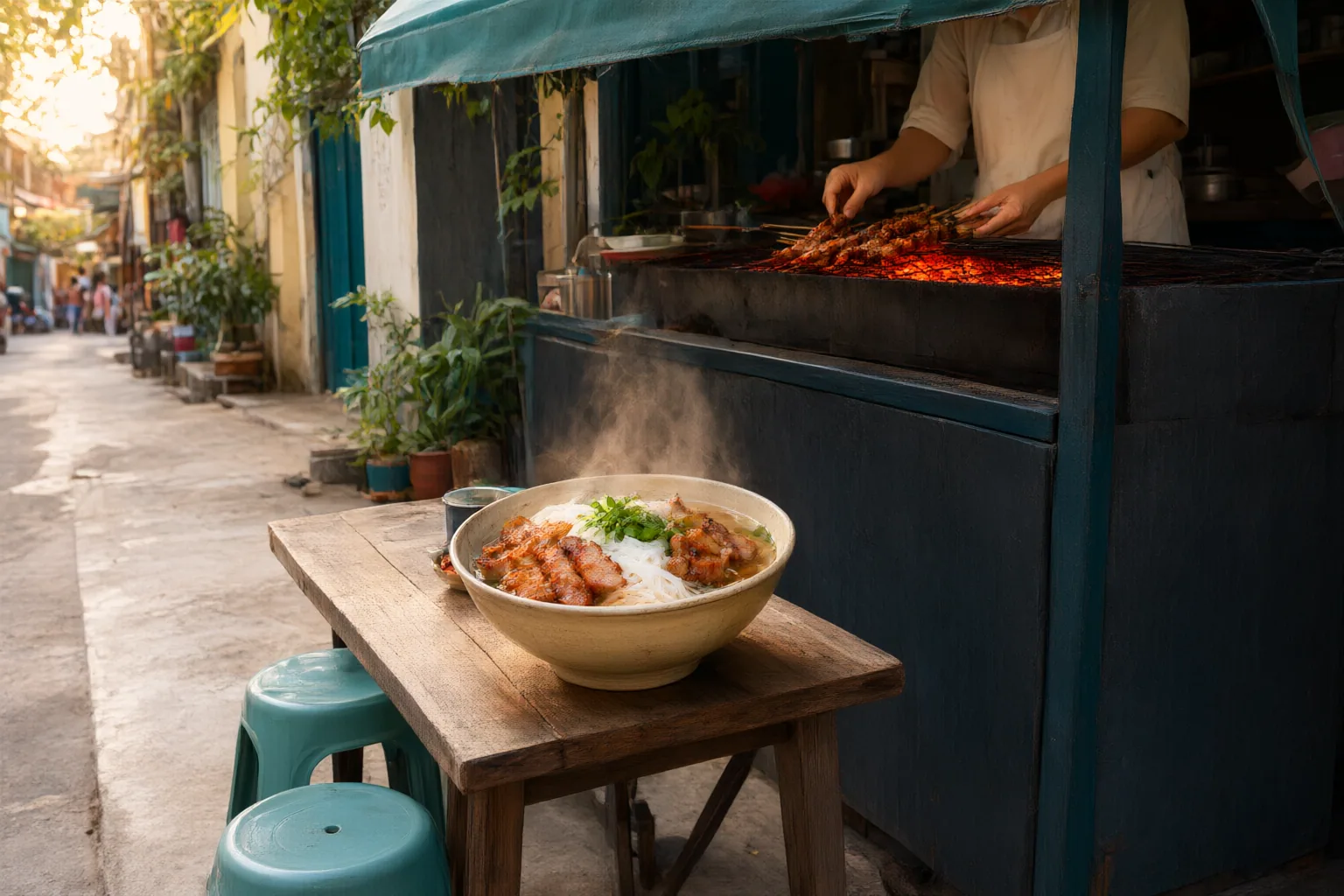
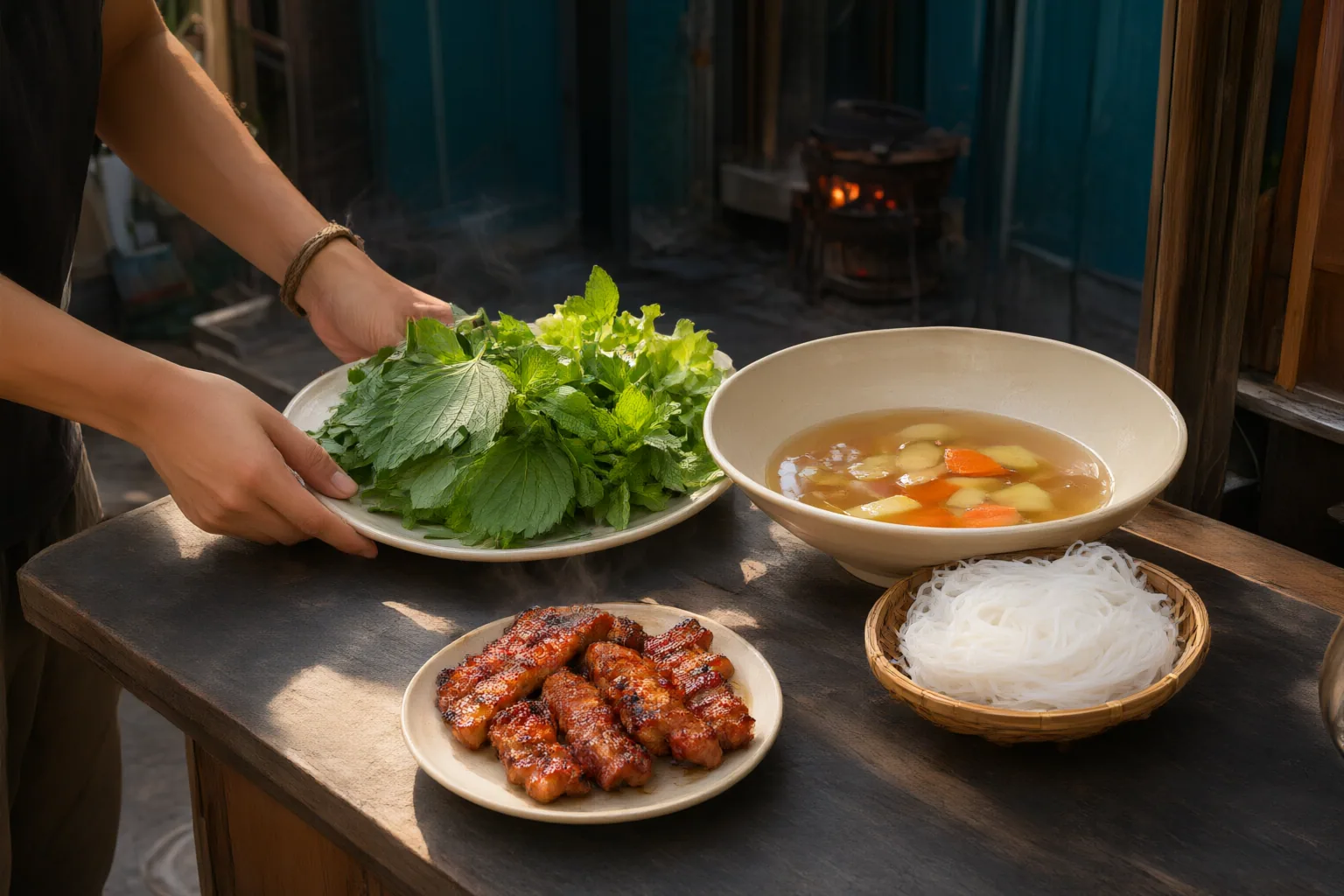
For Hanoi, the guides identify bún chả as a relevant local choice. They describe it as grilled pork served with rice noodles and a savory or sweet-savory broth or dipping sauce. For Central Vietnam, both supplied guides associate mì Quảng and bún bò Huế with the region. These geographic associations make them more useful itinerary choices than entries in an unsupported national ranking.
Build a modest list for each stop: phở or bánh mì where encountered, bún chả in Hanoi, and mì Quảng or bún bò Huế while traveling in Central Vietnam. This approach preserves the sources’ geographic distinctions and avoids assuming that every dish has the same relevance everywhere.
Prepare to order when menus or language support are limited
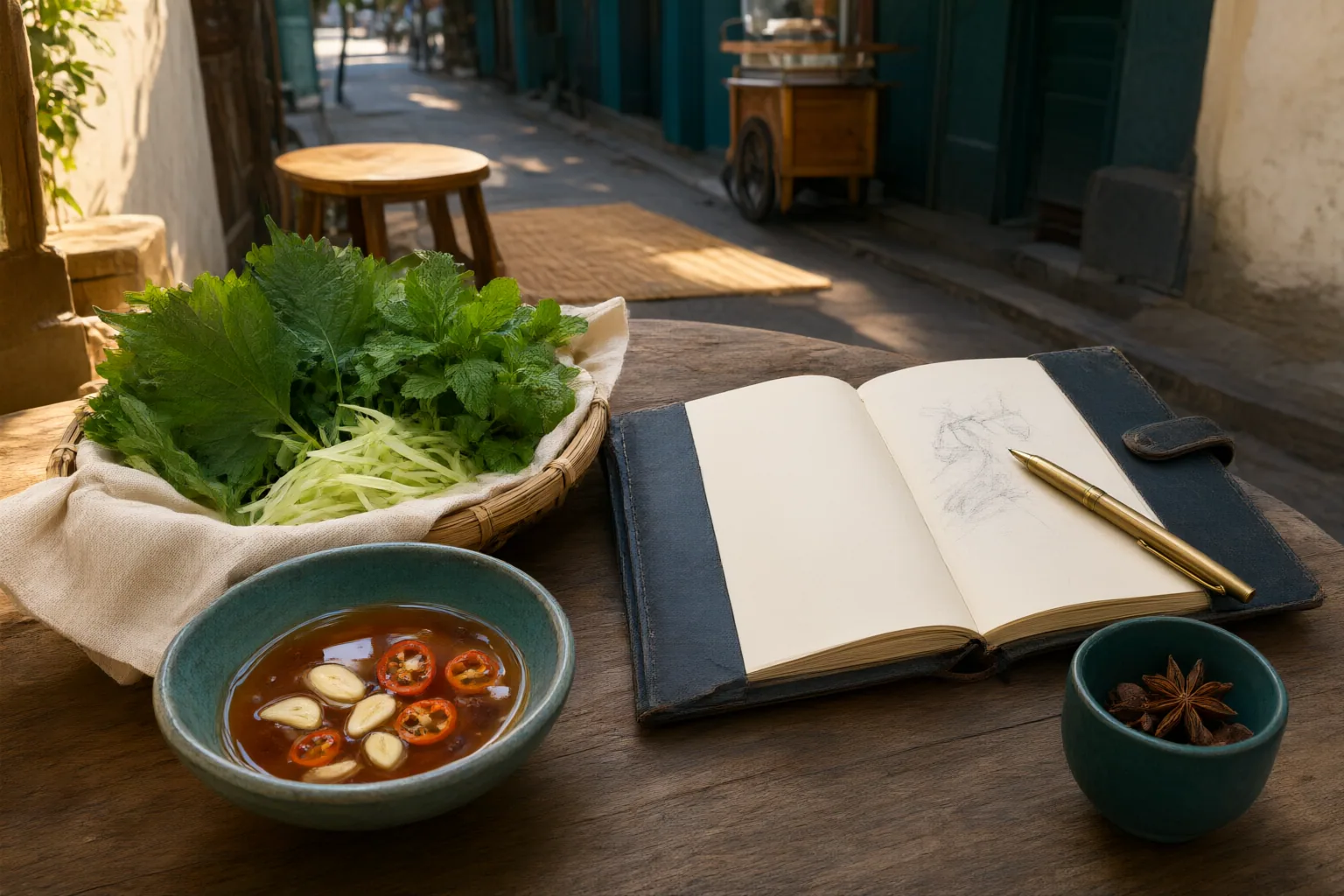
Save the Vietnamese names of your selected dishes before going out. A supplied food guide explicitly includes local dish names to make ordering easier, so keeping a short written or digital list can connect your itinerary plan with what you see at a stall.
Another guide reports that many street stalls may not offer a conventional menu. Its practical suggestion is to identify what is already being served and point to an existing dish if you cannot read the available information. Keep that tactic narrow: pointing can communicate which visible dish you want, but it does not establish ingredients, dietary suitability, portion size, or price. Do not infer those details from appearance alone.
Hours also require local confirmation. One guide reports limited lunch periods, afternoon closures, and separate evening service windows. Those observations should not be treated as universal operating hours. Check the specific venue or stall when possible, and keep an alternative nearby if a planned stop is closed.
A simple ordering routine is therefore: save the exact dish name, observe what the stall is serving, indicate an existing dish when necessary, and verify venue-specific timing. This reduces avoidable friction while staying within what the supplied traveler guidance supports.
Keep dining plans separate from pre-travel health decisions
Food inspiration is not a substitute for medical preparation. The CDC advises travelers to check recommended vaccines and medicines and to visit a doctor at least one month before travel to Vietnam. Because health recommendations can change and individual circumstances differ, review current official guidance with a clinician rather than relying on a dining guide.
The supplied CDC guidance recommends hepatitis A vaccination for unvaccinated travelers aged one year or older going to Vietnam. It also provides guidance concerning infants aged 6–11 months. A clinician can interpret those recommendations in light of a traveler’s age, vaccination history, health, and itinerary.
Mosquito exposure deserves separate attention. The CDC describes dengue as a year-round risk in many parts of the world and advises travelers going to risk areas to prevent mosquito bites. Its Vietnam guidance reports malaria transmission mainly in rural areas and lists no transmission in Da Nang, Hai Phong, Hanoi, Ho Chi Minh City, Nha Trang, or Quy Nhon.
These geographic statements should inform a professional pre-travel discussion, not a self-directed medical conclusion. Bring the actual itinerary—including rural destinations—to the appointment, verify the latest official information, and ask which vaccines, medicines, and bite-prevention measures apply.
Conclusion
Turn the research into two checklists. On the food list, place supported dishes beside relevant destinations: bún chả for Hanoi, mì Quảng or bún bò Huế for Central Vietnam, and phở or bánh mì when encountered. Save the Vietnamese names, prepare to indicate a visible dish when no conventional menu is available, and confirm each venue’s hours instead of assuming a single national schedule.
On the health list, record every destination, especially rural stops. Review current official Vietnam guidance and discuss vaccines, medicines, and mosquito-bite prevention with a clinician at least one month before departure when possible.
Now create a destination-by-destination food checklist for your itinerary, save the dish names where you can access them offline, and schedule the health review.
Disclosures and limitations
- This article was prepared with AI assistance from the supplied CDC material and traveler-oriented food guides; material health claims are attributed to official guidance, while food and ordering observations come from travel guides.
- No products, venue rankings, prices, or affiliate recommendations are included. If commercial links are added later, any affiliate relationship should be clearly disclosed, and time-sensitive health information should be checked again before publication or travel.
Related reading
- Food & Drink Guides for Curious Travelers
- A Practical Decision Checklist for Comparing Vietnam Itinerary Options and Total Trip Cost
- Vietnam Coffee Guide: What to Try and How to Find Local Coffee Experiences
Sources
- Vietnam – Traveler view | Travelers' Health | CDC — CDC.gov
- Vietnamese Food & Drinks: A Practical Guide for Travelers – Sand in My Shoe Travel Blog — Sand in My Shoe Travel Blog
- Vietnam Food Guide What to Eat, Where to Try It, and How to Experience Authentic Vietnamese Cuisine (Vietnam Travel Guide) — Vietnam Food Guide What to Eat, Where to Try It, and How to Experience Authentic Vietnamese Cuisine (Vietnam Travel Guide)
- Vietnam Food Guide Travel Guide — Viet Unfold
- The Best Vietnam Food Travel Guide That Must-Try (2026) — Vietnamtour 247