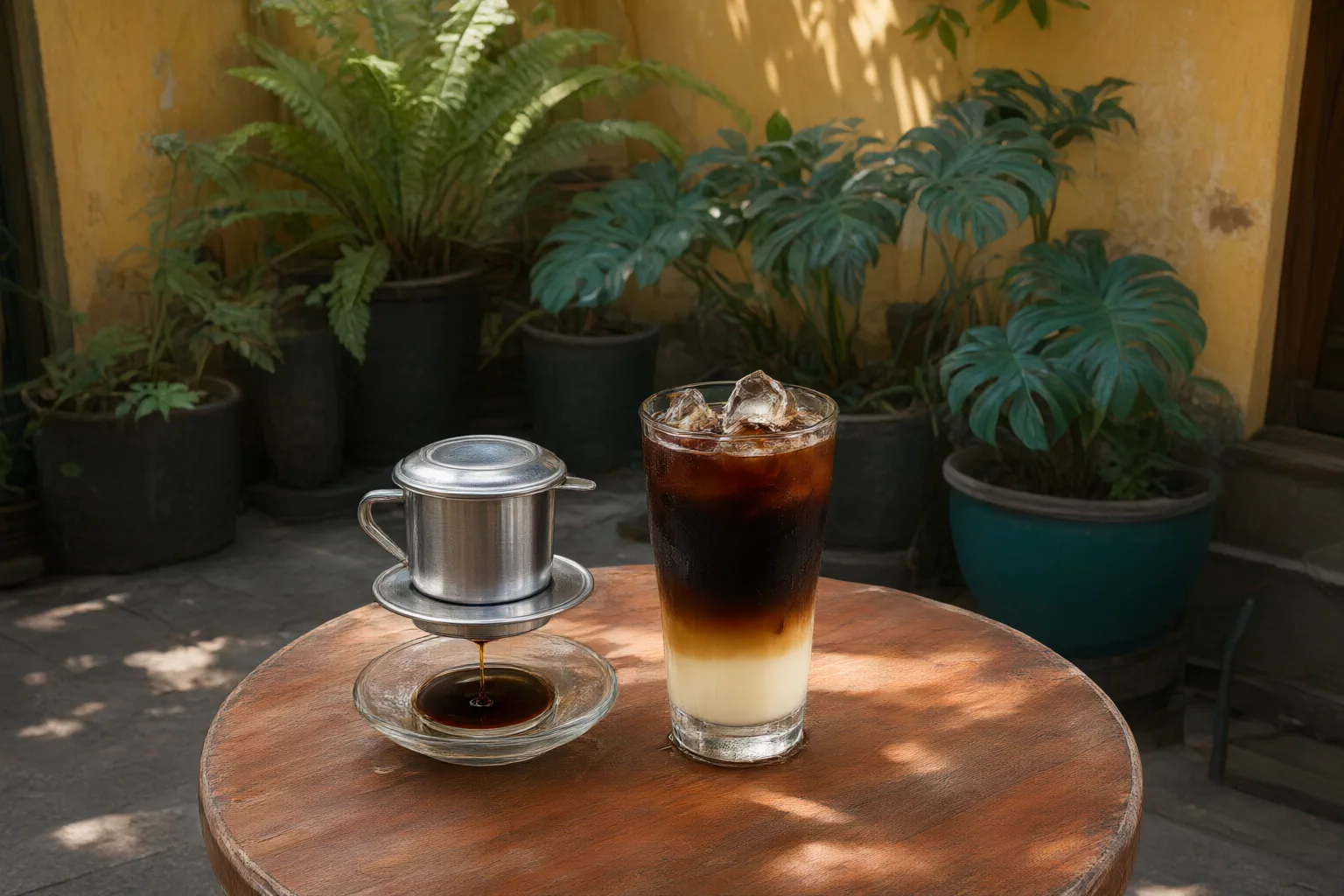
Vietnam’s coffee culture ranges from slow-dripped phin coffee and familiar iced styles to Hanoi egg coffee, Hue salt coffee, Central Highlands farm connections, and contemporary city cafés. Learning a few drink names and matching them to regional experiences can make ordering and itinerary planning easier.
Vietnamese Coffee Basics: The Phin and Common Drink Styles
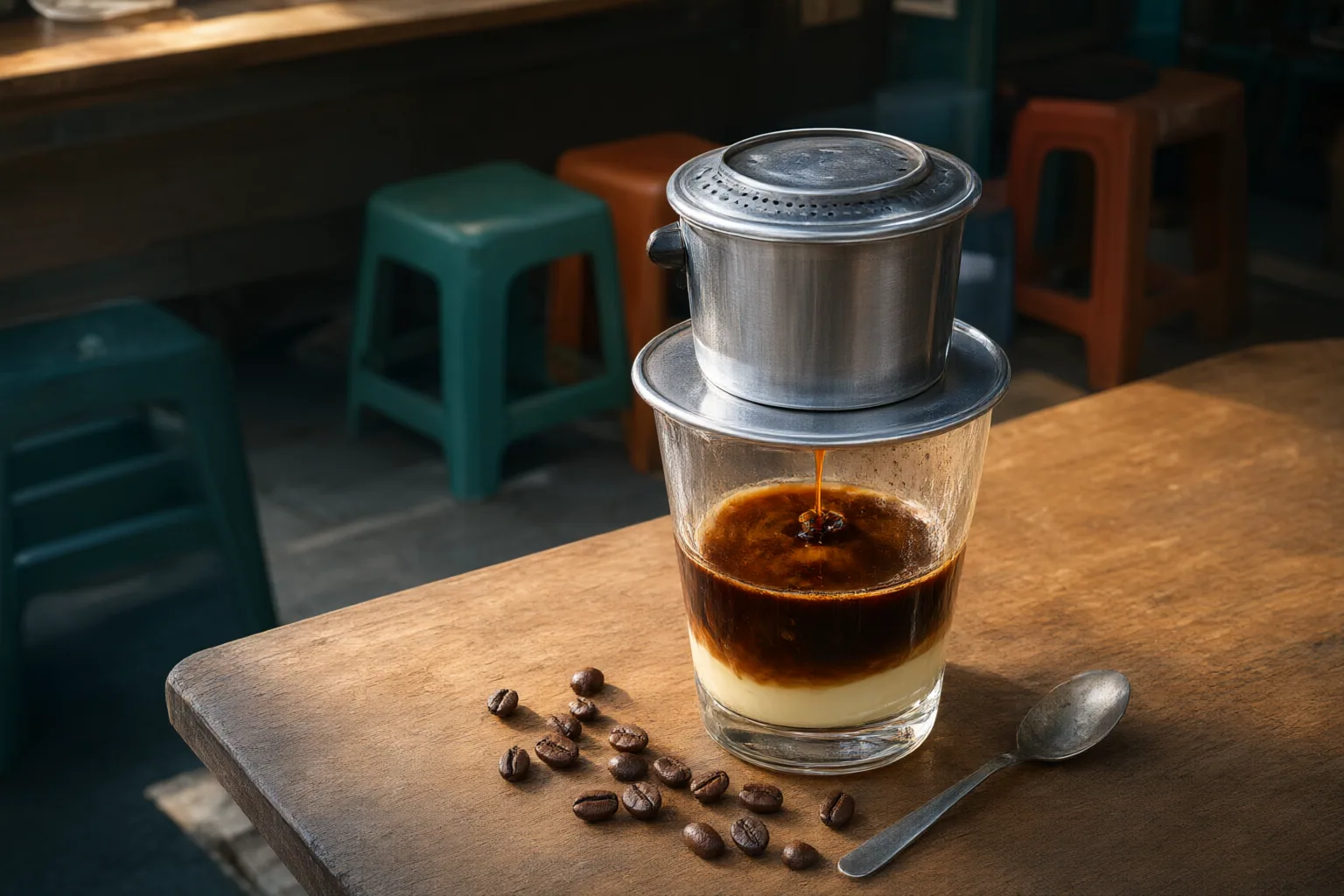
The phin is a traditional slow-drip filter closely associated with Vietnam’s coffee ritual. For travelers, it is both a brewing method to recognize in cafés and a compact way to reproduce a single-cup version of that ritual after returning home.
Several drink names provide a useful starting vocabulary. Cà phê đá refers to iced coffee, while cà phê sữa đá identifies iced coffee with sweet milk. Cà phê sữa chua is yoghurt coffee, and cà phê trứng is egg coffee. Travelers may also encounter coconut coffee and salt coffee, although styles should not be assumed to be equally prominent in every destination.
A practical approach is to save the Vietnamese names that interest you before visiting a café. First decide whether you want black coffee, a sweet-milk drink, or one of the more distinctive yoghurt, egg, coconut, or salt styles. Then look for an experience connected to the place you are visiting rather than treating Vietnamese coffee as a single uniform category.
What to Try: From Iced Coffee to Hanoi Egg Coffee
Start with cà phê đá if you want to explore the black iced style named in the research. Choose cà phê sữa đá when you want the sweet-milk version. These names make the basic distinction clear before you consider drinks with a more unusual format.
Cà phê sữa chua adds yoghurt to the range of named Vietnamese coffee styles. Egg coffee, or cà phê trứng, has a particularly clear regional identity: it is described as a Hanoi-born drink made with egg yolk, sugar, and condensed milk layered over strong coffee. That combination distinguishes it from both black iced coffee and coffee with sweet milk alone.
Coconut and salt coffee belong on a traveler’s list of styles to recognize, but geography matters. Salt coffee is specifically associated with Hue in the supplied research, while Hanoi provides the documented connection for egg coffee. Instead of expecting every café to represent the whole country, use these regional links to prioritize what to seek in each stop. Save the exact name of a preferred drink so that the distinction between iced, sweet-milk, yoghurt, and egg styles remains clear when ordering.
Where to Find Distinct Local Coffee Experiences
Hanoi is the natural destination to connect with cà phê trứng because egg coffee is described as having originated there. Travelers interested in a drink with a documented city identity can make it a specific part of a Hanoi itinerary rather than simply adding an unspecified café visit.
Da Lat offers a different perspective. The Central Highlands destination is presented as a place known for coffee farms and high-quality beans, making it relevant to travelers more interested in cultivation and production connections. The souvenir guidance also points travelers toward Da Lat or Buon Ma Thuot when looking for beans to take home.
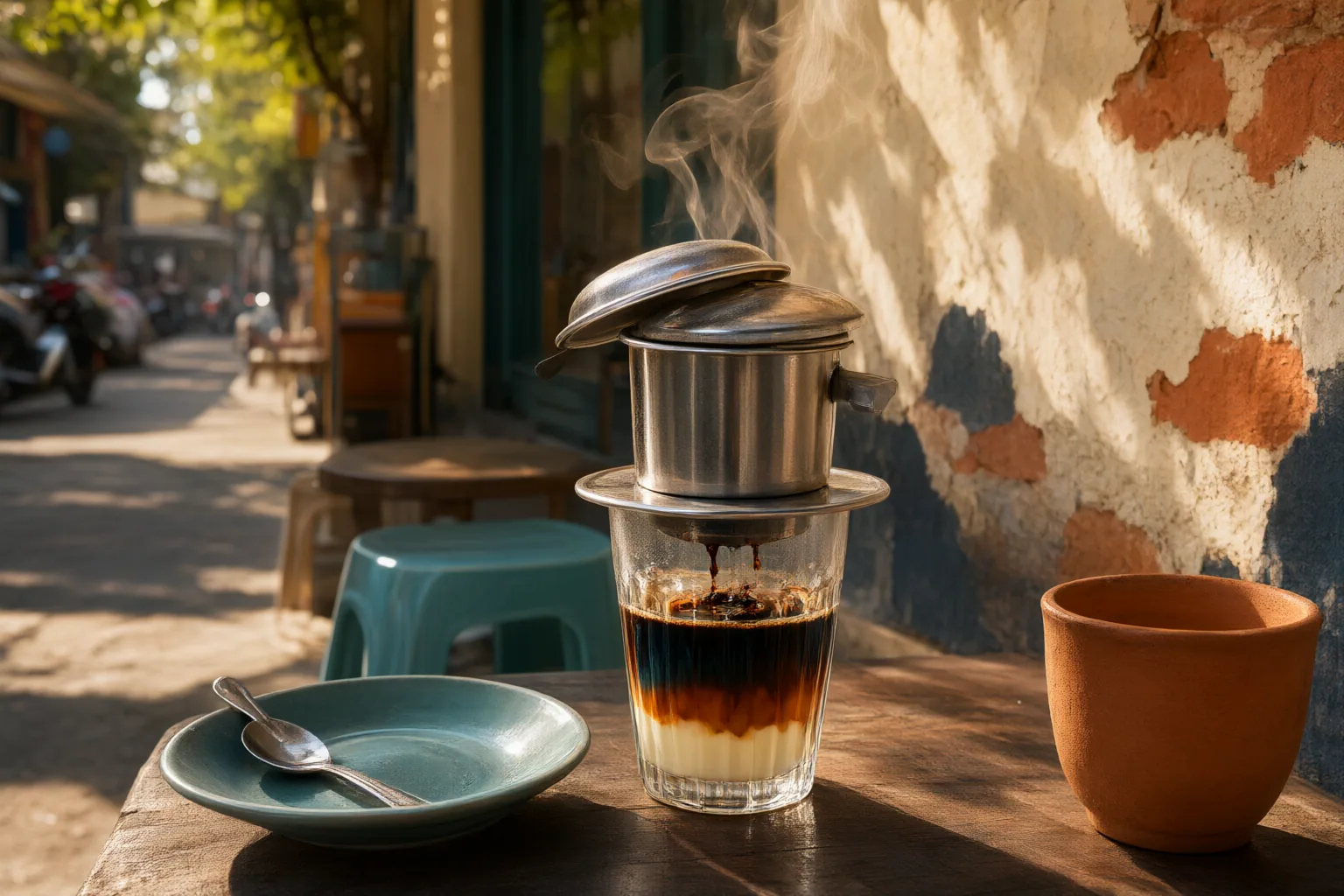
In Ho Chi Minh City, the research highlights a contrast between cloth-filter coffee stalls and modern cafés. That range makes the city suitable for travelers who want to compare an established street-level format with contemporary café settings. It also shows why choosing a type of experience can be more useful than searching for one supposedly definitive venue.
Hue supplies another focused regional link through salt coffee. Taken together, the destinations support different priorities: Hanoi for egg coffee, Da Lat for farms and beans, Ho Chi Minh City for cloth-filter stalls alongside modern cafés, and Hue for salt coffee. Select the connection that best fits your route and interests; the evidence does not require every trip to include all four.
Conclusion
A manageable Vietnam coffee plan begins with a few drink names and one destination-linked experience. Distinguish cà phê đá from cà phê sữa đá, note yoghurt or egg coffee if either appeals, and connect Hanoi, Da Lat, Ho Chi Minh City, or Hue with the documented experience found there.
For a practical take-home option, look for local beans in Da Lat or Buon Ma Thuot and consider pairing them with a portable single-cup phin. Choose one regional coffee experience for your itinerary now, then save the Vietnamese name of the drink you most want to order.
Disclosures and limitations
- This article was prepared with AI assistance using only the supplied research package; material claims are attributed through the listed source IDs.
- The take-home coffee suggestions are editorial guidance based on the supplied sources, and no affiliate relationship was declared in the provided materials.
Related reading
- Food & Drink Guides for Curious Travelers
- What to Eat in Vietnam on National Day: A Practical Guide for Travelers
Sources
- Vietnam’s Coffee Culture Brews a Global Buzz — Vietnam Tourism
- Cà Phê Cổ | Wolt | Doručení | Brno — wolt.com
- 12 traditional Vietnamese souvenirs — Vietnam Tourism