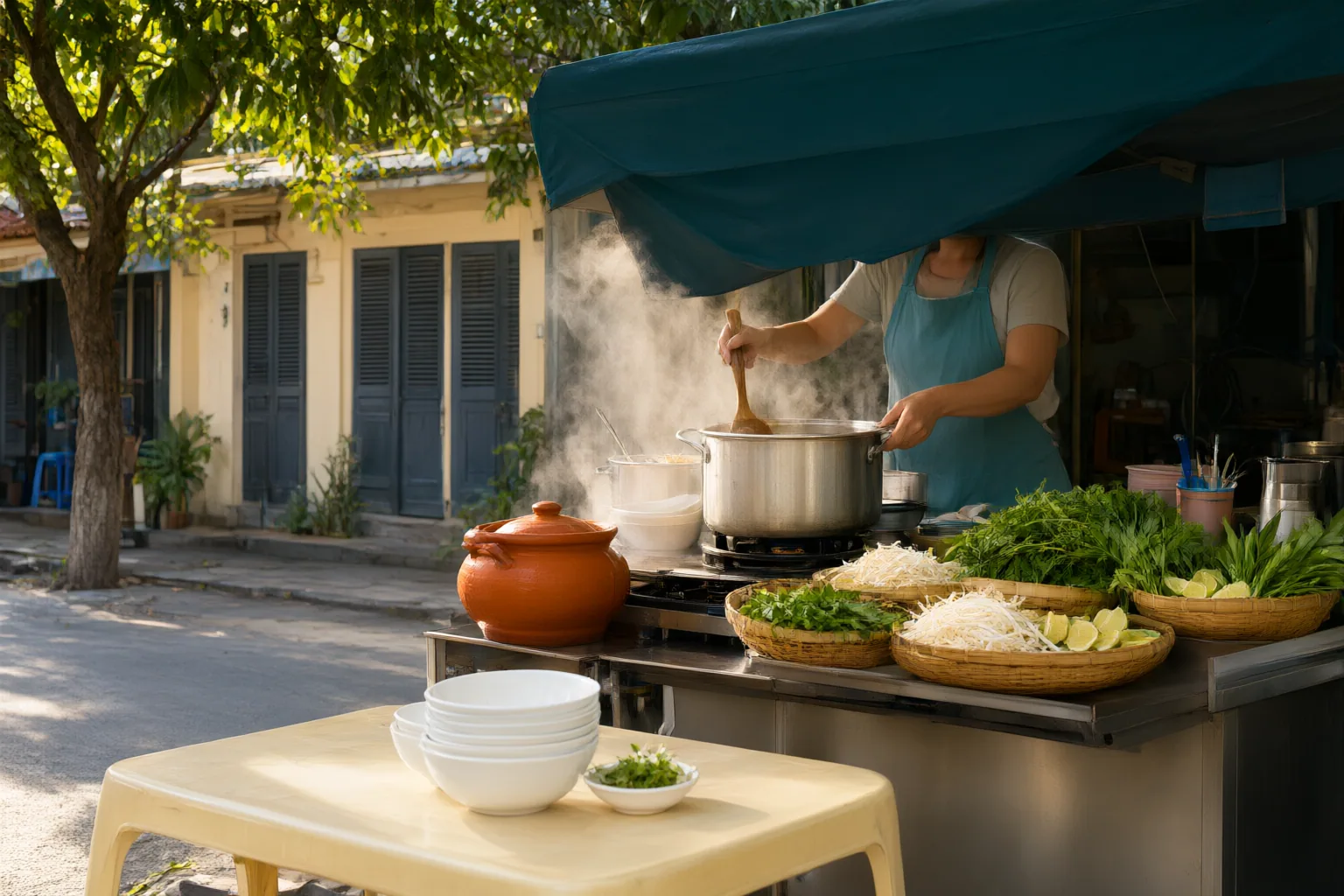
Evaluate a street-food stall by combining visible clues: steady turnover, food cooked to order and served hot, careful handling, fresh-looking ingredients, clean tableware, and identifiable tubular ice. No single sign proves that a stall is safe, so reconsider ordering when several conditions are unclear or concerning.
Start With Turnover, Then Verify the Basics
Begin by watching how quickly customers, ingredients, and finished dishes move through the stall. Vietnam-focused travel guides recommend favoring busy vendors with rapid turnover because ingredients and prepared food are less likely to remain unused for long periods. A short menu centered on one or a few frequently ordered dishes can reinforce that signal, since the relevant ingredients may cycle through more quickly.
Treat both clues as a first filter, not proof of hygiene. A queue does not reveal the stall’s water source, storage history, or conditions outside the customer’s view. Spend another minute observing whether food is prepared as orders arrive, whether the work area and utensils appear orderly, and whether the vendor’s handling practices separate money from ready-to-eat food. Popularity is useful only when the other visible conditions also look acceptable.
Watch How the Food Is Cooked and Handled
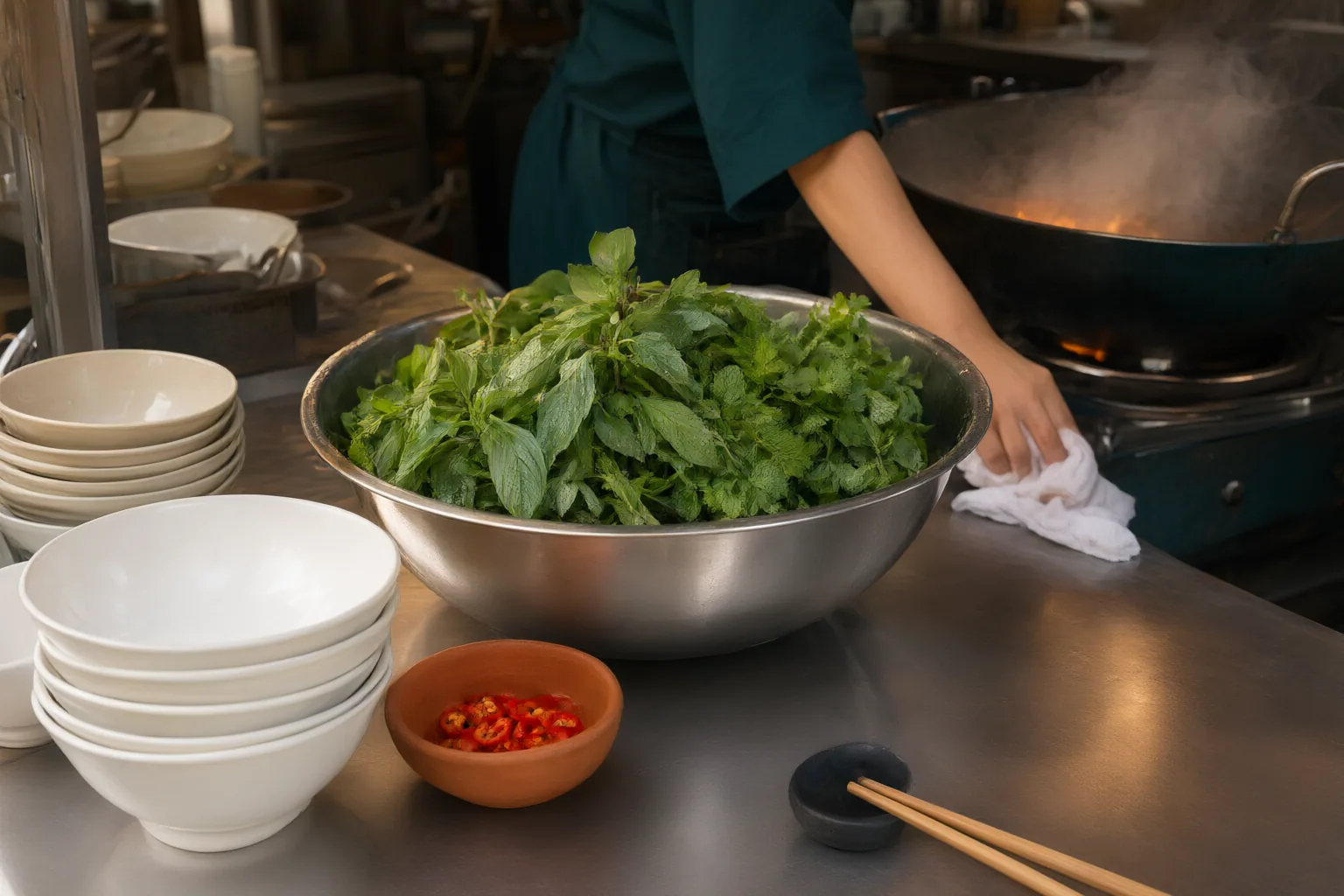
Favor dishes cooked to order and served visibly hot. The reviewed guides consistently prefer this over food that has been sitting lukewarm or was assembled at room temperature well before purchase. Watch a few orders from start to finish: the process should make it possible to see that cooking follows the order and that the finished food goes promptly to the customer.
Next, observe contact between hands, cash, utensils, and ready-to-eat ingredients. A warning sign is a vendor handling money and then touching finished food with the same unwashed hand. Look for separate tongs or utensils, gloves, or paper used during assembly. These measures are more informative when they are used consistently rather than only for part of the process.
Preparation surfaces also deserve attention. Check whether cooked food is kept apart from ingredients still awaiting cooking and whether utensils used for assembly appear clean. None of these observations exposes every behind-the-scenes condition, but together they provide a more useful assessment than relying on the queue alone.
Check Ingredients, Tableware, and Ice
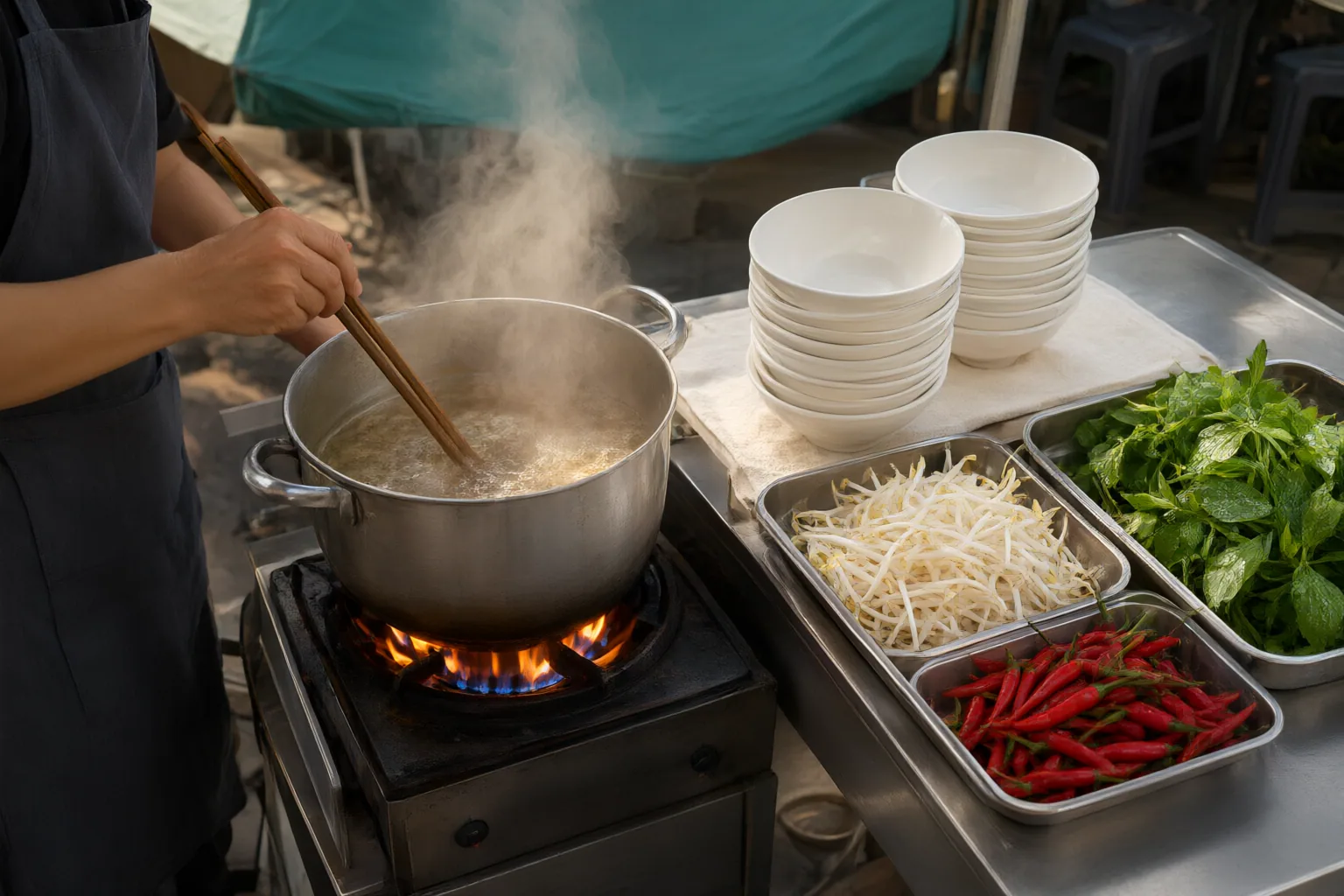
Inspect displayed ingredients before ordering. Vegetables should look fresh. Meat and seafood should be used quickly and kept on ice or under refrigeration between uses, according to VietnamKB. Raw greens, lightly cooked meat, shellfish, and cold items prepared well in advance warrant more caution because their earlier handling may not be visible.
If reusable dishes are provided, look at the plates, bowls, and utensils reaching customers. Visibly greasy tableware is a reason to reconsider. Also check the washing setup when it is visible: water that appears heavily used and murky is an unfavorable sign.
For drinks, the guides distinguish uniform tubular ice with a central hole from irregular chipped or block ice. They describe the uniform tubular form as commercially produced. Shape is still only an observable clue, so decline ice whenever its form or source remains uncertain.
Evaluate these details together. Fresh-looking vegetables do not offset questionable tableware, and recognizable ice does not compensate for food sitting at room temperature. When several elements cannot be assessed, a fully cooked dish served hot may be the more cautious choice—or you can choose another stall.
Conclusion
Use a cluster of visible signals rather than searching for one decisive clue. Stronger combinations include rapid turnover, cooking that begins after an order, food served visibly hot, separation between cash handling and ready-to-eat food, fresh-looking produce, chilled meat or seafood between uses, and clean tableware. Give extra scrutiny to raw greens, pre-prepared cold items, undercooked meat, and shellfish.
These checks come from travel guides and are practical heuristics, not guarantees. Travelers usually cannot inspect a stall’s kitchen, water source, storage records, or formal inspection information, so some relevant conditions remain unknown even when the visible setup looks orderly.
Before ordering, pause and run through turnover, heat, handling, ingredients, utensils, and ice. If several signals are unclear or concerning, decline the higher-caution item or walk to another stall.
Disclosures and limitations
- This article was prepared with AI assistance from the supplied Vietnam-focused travel-guide sources. Its checks are practical heuristics rather than inspection findings or guarantees of safety. No products or affiliate offers are included.
Related reading
- Food & Drink Guides for Curious Travelers
- Choosing Food Experiences for Children in Vietnam: A Practical Family Guide
- How to Identify a Worthwhile Street-Food Tour in Vietnam
Sources
- Is Vietnam Street Food Safe? An Honest 2026 Guide | Day Trips Vietnam — Day Trips Vietnam
- Food Stalls Uncovered: A Complete Guide to Street Eats, Markets, and Event Favorites — Grivally.com
- Street-food hygiene rules — how to choose where to eat — vietnamkb.com
- Vietnamese Street Food Safety: How to Eat Everywhere Without Getting Sick — vietnamtourism.com
- 100 Food Stall Ideas for Events, Markets & Festivals | BusinessNES — BusinessNES