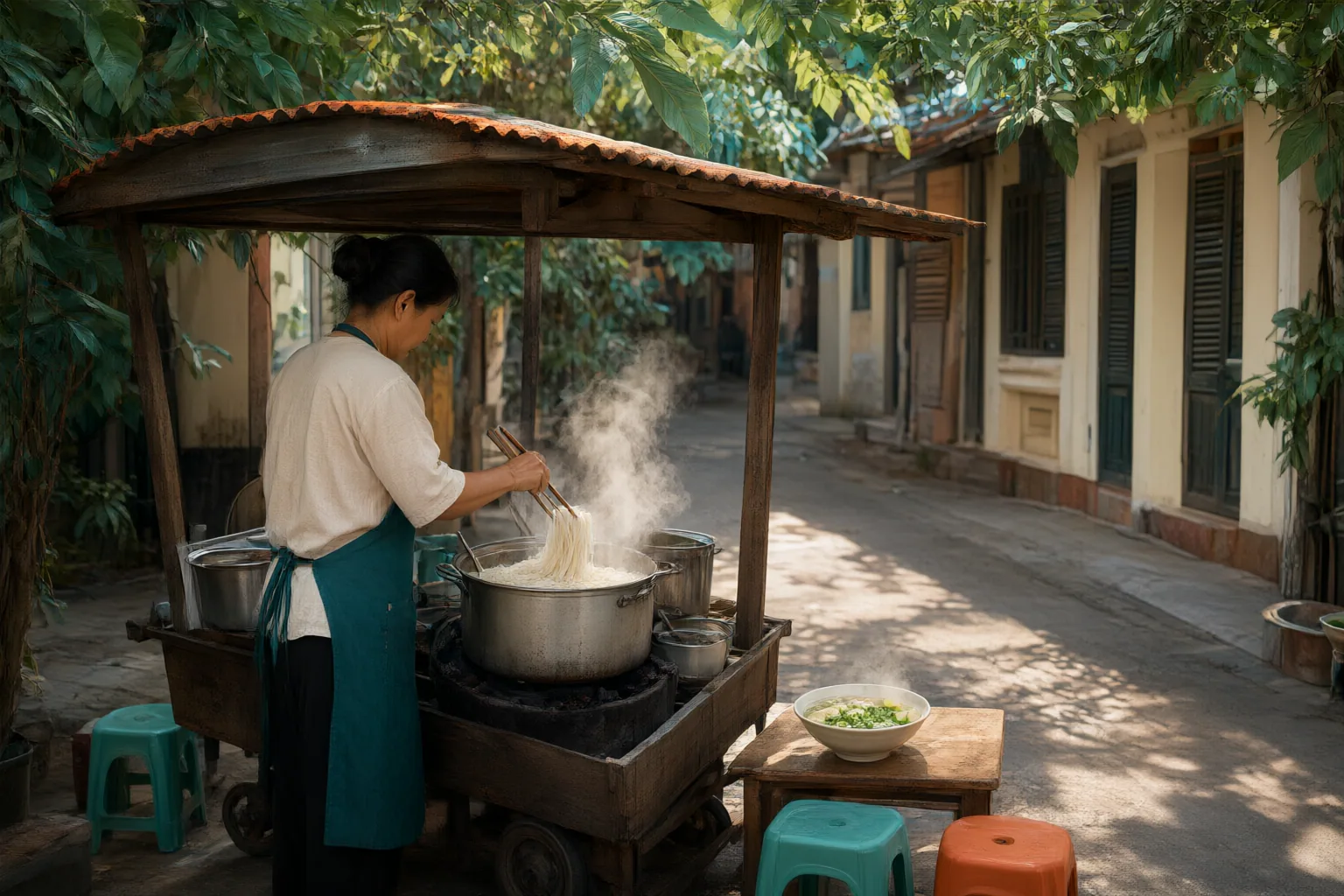
A worthwhile Vietnam street-food tour should match your destination and preferred pace while providing a specific, logically organized itinerary—not merely a list of dishes. Before booking, look for meaningful cultural guidance and clear answers about dietary support, food handling, group size, transport, inclusions, and price.
Start With the Destination and Tour Format
Begin by deciding what kind of regional experience you want. The available sources associate Hanoi with northern dishes and Old Quarter street food, Hoi An with local specialties and hands-on cooking, Hue with imperial-influenced dishes and central spices, and Ho Chi Minh City with varied regional influences and late-night dining. A tour should therefore explain why its dishes and stops belong to the city or neighborhood rather than presenting “Vietnamese food” as a single uniform cuisine.
Next, match the format to your pace, mobility, and interests. Options described in the research include neighborhood walks, market visits, cooking activities, and outings by scooter, Vespa, or Jeep, as well as private and small-group experiences. Walking can provide close contact with a compact district: Hanoi’s Old Quarter, for example, allows movement among noodle shops, snack stalls, and cafés without lengthy transfers. Motorized formats cover ground differently, while market or cooking components may suit travelers interested in ingredients and preparation.
Ask how far the route travels, how much walking or riding it involves, and whether the pace works for everyone in your party. Families, seniors, and travelers with differing activity preferences should treat transport and group size as core selection criteria, not minor details.
Check Whether the Itinerary Offers More Than Tastings
A strong description should identify the neighborhood, types of stops, route structure, and what the guide will explain. Guided food experiences can add value by connecting dishes with regional culture, ingredients, preparation, neighborhood life, and dining customs. Guides may also help travelers understand unfamiliar menus, use condiments, order food, and move through several tastings along a logical route.
Be cautious with vague promises of numerous “authentic” dishes when the operator does not explain where the tour goes or how stops relate to one another. Ask whether the guide discusses how a dish is made, why it matters locally, and how residents typically eat it. This context helps distinguish an interpreted neighborhood experience from an unconnected sequence of samples.
Specificity does not guarantee quality, but it makes a tour easier to assess. One captured listing, for example, describes a three-hour, small-group experience in Hanoi’s Old Quarter with market stops, egg coffee, and Train Street photographs. That listing is not a benchmark for the wider market; it simply illustrates the useful level of detail a traveler can request. Confirm whether advertised stops are fixed or illustrative and whether substitutions may occur.
Confirm Safety, Dietary Support, Comfort, and Cost Details
Contact the operator before paying and request concrete answers rather than relying on broad assurances. A practical checklist includes:
- Who leads the tour, and what food and cultural guidance is provided?
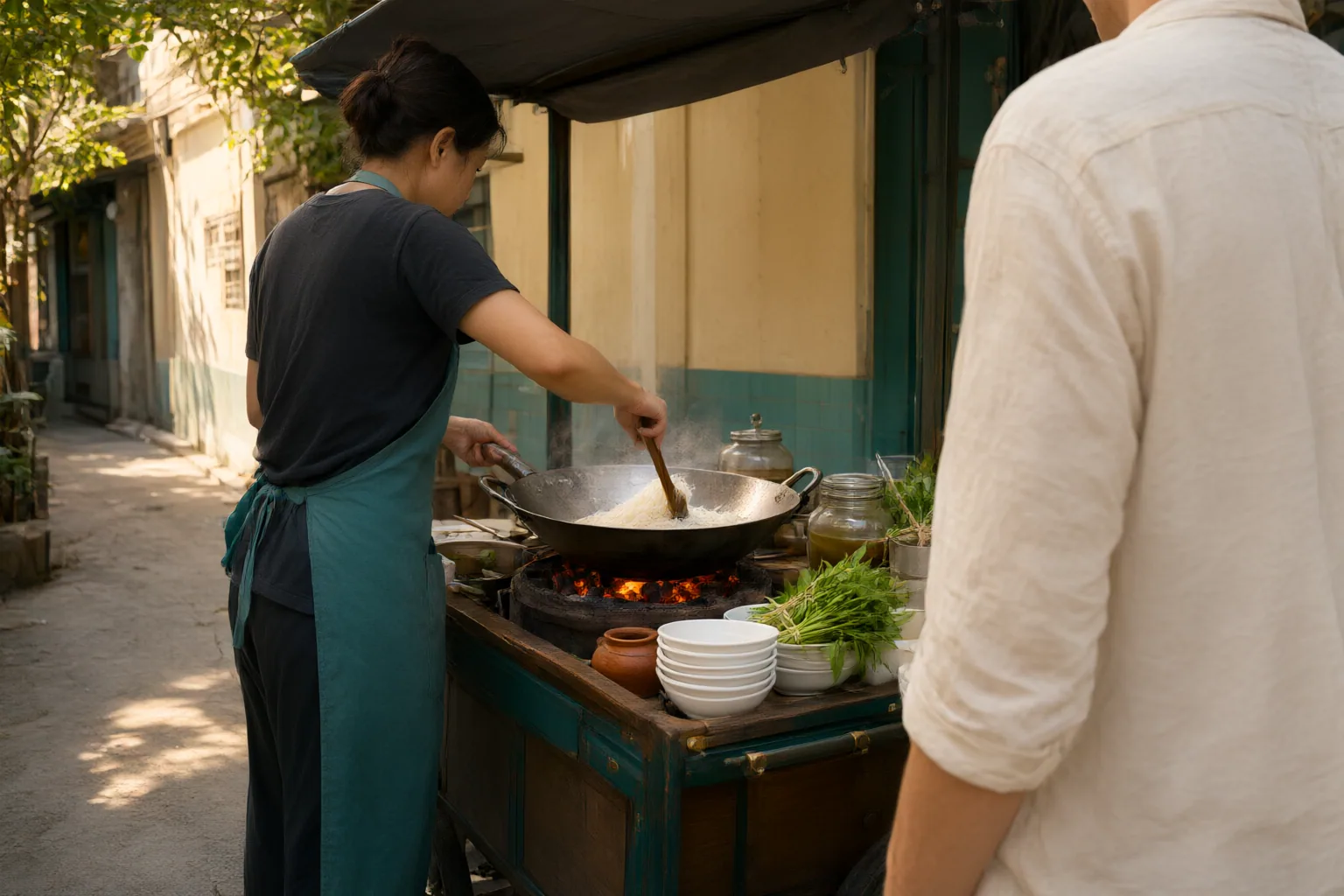
- How are stalls selected? Are busy vendors with high turnover favored, and is food cooked visibly to order?
- Can the route accommodate allergies, vegetarian requirements, pork-free preferences, or spice limits? Will the guide explain ingredients before anything is served?
- What are the maximum group size, walking distance, pace, duration, and transport arrangements?
- Which tastings, drinks, activities, entrance costs, and transfers are included?
- Is the stated price tied to the date, group size, itinerary, or private-versus-group format?
The research recommends busy stalls with high turnover and visibly cooked-to-order food as selection signals. It also suggests bottled water and carrying personal hand sanitizer or tissues as traveler precautions. These measures do not eliminate risk, so ask how the operator handles stall choice and dietary communication.
Comfort matters as much as the menu. Check whether a walking route includes extended distances and whether a motorized outing fits your confidence and activity preferences. If someone in your group has mobility needs, obtain route and pace details in advance.
Finally, compare like with like. Prices can vary with group size, travel date, itinerary, and private or group arrangements. Because availability, routes, inclusions, and prices may change, reconfirm the current details directly with the operator before booking.
Conclusion
The most useful tour description places its food in a clear geographic context, lays out a specific and logical route, and explains what travelers will learn about ingredients, preparation, and dining customs. The format, pace, distance, and group size should fit your party, while the operator should respond directly to questions about dietary needs, stall selection, inclusions, and pricing.
Create a shortlist of tours suited to your destination, then send each operator the same questions about route, inclusions, group size, dietary support, food-handling practices, and current price. Compare the answers and choose the option that best matches your interests and comfort needs.
Disclosures and limitations
- This article was prepared with AI assistance from the supplied research package. Its sources are predominantly travel-company, tour-operator, or commercial listing pages, so claims about quality, authenticity, safety, and vendor reliability are not independently verified.
- No structured tour products or affiliate offers were provided, and this article does not endorse a specific operator. If commercial or affiliate links are added later, that relationship should be disclosed clearly; travelers should confirm current itineraries, availability, inclusions, and prices directly before booking.
Related reading
- Food & Drink Guides for Curious Travelers
- How to Turn a Broad Choice into a Defensible Shortlist for a Vietnam Trip
- A Buyer’s Guide to Evidence, Uncertainty, and Practical Next Steps for Food Travel in Vietnam
Sources
- 10 Best Street Food Tours in Vietnam 2026 | Local Vietnam — Local Vietnam
- Vietnam Street Food: A Local’s Guide to Eating Like You Belong – Asia Pioneer Travel — Asia Pioneer Travel
- 15 Best Street Food & Food Tours In Vietnam – Vietnam Discoveries — vietnamdiscoveries.com
- Vietnam Food Tour: A Complete Guide to Eating Your Way Across Vietnam — asianwaytravel.com
- Vietnam Street Food Tour Packages You Shouldn’t Miss — FTrip Asia
- Top 10 Vietnam Street Food Tours | Best Local Food — asiaeyestravel.com
- Food Tour Vietnam Hanoi: The Ultimate Street Food Guide — Vietnam Street Food