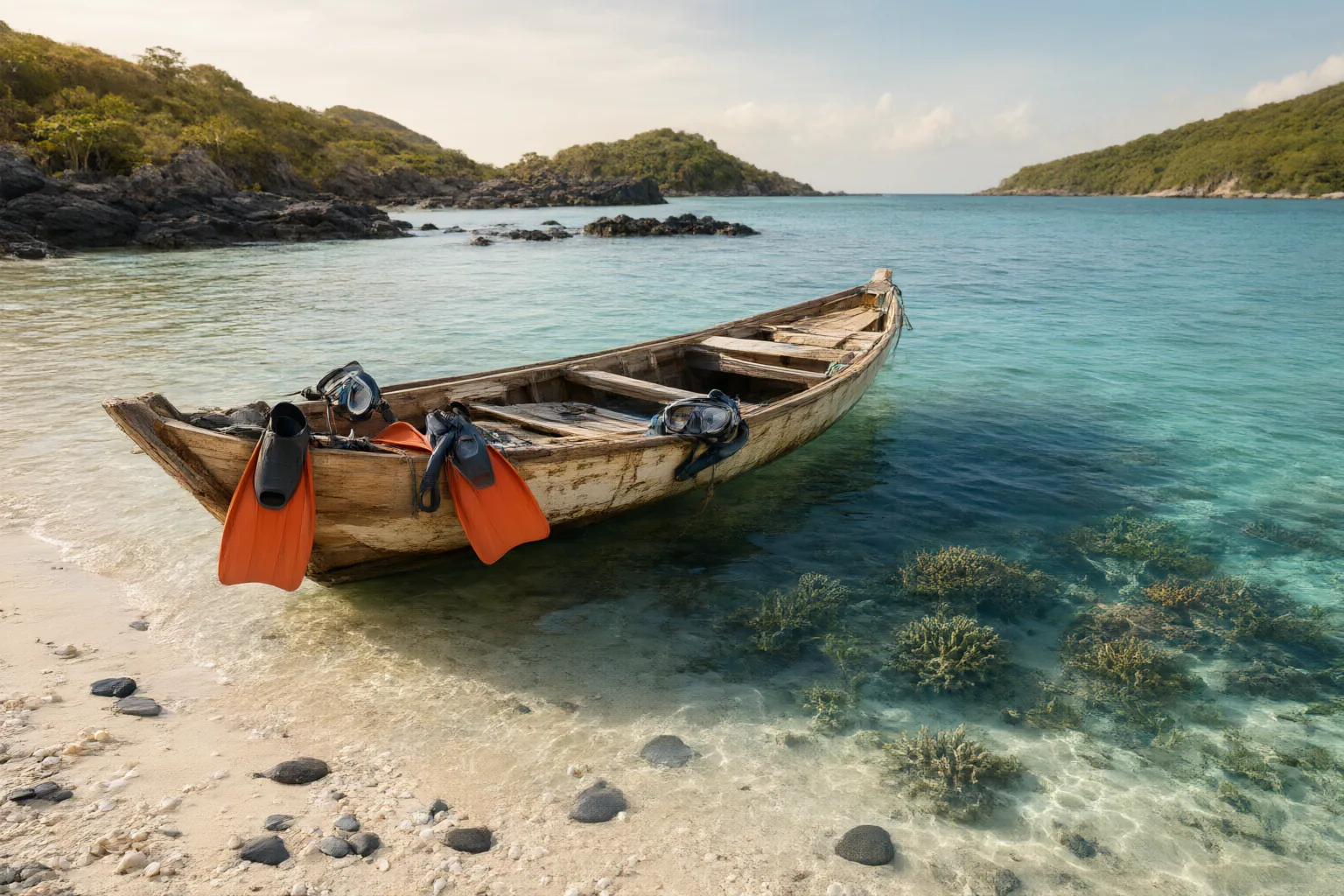
Choose a snorkeling experience on Vietnam’s coast by checking recent weather and water conditions first, then matching the planned sites to your swimming confidence. Access, boat crowds, departure time, flotation support, supervision, and control over the itinerary should also shape your decision.
Start With Conditions, Not Destination Reputation
A well-known destination does not guarantee clear, calm water on your travel date. Conditions vary by region and season, while recent rain and strong currents can quickly reduce visibility. Around Nha Trang, reported visibility typically ranges from 8 to 15 meters depending on the season and recent weather, illustrating why a destination name alone is not enough.
The supplied sources do not fully agree on the best seasonal windows for Nha Trang and Vietnam’s coastal regions. Treat broad calendars as planning clues rather than firm promises. The Cham Islands are a more specific case: one source describes snorkeling operations there as running from April through August. Even within that period, current sea and weather conditions still need to be checked.
Before committing, ask what conditions have been like recently at the actual sites on the itinerary. Request current information about visibility, currents, sea state, and any weather-related changes. The supplied articles are not live marine forecasts or operator safety assessments, so their general guidance cannot confirm conditions for a particular departure.
Match the Site to Your Swimming Confidence
Judge the planned snorkeling sites, not merely the coastal base. This Is Vietnam identifies the An Thoi Archipelago near Phu Quoc, Hon Mun near Nha Trang, and the Cham Islands near Hoi An as major options, but individual sites can differ in depth, currents, and underwater terrain.
At selected An Thoi sites, coral gardens are reported to lie roughly two to five meters below the surface. That comparatively shallow viewing depth may appeal to travelers who prefer coral closer to the surface, but depth alone is not a safety guarantee. Less-confident swimmers should still ask whether the route includes drop-offs or current-affected water and whether they can remain near the boat or another supported area.
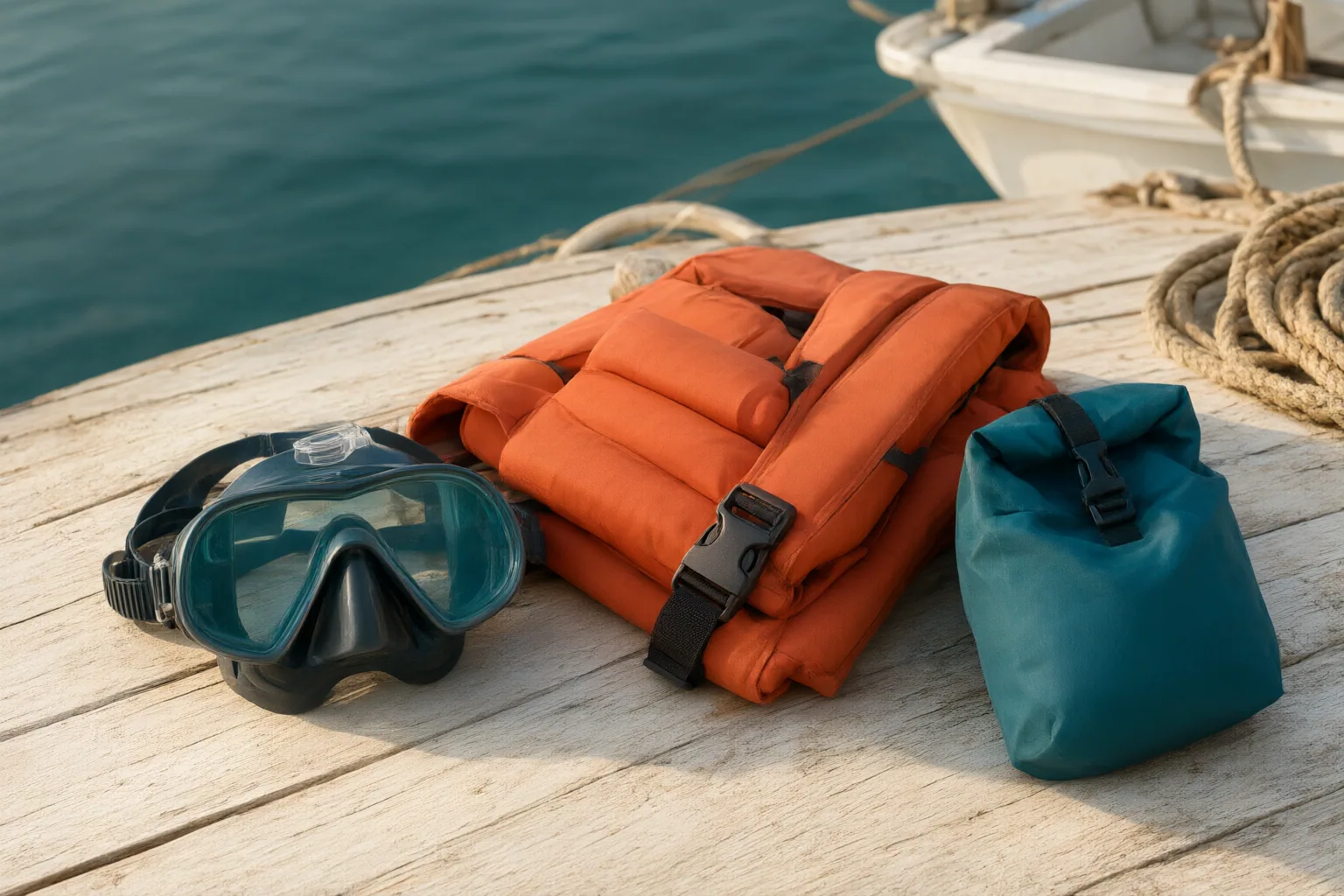
Tell the operator honestly about your swimming ability and physical needs before booking. Ask what supervision and flotation support are available, how guests enter and leave the water, and whether an unsuitable site can be changed. These details are especially important because the supplied sources do not verify the safety practices or requirements of any current operator.
Compare Access, Crowds, and Trip Format
Practical tradeoffs can narrow the choice. Phu Quoc offers access to the An Thoi sites, Nha Trang is associated with Hon Mun, and the Cham Islands are reached from the Hoi An area. Con Dao is described as more isolated and requiring a ferry or flight, which can add both travel time and cost while also limiting visitor numbers. Travelers with a tight schedule or budget should account for that extra access rather than comparing only the snorkeling itself.
Timing and boat format matter as well. One source says outings between 7 and 10 AM typically encounter fewer boats and better visibility than later departures. Early timing is therefore worth asking about, although it cannot guarantee either quiet water or clear conditions on a particular day.
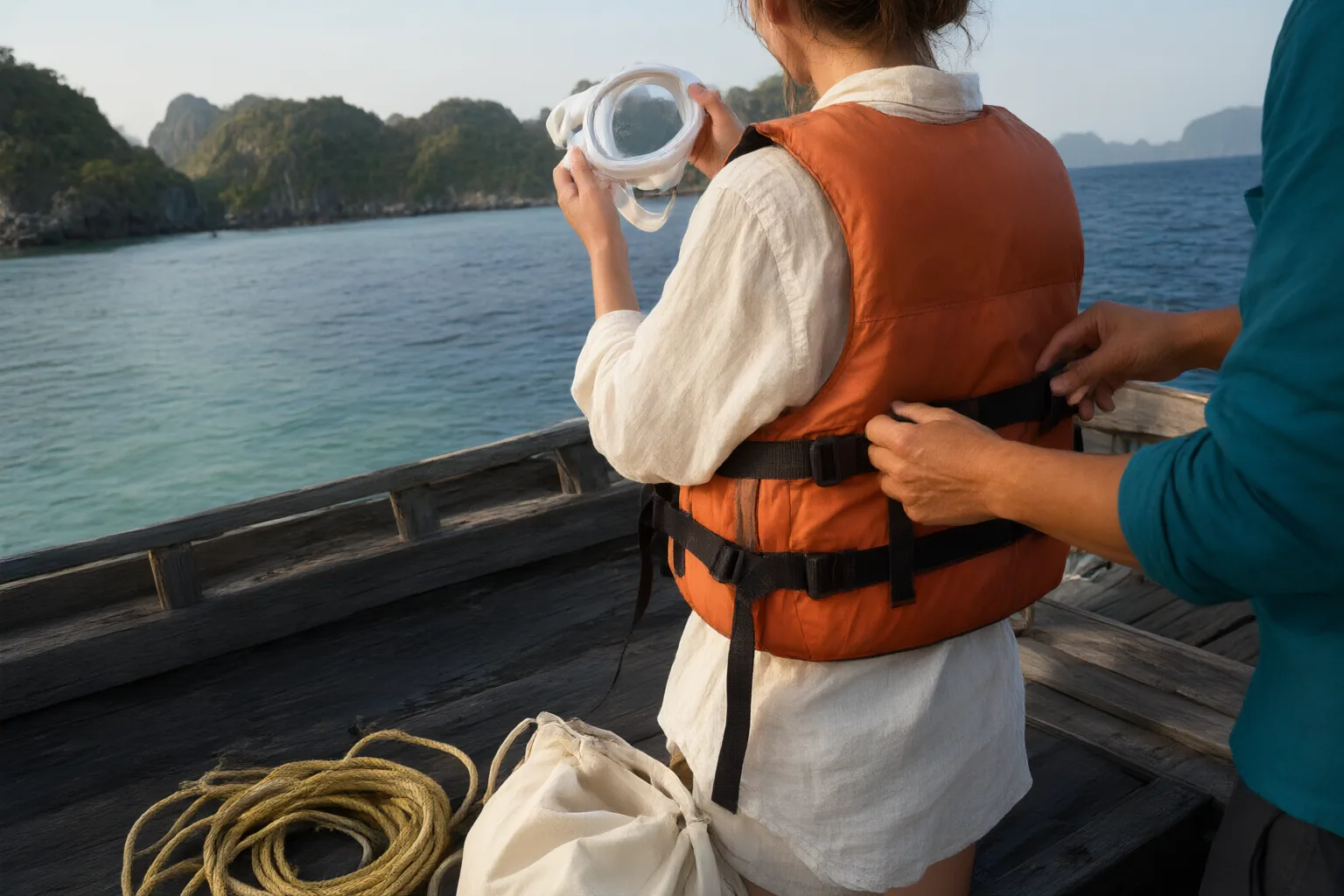
Standard group trips generally use larger boats and may become crowded at peak times. Private charters are described as providing greater control over the itinerary and choice of snorkeling sites. When comparing formats, ask for the expected group size, departure time, planned locations, travel time on the boat, and flexibility to change sites. Choose the format whose access demands and level of itinerary control fit your time, budget, and comfort in the water.
Conclusion
The best fit is the trip whose current conditions, sites, access, and format match your abilities—not simply the destination with the strongest reputation. Start with the date and region, check recent weather and water conditions, and compare the planned site characteristics with your swimming confidence. Then weigh transport demands, group size, departure time, and flexibility.
Once in the water, protect the reef by remaining horizontal, avoiding standing on coral, and never pushing off the seafloor with your feet. Before booking, contact the operator with a concrete checklist: ask about current visibility, currents, sea state, supervision, flotation support, group size, departure time, and whether the intended sites suit your swimming ability.
Disclosures and limitations
- This article was prepared with AI assistance using only the supplied publisher-source research. It does not reflect personal testing, an operator assessment, or a live marine forecast.
- No products or operators are recommended here. Current conditions, safety practices, supervision, flotation support, and operator requirements remain unverified.
Related reading
- Travel Ideas for Meaningful Trips
- Before You Go: What to Expect at an Early-Morning Floating Market in Southern Vietnam
- Rail Transport in Vietnam: When Train Travel Fits an Independent Trip
Sources
- Vietnam Snorkeling Guide: Best Reefs & Spots 2026 — This Is Vietnam
- Snorkeling Vietnam's Coast: What the Water Actually Reveals — Coral Reef Science
- Snorkeling Los Angeles — Somewhere Good