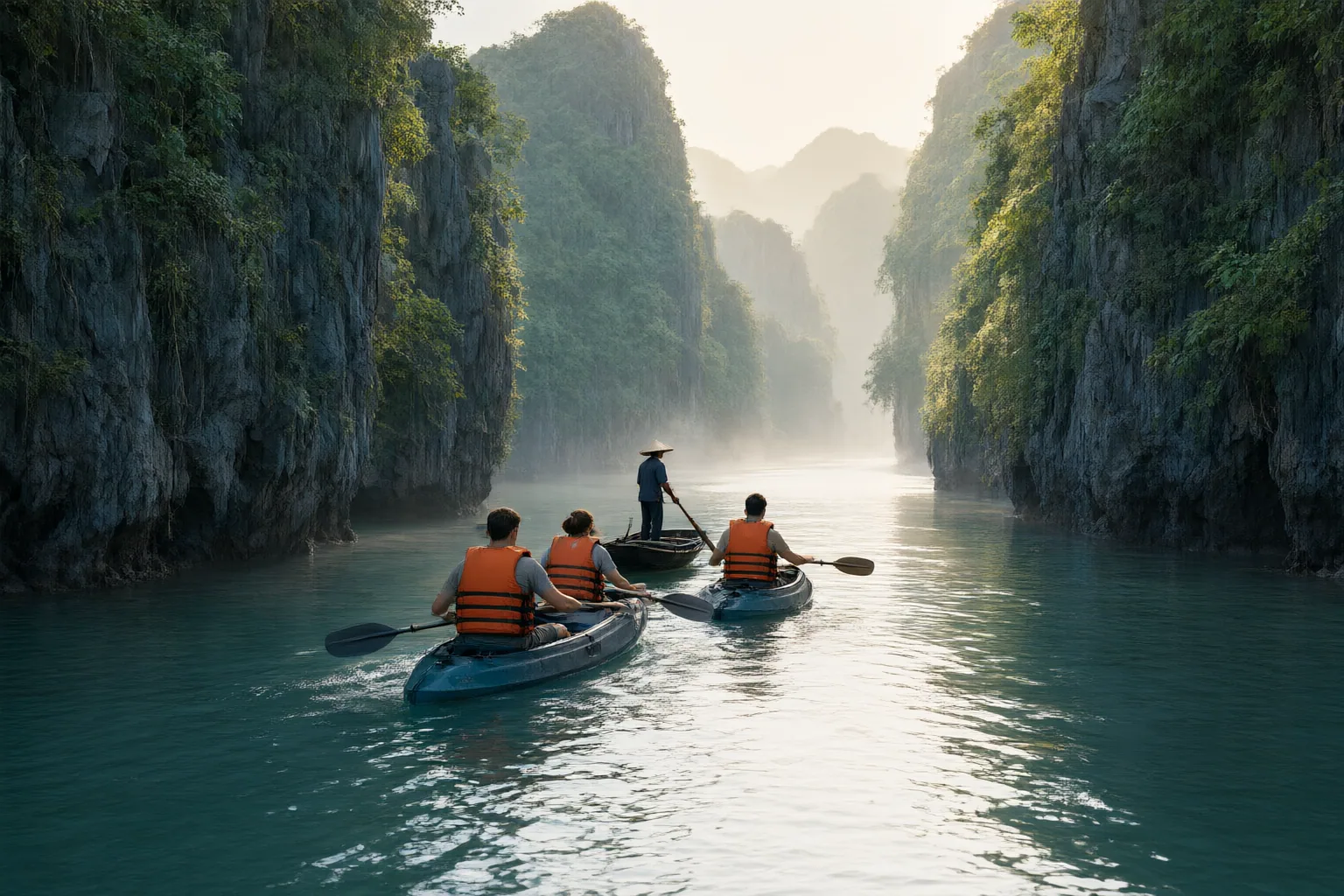
Evaluate a guided kayaking trip by matching expected conditions to your ability, confirming which landscape features should be accessible, and separating the advertised duration from actual guided paddling time. Before booking in Vietnam, ask the operator for current, route-specific answers because the available evidence establishes general comparison criteria, not local conditions or safety arrangements.
Start With Skill Level, Conditions and Instruction
Begin with two questions: What conditions are expected, and are they appropriate for your experience? One source advises paddlers to check the weather and select conditions suited to their skill level. It also notes that a guided trip can introduce beginners to safety and paddling skills. A beginner should therefore ask what instruction is provided, when it occurs and what experience the operator expects participants to have.
Landscape labels alone do not establish what the outing will involve. The source describes kayaking environments ranging from flat water and ocean to caves and mangrove swamps. It also reports that access to caves at one location depends on suitable weather. When considering limestone formations, caves or mangroves in Vietnam, ask which features the planned route normally reaches and whether expected conditions could change that access.
These sources do not establish conditions, routes or safety arrangements for any Vietnamese trip. Obtain current information directly from the operator and assess the answer against your own ability rather than assuming that “guided” or “beginner-friendly” guarantees a particular experience.
Check What the Itinerary Actually Includes
Break each itinerary into separate components before comparing price or total duration. Ask the operator to list transfers, the briefing or instruction, guided paddling time, meals, maps, walking and any segment completed without a guide. This reveals how much of the advertised day is actually spent kayaking.
A documented full-day itinerary in New Zealand shows why this matters. It combined a water-taxi transfer, a short set of instructions, about two and a half hours of guided kayaking, a packed lunch, a map and an unguided coastal walk. The example does not describe a Vietnamese tour, but it demonstrates that “full day” can refer to the whole sequence rather than a full day on the water.
Request a simple timetable for the trip you are considering. Confirm when the transfer begins, when paddling starts and ends, which portions have a guide, and what happens after the kayaking segment. If the package includes a meal, map or walking section, establish whether each item is provided and included. Compare trips using actual guided paddling time and the complete set of components, not the headline duration alone.
Compare Trip Length, Guidance and Landscape Priorities
Decide first whether your priority is time on the water, a mixed day of activities or a longer itinerary. One source reports that half-day, full-day and multi-day options, as well as guided and unguided formats, were available at its New Zealand destination. It also notes that some overnight accommodation operated seasonally and required advance booking. These are useful comparison categories, but they do not prove that the same choices are available from Vietnamese operators.
For each candidate, record the stated trip length, guided paddling time, unguided portions and any transfer or walking time. Then compare that structure with your preferred pace. A shorter format may allocate less total time, while a longer label may include several non-paddling components; the supplied evidence does not establish a fixed relationship, so obtain the actual schedule.
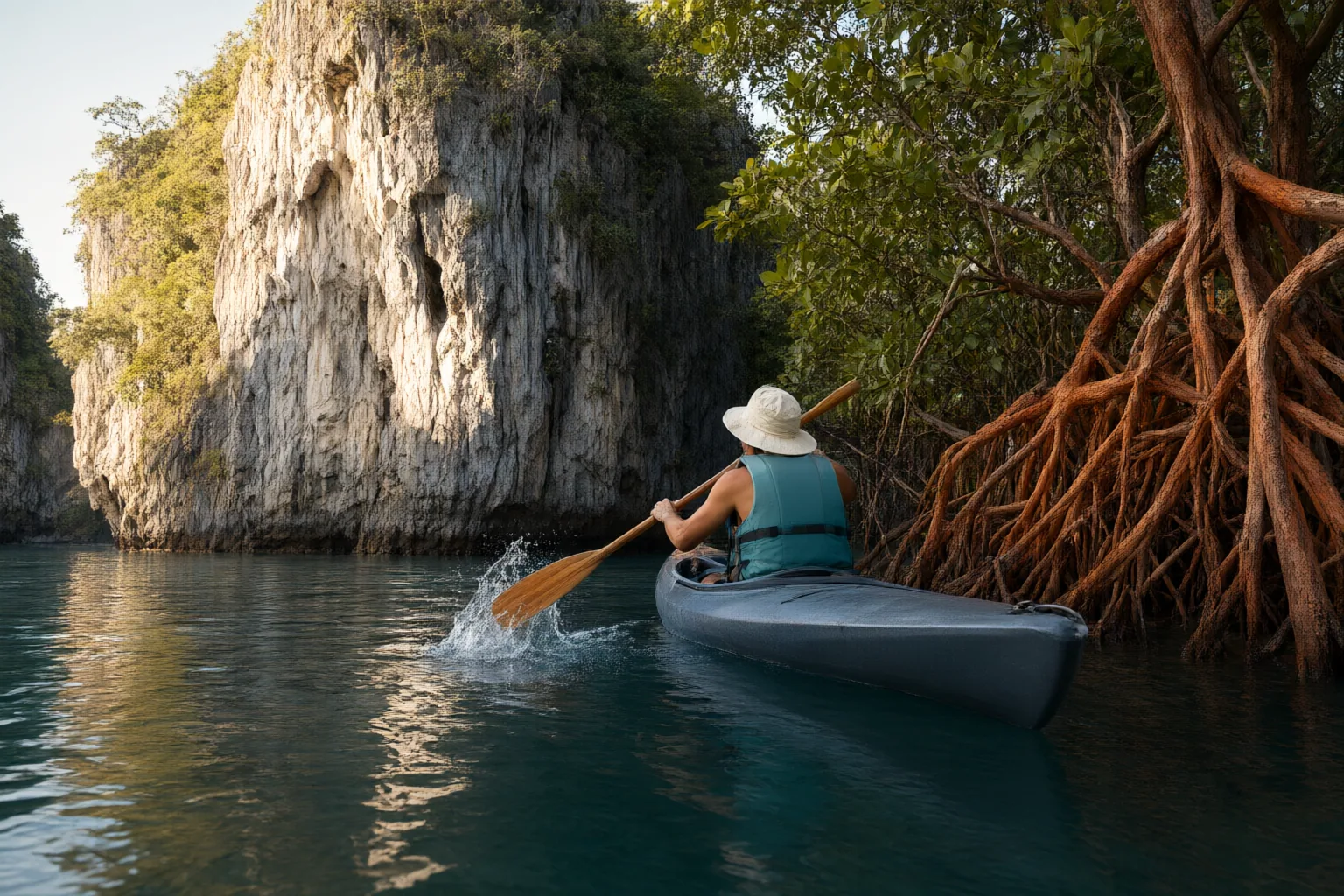
Treat limestone and mangrove scenery as separate priorities rather than interchangeable marketing terms. Ask what environment the planned route enters and which advertised features are expected to be accessible under the forecast conditions. If the itinerary includes a seasonal or overnight element, confirm its operating dates and whether advance booking is required. This produces a like-for-like comparison without assuming unsupported details about Vietnam.
Conclusion
Use a short checklist before committing. Match the expected weather and water conditions to your experience. Ask what instruction is included and which limestone, cave or mangrove features are expected to be accessible. Calculate actual guided paddling time separately from transfers, meals, walking and unguided segments. Identify every included component, and confirm any seasonal operating limits or advance-booking requirements.
The supplied sources support this evaluation method but do not verify Vietnamese routes, operators, conditions or safety arrangements. Shortlist trips that fit your ability and preferred itinerary, then ask each operator to confirm current conditions, accessible landscape features, instruction, guided paddling time, transfers, meals, unguided portions and seasonal requirements before you book.
Disclosures and limitations
- This article was prepared with AI assistance using the two supplied travel-article sources. Those sources concern experiences in the United States and New Zealand, not verified conditions or operators in Vietnam.
- No specific operator or product is recommended, and no affiliate relationship was provided. Travelers should verify current commercial terms and trip details directly before booking.
Related reading
- Travel Ideas for Meaningful Trips
- How to Plan a National Park Day Hike in Vietnam
- Vietnamese Communal Houses: Rituals, Cultural Meaning, and What Visitors Should Expect
Sources
- 25 Best Kayaking Day Trips in the US — Outdoor Adventure Sampler
- Abel Tasman Kayak and Walk: Go Kayaking in Abel Tasman National Park — The Boho Chica