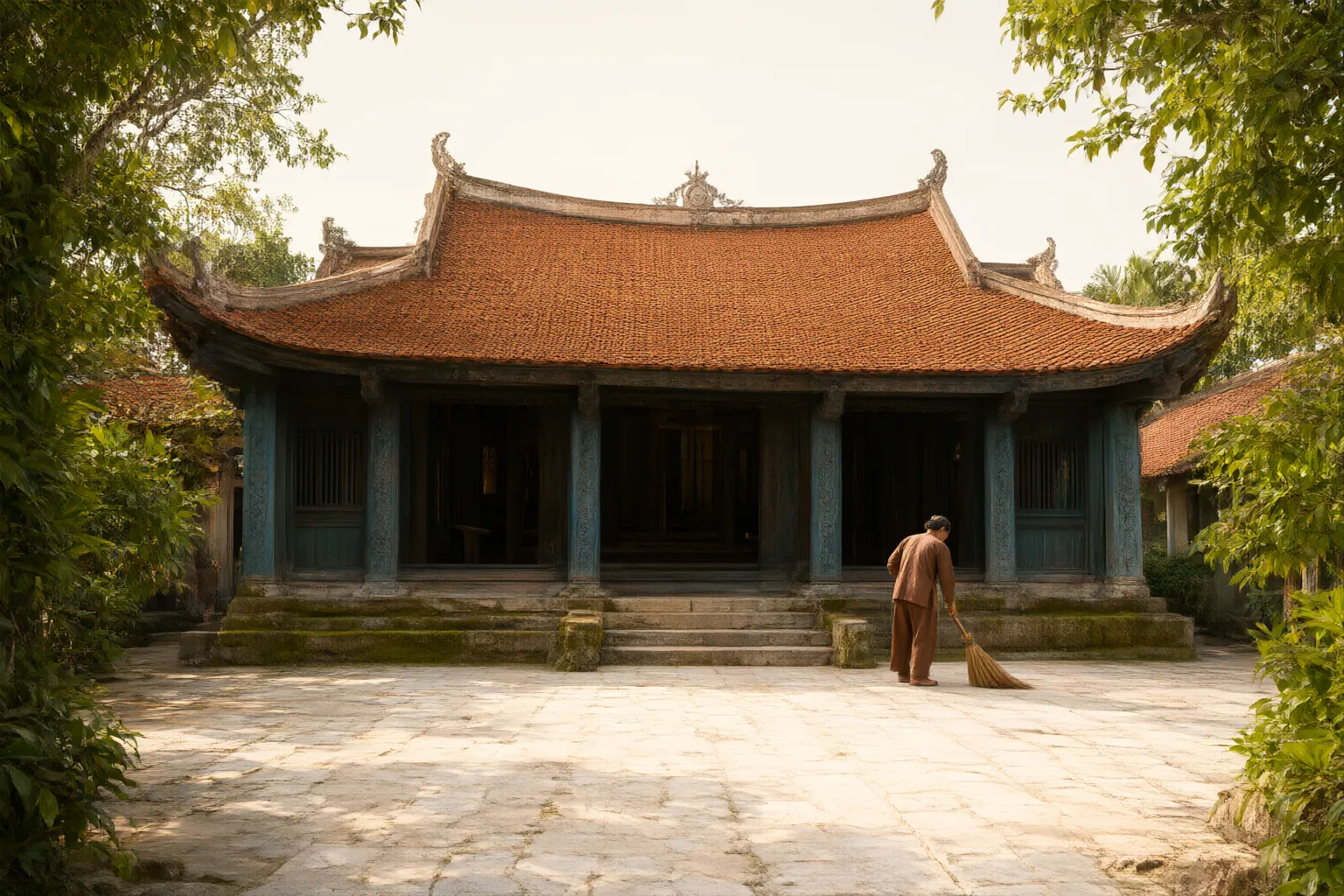
A Vietnamese communal house, or đình, is more than a place of worship: it can also be a center of village memory, civic life, festivals, and artistic heritage. Because every community has its own honored figures and traditions, visitors should observe the site’s distinctive features and confirm local rules before entering or photographing ceremonial areas.
What a Vietnamese Communal House Means to Its Village
A Vietnamese communal house is traditionally associated with honoring the thành hoàng, often described as the village guardian. Depending on the community, the honored figure may be a nature deity, national or local hero, village founder, or another person connected with the settlement’s development. Visitors therefore should not assume that every đình has the same object of worship or historical meaning.
The building may unite religious, administrative, cultural, and social functions. Historically, communal houses provided places for worship and community gatherings, placing sacred observance and village affairs within the same setting. This overlapping role distinguishes a đình from a building understood only as a shrine or place of private devotion.
Understanding that broader purpose changes how a visitor reads the space. Ceremonial features relate to worship, while gathering areas and the building’s position within the settlement reflect its community role. VietNamNet identifies Nam Huong, Kim Ngan, and Dong Lac communal houses in Hanoi as examples with distinct histories and objects of worship, illustrating why the identity of each site matters.
How Rituals and Festivals Preserve Local Stories
Communal-house rituals gain meaning from the figure honored by a particular village and from the history associated with that figure. Since guardians can range from nature deities to founders and heroes, there is no single story that explains every ceremony. Local context is essential for understanding what participants are commemorating.
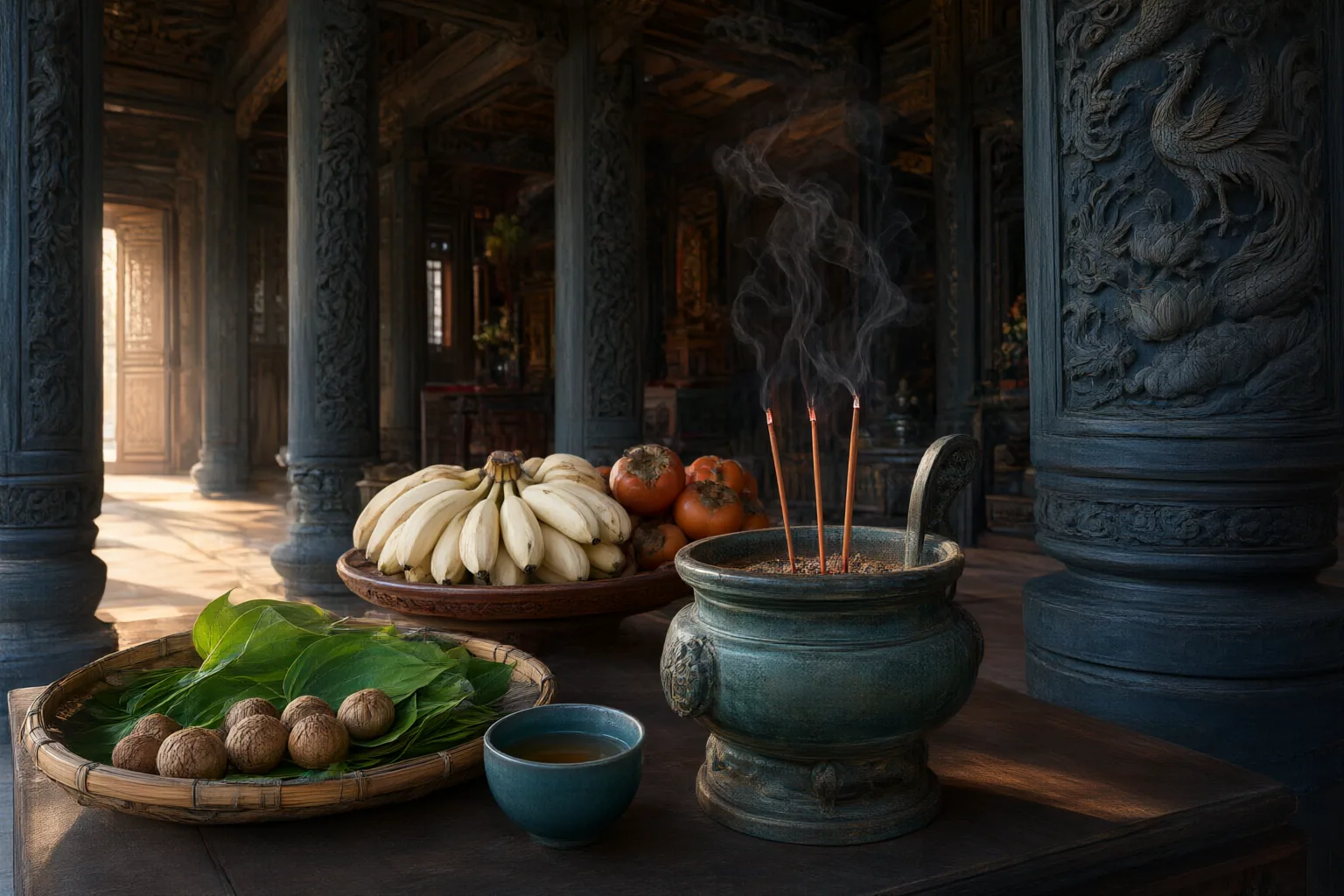
A communal-house festival may mark a guardian deity’s birthday or death anniversary, the village’s foundation day, or another event in local history. Its program can combine formal rituals with music, arts, sports, and games. These different activities show how commemoration, cultural expression, and community participation can meet in one festival.
In some villages, rituals honoring the guardian also retell an origin story. Recalling ancestors and local beginnings helps transmit a community’s account of itself. For a visitor, the useful questions are therefore specific: Who is honored here? What event does this ceremony remember? How does the story connect the figure to the village? Answers cannot safely be transferred from one communal house to another, because the guardian, legend, and commemorative calendar vary by place.
What Visitors Can Observe—and What They Should Verify
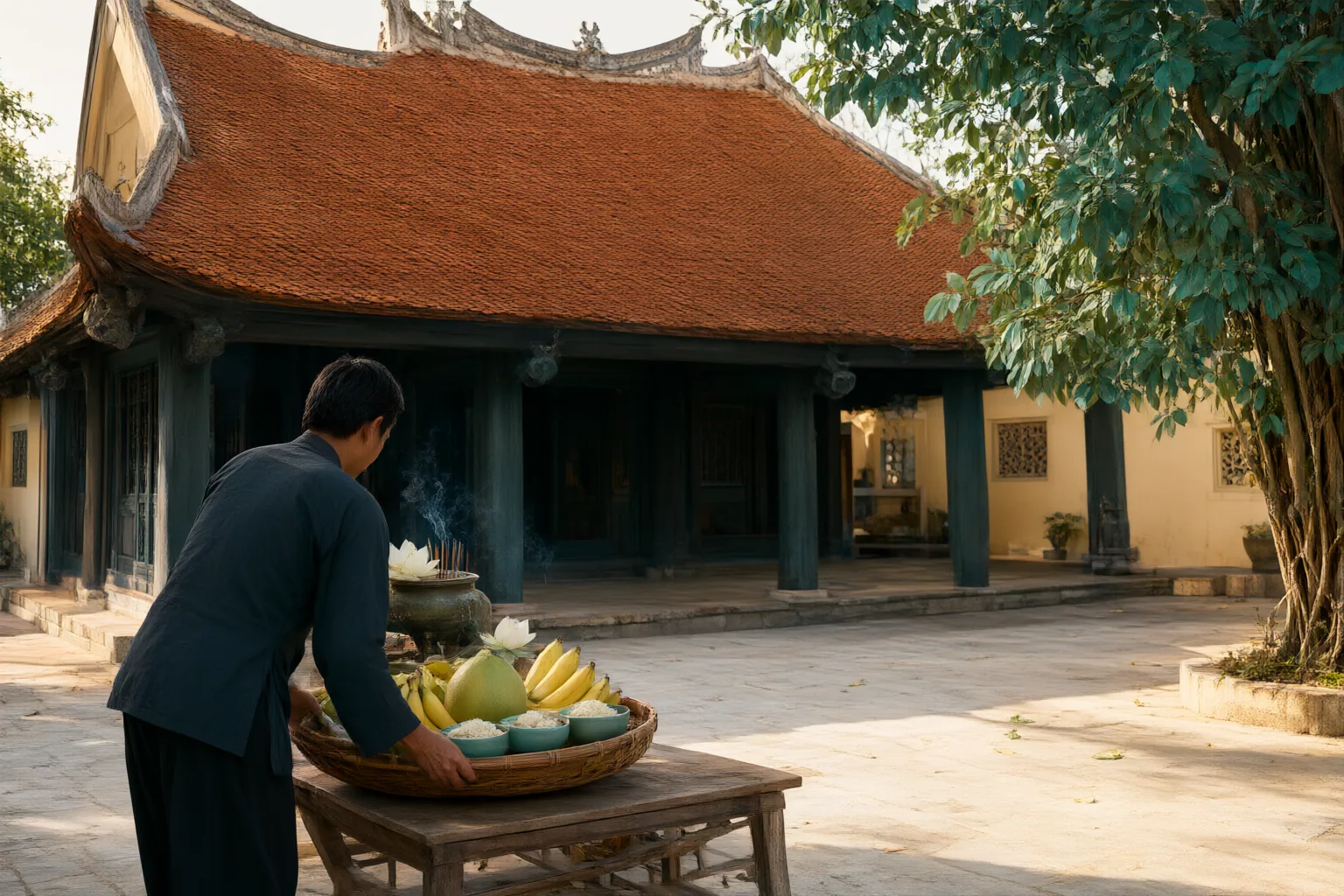
Begin with the building and its surroundings. Examples in the Northern Delta connect the communal house with a courtyard, pond, nearby landscape, and a central position in village life. Looking at these relationships can reveal how the site serves both as a significant structure and as part of a wider communal setting.
Inside or around the building, carvings may depict deities, mythical creatures, people, everyday activities, plants, and animals. Surviving communal houses can also retain artistic features from different historical periods. These details are valuable evidence, but their meaning depends on the site’s history and village traditions. Without local explanation, an image should not automatically be assigned a particular identity or ritual significance.
Visitor conduct is similarly site-specific. The available evidence does not establish a universal code covering opening hours, clothing, photography, attendance during ceremonies, or entry into sacred areas. Check current arrangements at the individual communal house, especially when a ritual or festival is underway. Ask locally before photographing people or ceremonial activity and before entering an area that may have restricted access. This cautious approach recognizes that a đình remains connected to living worship and community events while avoiding invented rules that may not apply at a particular site.
Conclusion
A Vietnamese communal house brings together worship, community life, local memory, and artistic heritage. Its guardian figure and festivals express a particular village history, while its carvings, layout, courtyard, and relationship to the surrounding landscape offer further clues to that history. Before visiting, identify whom the site honors, look carefully at its locally distinctive details, and ask on arrival about access, dress, photography, and any ceremony-specific expectations.
Disclosures and limitations
- This article was prepared with AI assistance from the supplied research package and its identified sources. Site-specific visitor rules should be confirmed locally because the sources do not establish a universal code of conduct.
Related reading
- Travel Ideas for Meaningful Trips
- How to Choose a Farm Stay in Vietnam for a Hands-On Rural Experience
- Heritage Walking Tour or Independent Exploration: How to Choose in a Historic Vietnamese Town
Sources
- Vietnamese communal house – Wikipedia — en.wikipedia.org
- Communal house: a symbol of Vietnamese religion and culture — VietNamNet News
- Ancestor worship in Vietnam: altars, rituals and what travelers should know — vietnamtourism.com
- Vietnamese village communal houses: pages of history. — vietnam.vn