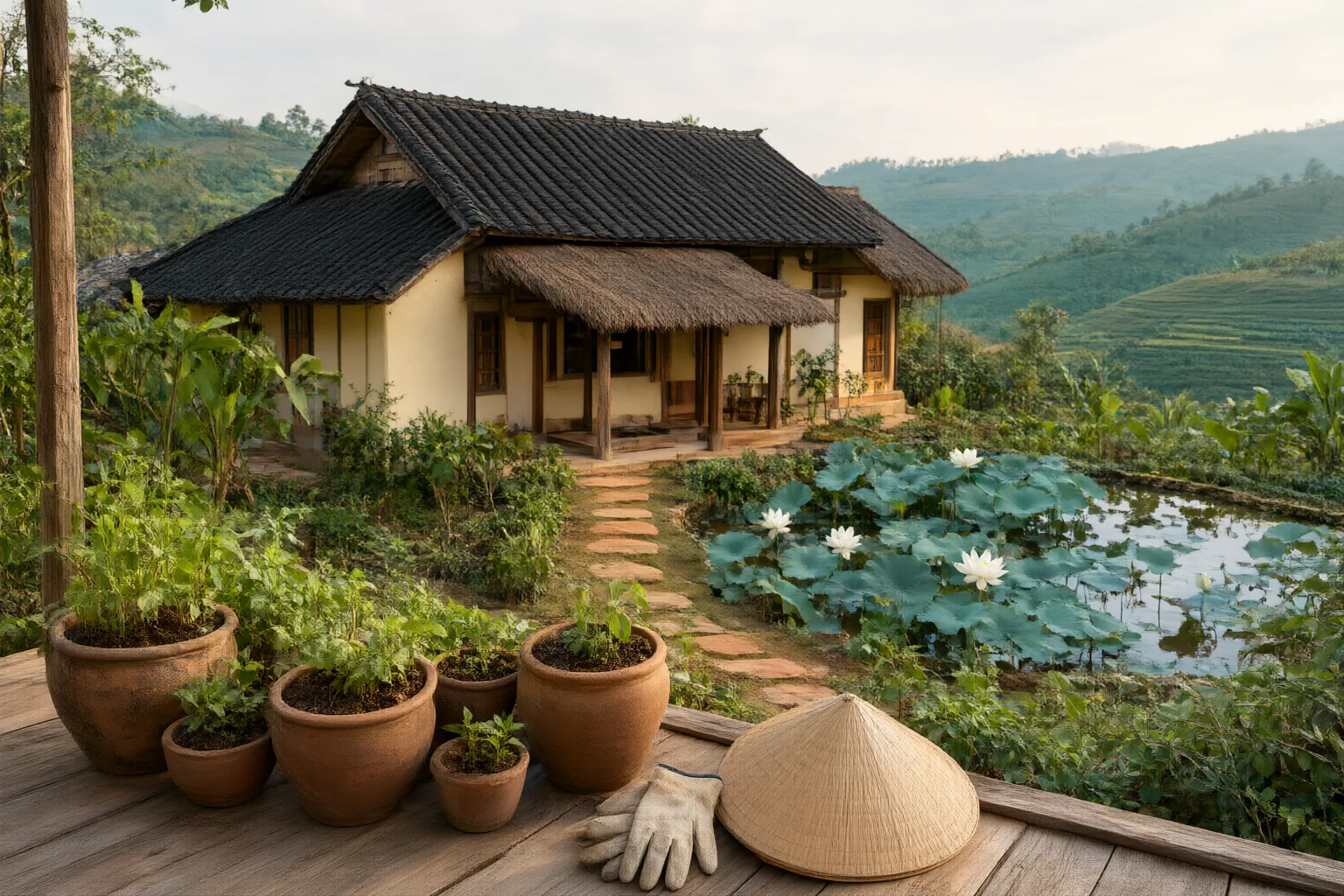
Choose a farm stay in Vietnam by matching the region and season to the agricultural work you want to see, then confirming the actual activities, inclusions, comfort, transport, and mosquito protections. The label alone is not enough: properties range from working rural settings to countryside accommodation focused mainly on scenery or amenities.
Choose a Region and Match the Farming Season
Start with the type of agriculture that interests you. The Mekong Delta is associated with rice, fruit, and aquaculture, while the Central Highlands are linked with coffee. Areas around Hanoi and Hoi An offer smaller farms and fishing communities. These settings can provide very different days, from observing food production and meeting farmers to participating in seasonal work.
Next, ask what will be happening during your dates. Tasks depend on the crop and its stage, so sowing, watering, tending, and harvesting are not necessarily available together. Examples described in central Vietnam include digging, sowing, and watering vegetables at Tra Que; rice-related activities at Thanh Toan; and planting or composting at Green Life Farm. Their availability is described as seasonal.
Choose the region for its agricultural focus, but treat any activity list as provisional until the host confirms what guests can actually do during your stay. Families should also ask whether the available tasks are suitable for every participant.
Check Whether the Experience Is Truly Hands-On
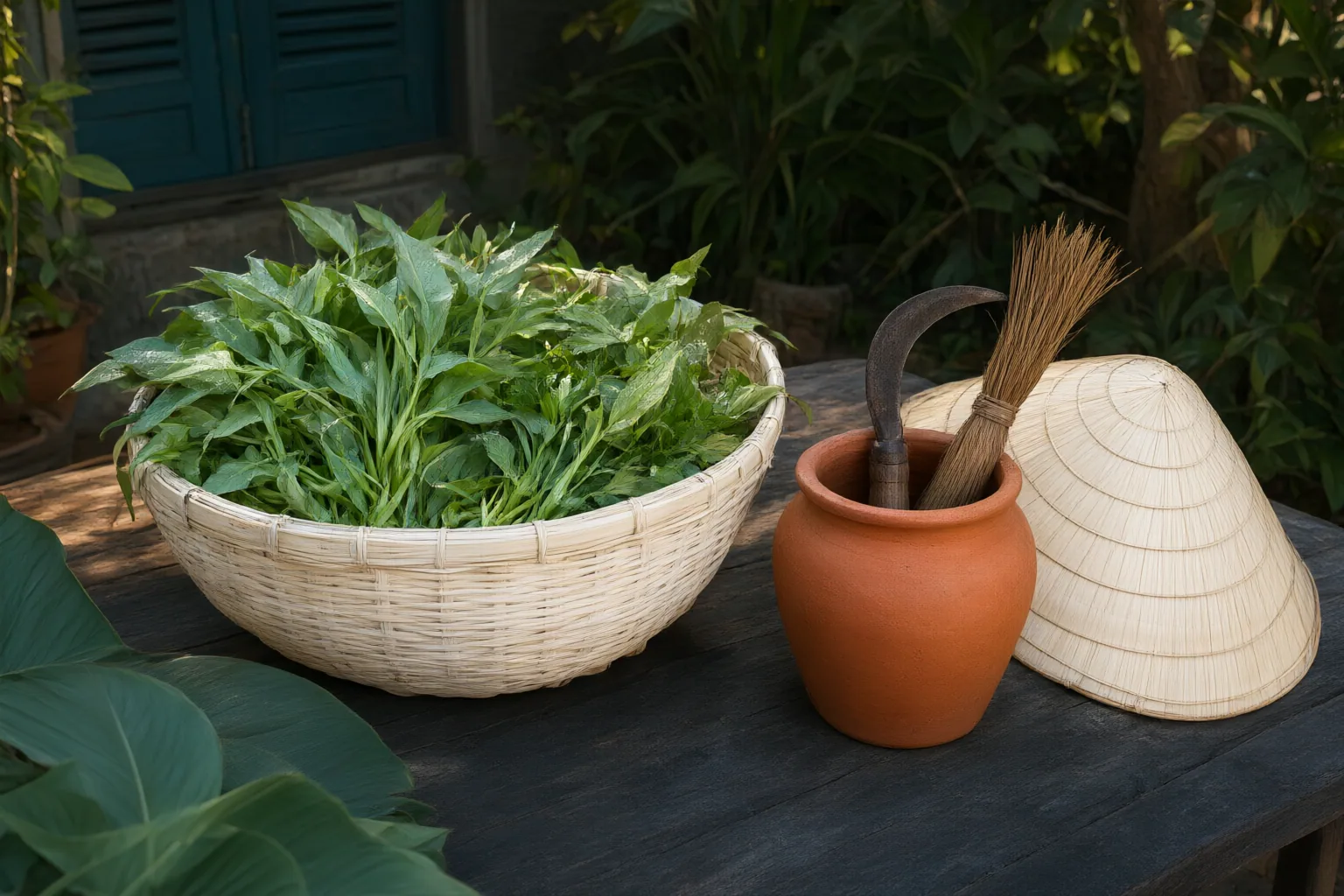
Agritourism involves engagement with farming, food production, or rural communities; merely sleeping in the countryside does not guarantee that participation. Farm-stay marketing covers working properties, homestays, and countryside villas whose main appeal may instead be scenery, comfort, or access to a nearby town.
Look for named tasks rather than broad phrases such as “farm experience.” Useful descriptions might identify a crop, explain whether guests meet or work alongside farmers, and state the timing or duration of an activity. Ask whether participation is demonstrated, supervised, or performed directly by guests. Also confirm whether bad weather or the farming cycle could change the schedule.
Check every inclusion separately. The cited listings variously describe meals, workshops, farm participation, bicycles, tours, and transport as included, occasional, available on request, or subject to an extra charge. Request a written list covering what is included in the room rate, what must be reserved, and what costs more. This helps distinguish a structured hands-on stay from rural lodging where activities may be limited or informal.
Compare Comfort, Access, and Rural Health Needs
Set practical requirements before comparing properties. Listings in the farm-stay category show substantial differences: one cited example lacks air conditioning and television but offers hot water and internet, while others advertise kitchens, pools, workspaces, or transport services. Ask specifically about air conditioning, window or door screens, bed nets, hot water, internet, kitchen access, sleeping arrangements, and any needs important to children or other group members.
Map the complete journey, not only the distance. One northern listing describes a location about 250 kilometers from Hanoi and estimates a five-hour local-bus trip from Hanoi or three hours from Sapa or Ha Giang. It also notes that assistance may be useful because local bus staff may speak little English. Confirm pickup points, schedules, transfers, road access, luggage handling, and the plan for leaving the property.
Consider health preparation as part of accommodation selection. CDC advises Vietnam travelers to discuss vaccines and medicines with a doctor at least one month before departure and to prevent mosquito bites. It says Japanese encephalitis vaccination may be considered for some travelers spending less than a month in rural areas when activities or lodging increase exposure, including hiking, camping, or staying without air conditioning, screens, or bed nets. CDC also identifies malaria transmission primarily in rural areas, with recommendations varying by province and between delta areas. Seek itinerary-specific medical advice rather than treating these general points as personal guidance.
Conclusion
A suitable farm stay aligns four things: the region’s agriculture, the seasonal work available, the group’s comfort needs, and a manageable journey. First choose whether rice, fruit, aquaculture, coffee, vegetables, fishing, or another rural activity best fits the trip. Then verify the specific guest tasks, schedule, host involvement, inclusions, extra costs, amenities, transport arrangements, and mosquito protections.
Shortlist suitable stays and send each host the same questions before booking. Ask for current answers for your exact dates, because agricultural work and offered activities can change with the season.
Disclosures and limitations
- This article was prepared with AI assistance using only the cited research package, which includes public-health guidance, travel articles, and self-reported marketplace listings. Current activities, amenities, access, inclusions, and health guidance should be verified directly with the relevant host or authority.
- No specific property is ranked or recommended here. Commercial listings may be promotional, and travelers should check whether any booking service or linked publisher discloses affiliate compensation before making a reservation.
Related reading
- Travel Ideas for Meaningful Trips
- Heritage Walking Tour or Independent Exploration: How to Choose in a Historic Vietnamese Town
- How to Choose a Vietnamese Cooking Class with Regional Ingredients and Home-Style Techniques
Sources
- Vietnam – Traveler view | Travelers' Health | CDC — CDC.gov
- The 10 Best Farm Stay in Vietnam for an Authentic Rural Escape (2026) — Sun Getaways
- Agricultural Tourism In Vietnam: Farm Experiences — Footprint Travel
- Vietnam Farmstay Vacation Rentals | Airbnb — Airbnb
- Top 5 Vietnam Farming Experiences You Shouldn’t Miss – Vietnam Vacation — Vietnam Vacation
- How to Experience Authentic Vietnamese Agricultural Tourism on Your Next Trip — Sun Getaways
- Northern Vietnam Farmstay Vacation Rentals | Airbnb — Airbnb