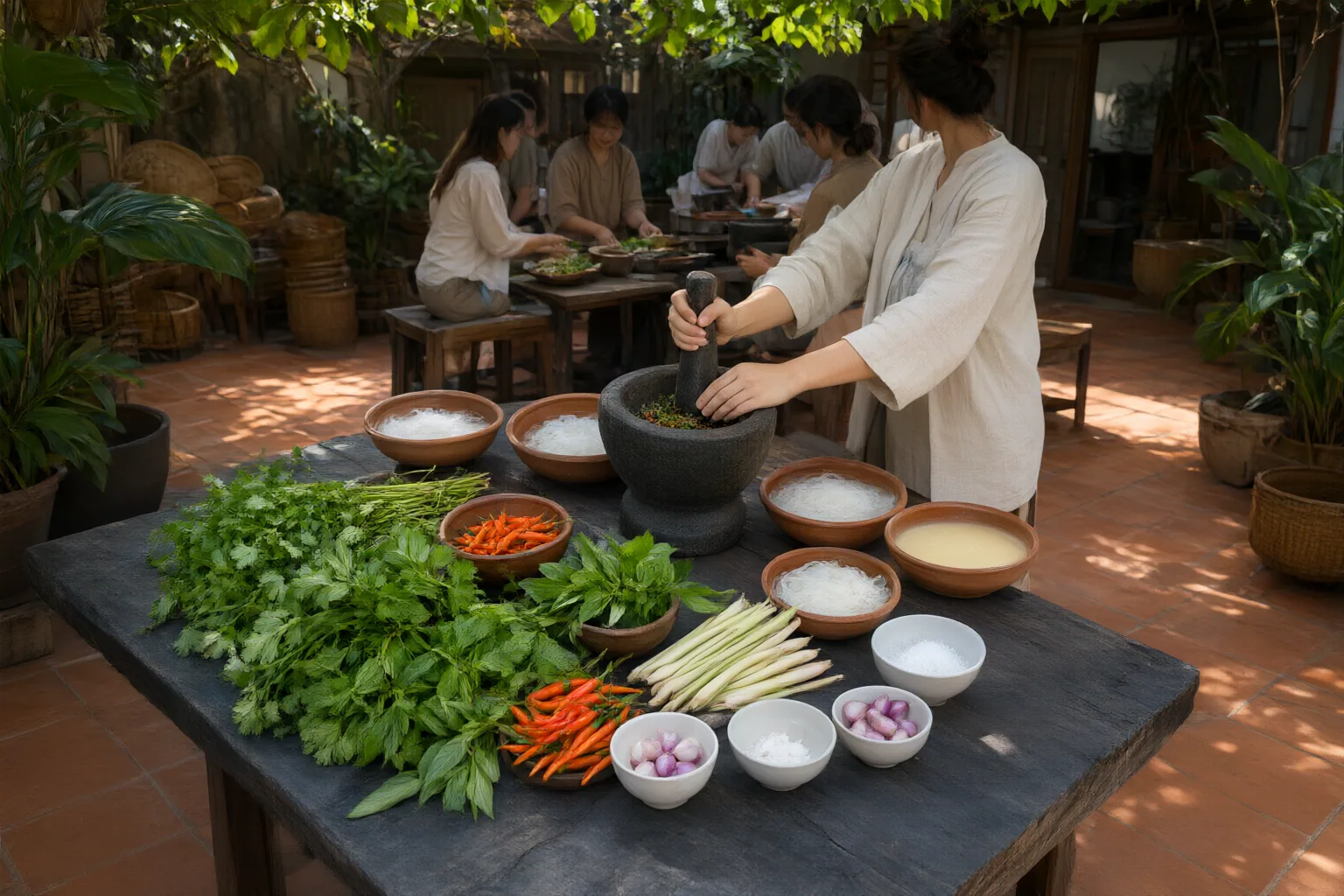
Choose a Vietnamese cooking class that links its menu to the region, teaches how to select and prepare ingredients, and gives participants meaningful hands-on work. Before booking, compare the dishes, market instruction, techniques, group size, format, and dietary options—not just the number of recipes advertised.
Start with the Region, Menu, and Ingredients
A class should make geographic sense. Vietnamese cooking varies across regions, so a menu in Hanoi should not be evaluated in the same way as one in Hội An. Northern-focused instruction may cover phở broth preparation, bún chả grilling, fresh herbs, clear broths, and careful flavor balance. In Hội An, a locally grounded menu may feature cao lầu, white rose dumplings, or bánh xèo; some programs also connect these dishes with markets or nearby vegetable villages.
Ask for the full menu before booking and request an explanation of how it reflects the destination. Look for specific links among local dishes, ingredients, and methods rather than a generic collection of familiar recipes. Fresh vegetables and herbs such as basil, mint, cilantro, and Thai basil recur in Vietnamese cooking, but a useful class should explain how its chosen ingredients function within the particular dishes being taught. This regional connection helps distinguish focused instruction from a menu that could be offered almost anywhere.
Look Beyond a Market Visit or Recipe List
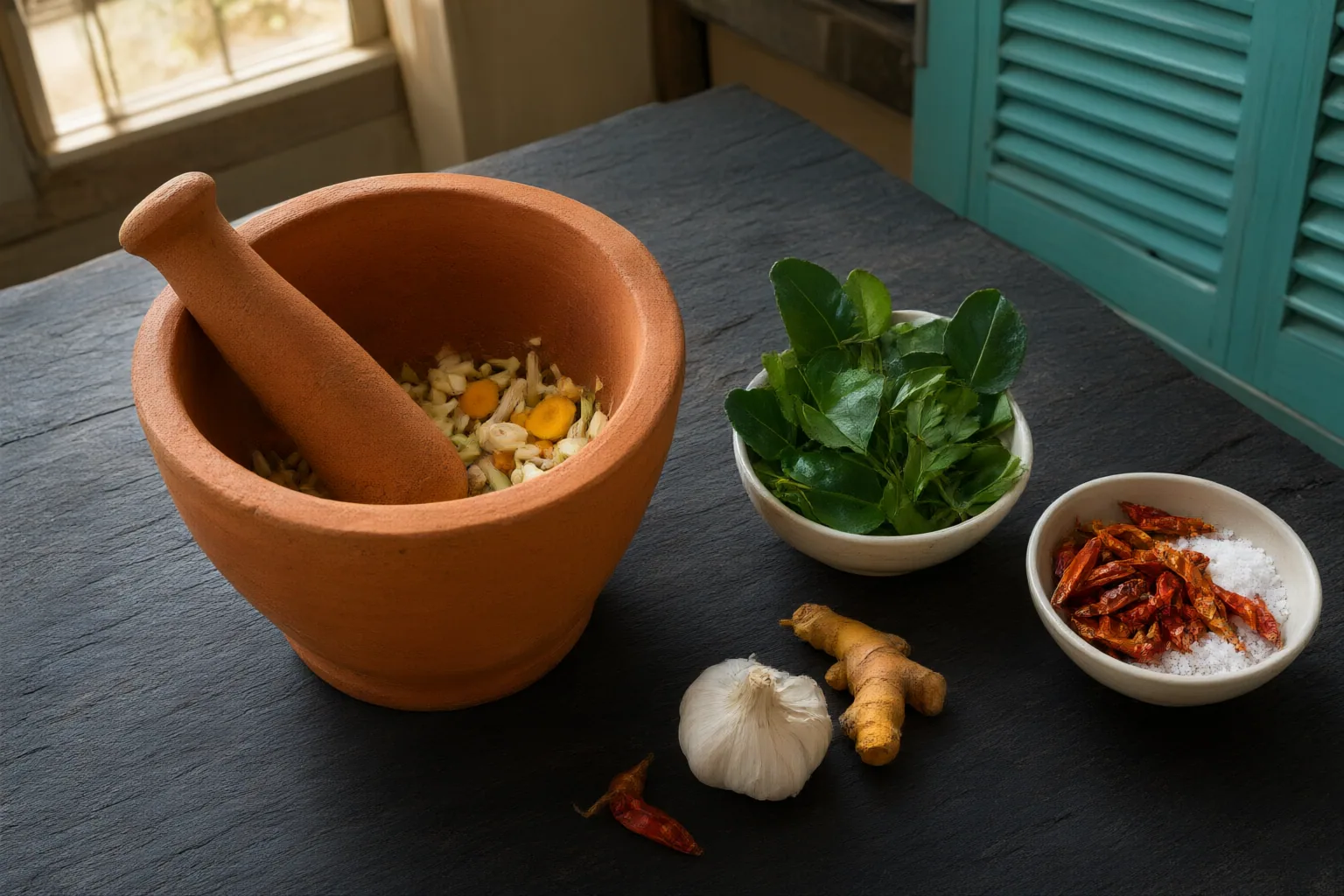
Many classes begin at a market, but the visit is valuable only when it supports the cooking lesson. Ask whether the instructor discusses freshness, seasonality, ingredient selection, flavor balance, and differences in regional use. A guided walk that identifies ingredients without explaining how to assess or cook them offers less depth than one that connects purchasing decisions to the dishes prepared later.
The same standard applies in the kitchen. Strong instruction goes beyond listing procedural steps: it explains why timing, freshness, balance, or a particular technique matters. For stir-frying, for example, practical teaching can address preparation, heat control, timing, and continuous movement. For other dishes, the important lesson may be broth development, grilling, or balancing herbs and other ingredients.
When comparing descriptions, look for verbs that show what participants will learn to judge and perform: select, prepare, balance, control, time, grill, or stir-fry. A long recipe list is not necessarily evidence of greater substance if the schedule leaves little room to understand those decisions.
Check How Much You Will Actually Cook
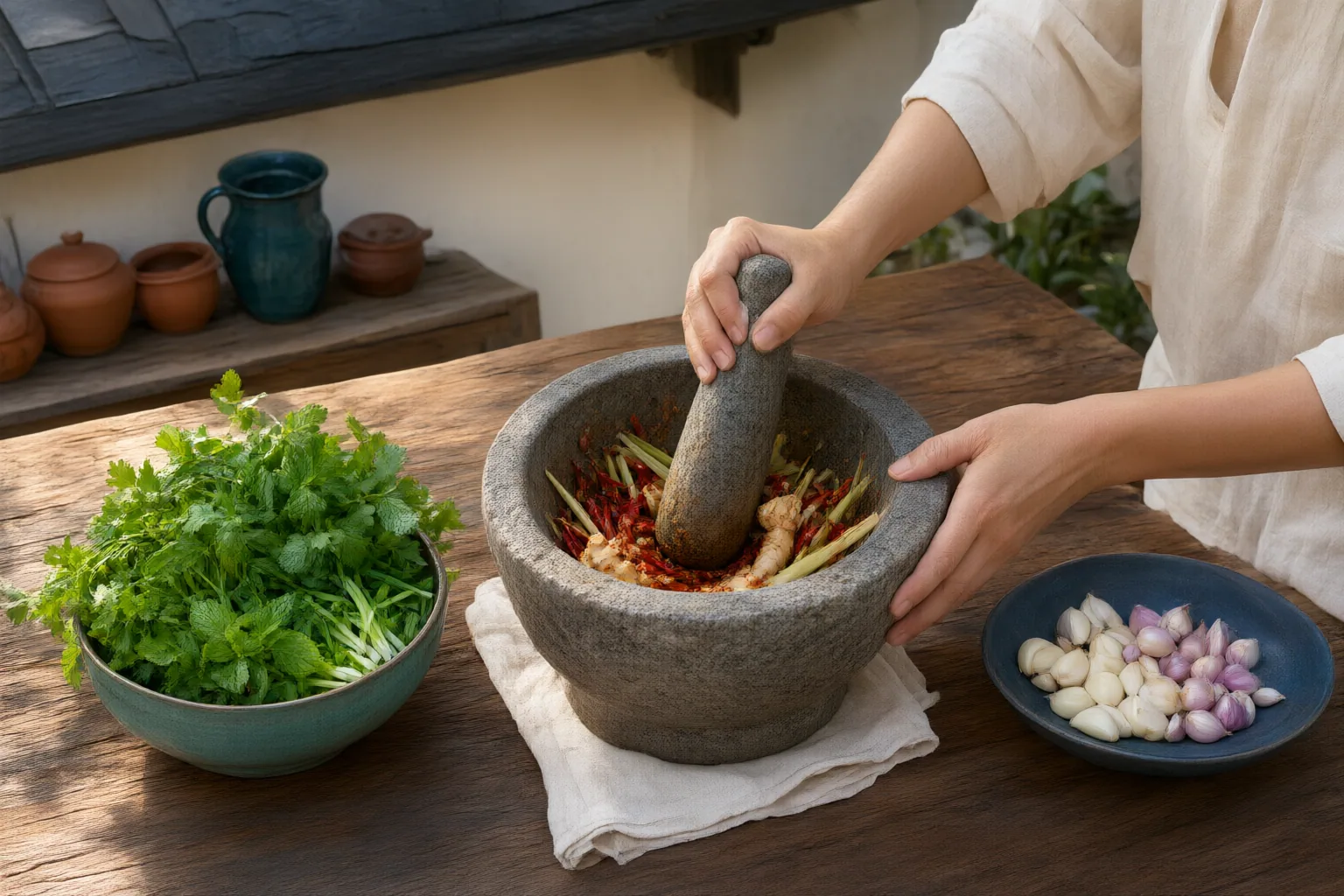
Class formats range from short restaurant sessions to full-day experiences combining markets and countryside settings. Duration alone does not reveal how much each participant cooks. Ask which tasks you will perform yourself, whether ingredients are prepared in advance, and how demonstrations and individual practice are divided. Smaller groups generally allow more hands-on time per person, making the participant-to-instructor ratio a useful comparison point.
Also ask how explanations are delivered. An instructor who connects each action to timing, freshness, balance, or technique can make a limited menu more educational than a hurried session covering many dishes. Families and mixed-experience groups should confirm whether everyone can participate in the principal tasks.
Discuss dietary requirements before paying. Vegetarian, vegan, and gluten-free accommodations may be available, but they should not be assumed on arrival. Fish sauce substitutions and wheat-derived ingredients in some sauces can require advance planning. Tell the provider the specific restriction, ask which dishes or components will change, and confirm how substitutions will be handled during the class.
Conclusion
Use a short checklist before choosing a class. First, request the menu and ask how its dishes, ingredients, and techniques represent the region. Second, find out what the market component teaches about freshness, seasonality, selection, flavor balance, and regional use. Third, identify the preparation and cooking tasks that participants perform themselves. Finally, verify the group size, schedule, and any dietary substitutions in advance.
These questions help reveal whether a class connects sourcing, regional context, and home-style techniques or simply moves participants through recipes. Before booking, contact the provider and ask for the regional focus, menu, group size, hands-on tasks, market-visit details, and available dietary substitutions.
Disclosures and limitations
- This article was prepared with AI assistance and is based on the supplied EnViet, Hanoi Voyages, Cultured Wanderer, and CulinaryBite research materials. No personal attendance or product testing is claimed.
Related reading
- Travel Ideas for Meaningful Trips
- How to Choose a Snorkeling Experience on Vietnam’s Coast
- Before You Go: What to Expect at an Early-Morning Floating Market in Southern Vietnam
Sources
- Vietnam Cooking Classes: Where to Learn Vietnamese Cuisine | EnViet — EnViet
- Vietnamese cooking classes: Explore culture through cuisine — Hanoi Voyages
- Exploring the Flavors of Vietnam: Origins, Influences, and Techniques – Cultured Wanderer — Cultured Wanderer
- Mastering Vietnamese Culinary Techniques and Traditions — CulinaryBite