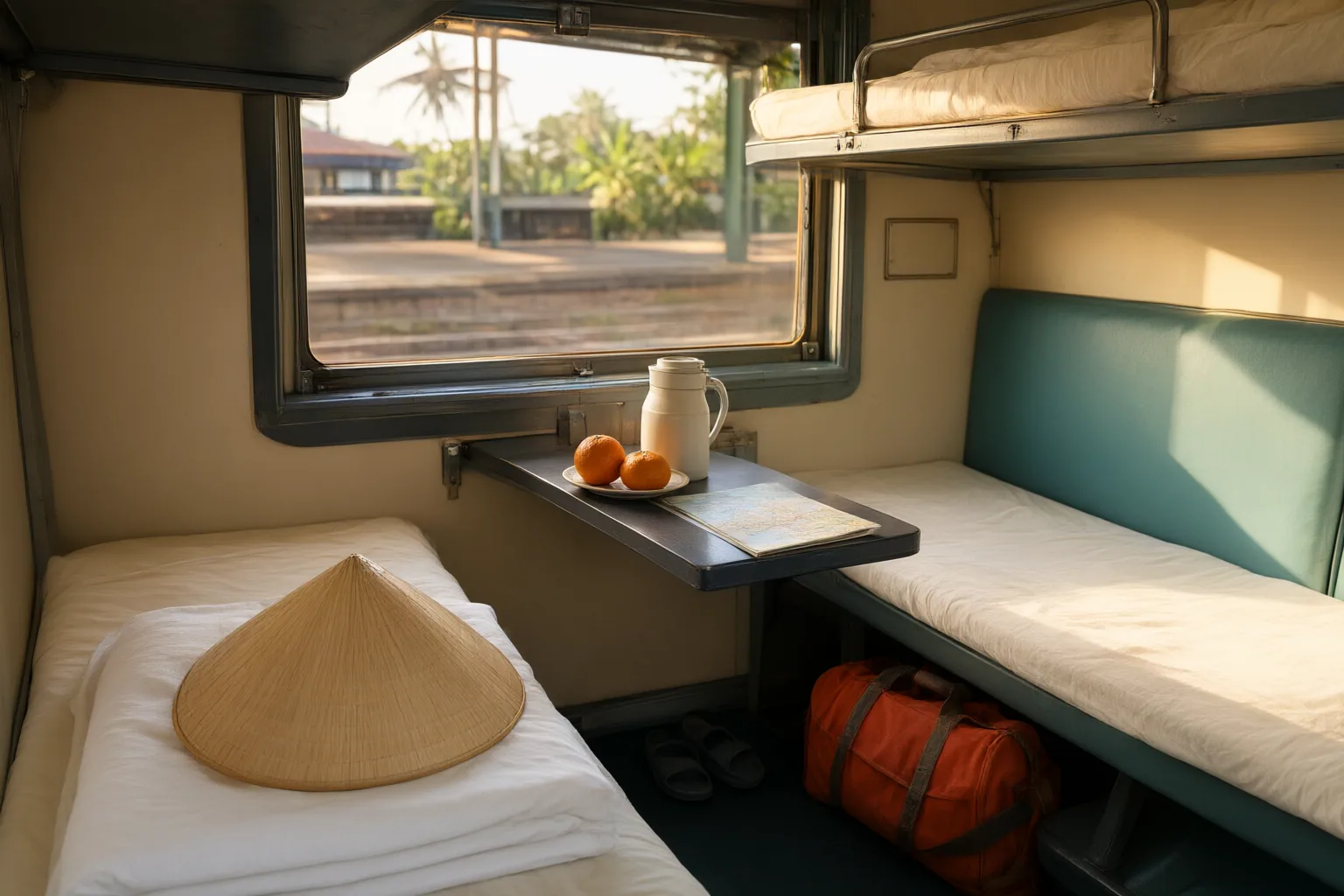
An overnight train in Vietnam can preserve sightseeing time and potentially replace a hotel night, but practicality depends on choosing a sleeper berth, accepting shared space and movement, and planning for luggage, food, boarding, and onward connections.
What Makes a Vietnam Overnight Train Practical?
The main advantage is efficiency: a long journey and a night’s rest can happen together, leaving more daylight for activities. That trade works best when the route is long enough to justify sleeping aboard and the traveler is comfortable with the available berth and cabin arrangement. On a short itinerary, journey duration may matter more than the experience or the accommodation night potentially saved.
Book an actual sleeper berth if rest is important. The cited guides describe hard and soft seats as substantially less suitable for sleeping. Consider the complete door-to-door trip as well: the Hanoi–Lao Cai train, for example, does not reach Sapa, so passengers need onward transport after leaving the train. A convenient rail schedule can therefore still produce an awkward overall journey if that transfer is overlooked.
Choosing a Cabin and Berth for Better Rest
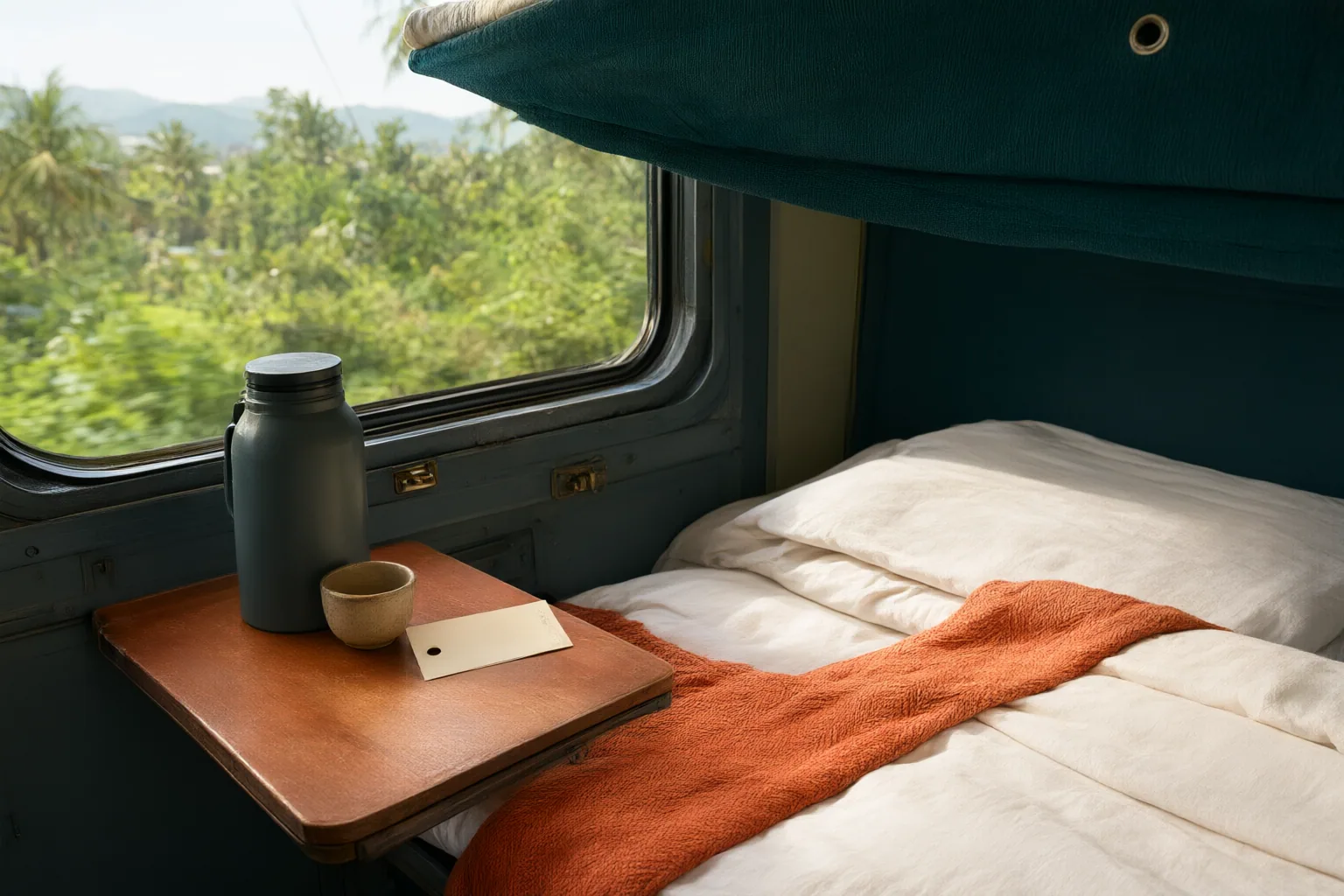
Four-berth compartments generally provide more privacy than six-berth compartments. Six-berth sleepers are commonly the less expensive choice, but they are busier and offer less headroom. The better value depends on whether lower cost or a quieter, less crowded cabin matters more to you.
Even in a sleeper, rest can be interrupted by rocking, carriage noise, other passengers, and corridor activity. Light sleepers should consider a four-berth cabin and request a position away from doors, toilets, and other high-traffic areas where possible. Earplugs and familiar sleep aids may help, although they cannot remove the train’s movement or every shared-cabin disturbance.
Some private tourist carriages operate on regular train routes and departure times but differ in bedding, finish, and maintenance. Treat those features as specific to the booked carriage. Enhanced amenities advertised by a private operator should not be assumed to exist on a standard train.
Practical Checks for Families and Solo Travelers
For families, the child’s usual sleep pattern is an important test. A family-oriented source suggests sleeper trains are generally easier for school-age children than for babies or toddlers who wake frequently or depend on a strict routine and familiar surroundings. Families should also account for boarding steps, narrow corridors, children, and luggage at the same time. Platforms may be below the carriage floor, while station accessibility is not consistent.
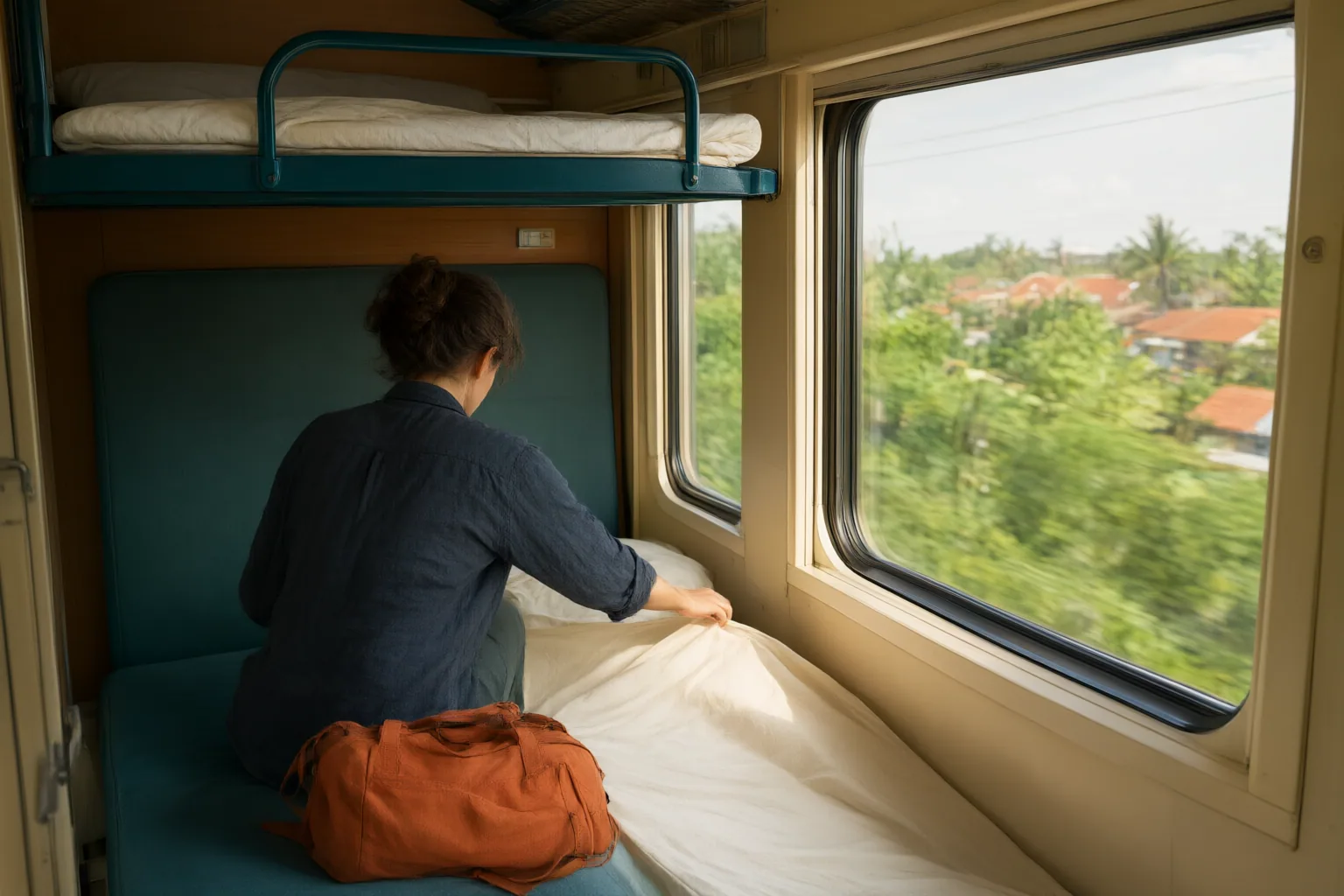
Pack with shared storage in mind. Small bags may fit under a berth, but large suitcases might occupy space between beds or at the end of the compartment. Solo travelers in particular should arrange essentials so valuables remain close while they sleep or move around the train. A luxury operator describes private cabins with lockable storage and personal safety boxes, but those facilities are not evidence of what standard services provide.
Food provision also varies. A dining car is not guaranteed, although snack and drink carts are commonly reported. Carrying water and suitable food is prudent, especially for children or anyone with dietary requirements. Travelers joining mid-route may also wish to consider the cited concern that it can be unclear whether berth linen was changed after an earlier passenger.
Conclusion
An overnight train is most practical when it meaningfully advances your itinerary and everyone can tolerate the booked cabin’s space, sound, and movement. Before choosing it, check the journey length, each child’s sleep needs, berth class, cabin size, luggage arrangements, mobility constraints, food requirements, and any transfer needed after arrival.
Schedules, fares, cabin availability, ticket rules, accessibility, and onboard facilities can vary by route, season, train, and operator. Compare the available berth and boarding arrangements with your group’s needs, then verify current details directly with the relevant train or carriage operator before booking.
Disclosures and limitations
- This article was prepared with AI assistance from the supplied travel-guide and commercial-provider research sources; current operational details should be confirmed with the relevant operator.
- No products or affiliate offers are recommended here. If booking links are added later, any affiliate relationship should be clearly disclosed.
Related reading
- Travel Ideas for Meaningful Trips
- How Families Can Choose a Vietnam Cave Experience by Age, Mobility, and Comfort
- How to Verify Product Facts, Tradeoffs, and Long-Term Fit When Planning a Vietnam Trip
Sources
- Vietnam Overnight Trains: Classes & Booking Guide — Enjoy Vietnam Travel
- Solo Travel Vietnam by Train: Is It Safe? Your Ultimate Luxury Guide — SJourney | The First Luxury Train Travel in Vietnam
- Vietnam sleeper train guide – options, prices and what to expect | Local Vietnam — Local Vietnam
- Vietnam Train Travel With Kids: Is It Worth It? Family Guide — roamingcrew.com
- Vietnam Overnight Train: Honest Review — https://vietnamtour.travel/
- Vietnam Sleeper Train Guide: Berths, Prices & Tips (2026) — Backpackers Wanderlust
- Vietnam Sleeper Train – Overnight Train Travel in Vietnam — Viet Express Travel