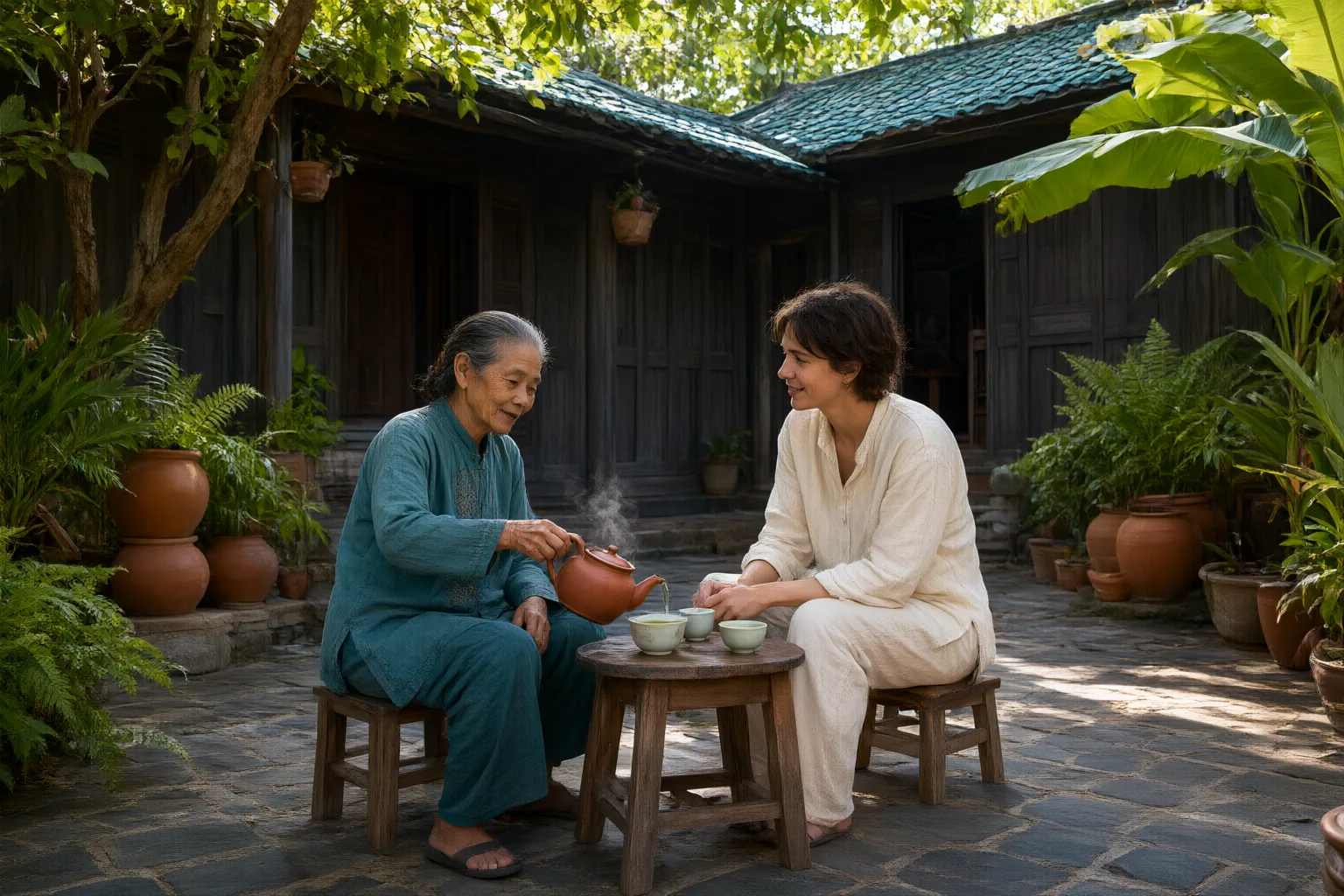
Respectful community travel in Vietnam starts with treating privacy as the default, asking permission before entering homes or taking photographs, and following local etiquette. Travelers can also reduce their impact by limiting waste and intrusion, choosing locally rooted services, and checking whether community-based experiences provide tangible benefits to residents and the environment.
Respect privacy and ask before entering or photographing
A village, neighborhood, or family home is part of someone’s everyday life, not simply a visitor attraction. Vietnam Tourism advises travelers to ask before photographing people and to respect their privacy. Guidance from Pu Luong Trekking similarly recommends avoiding intrusive village photography and not entering private homes without permission.
Use consent as the starting point. Before raising a camera, clearly request permission and wait for an answer. If a person declines or appears uncomfortable, do not take the photograph. Permission to visit a village does not automatically grant permission to photograph every resident, and an open doorway should not be interpreted as an invitation to enter.
This approach is especially useful when travelers are uncertain about boundaries. Observe from an appropriate distance, avoid disrupting daily routines, and let residents decide whether they want to interact. Treating homes and personal moments as private unless invited helps make community visits less intrusive.
Learn the etiquette for homes, villages, and shared spaces
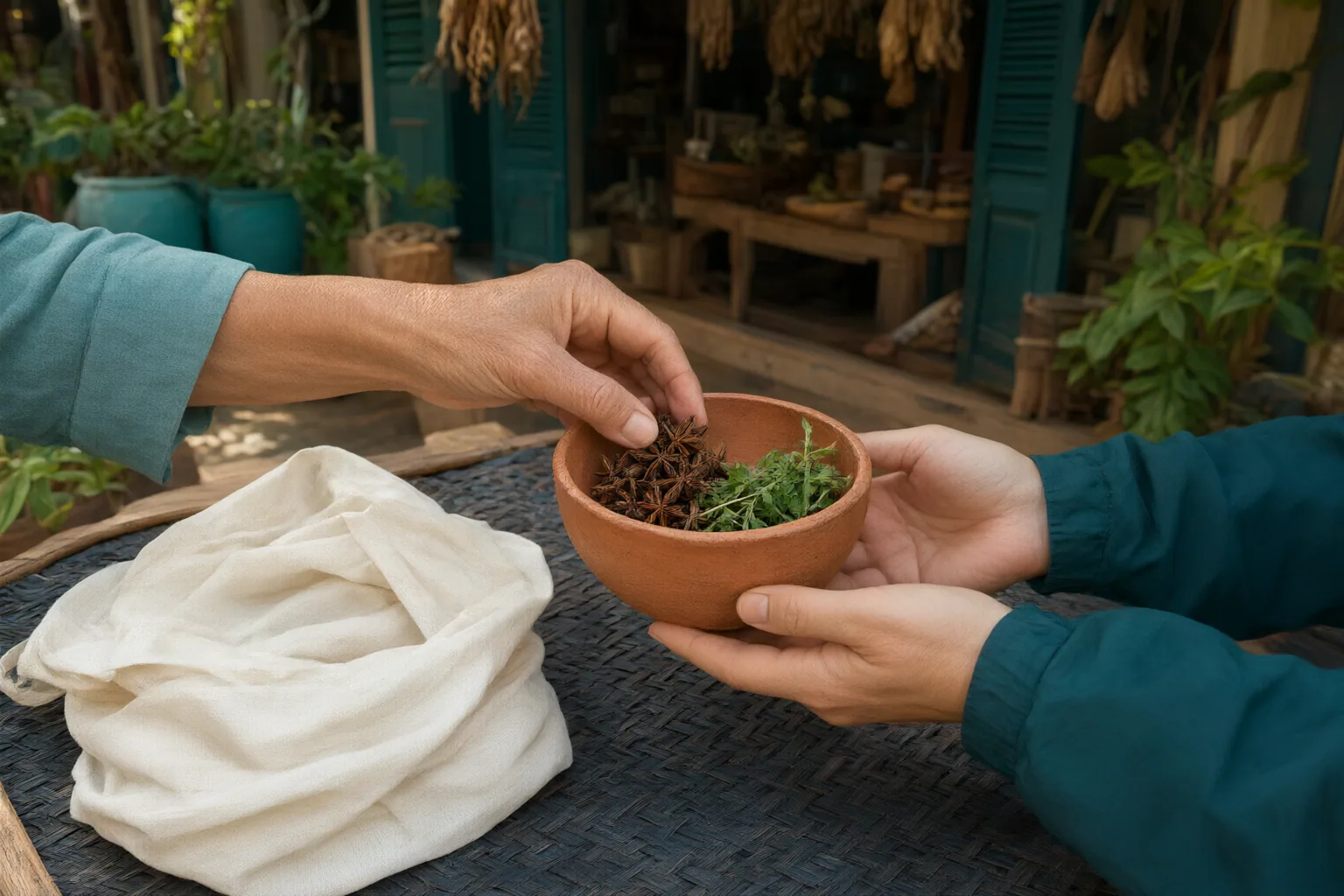
Local etiquette can shape even a brief visit. Vietnam Tourism advises removing shoes when entering a home and greeting older family members first. These are simple, practical actions that help visitors approach a household respectfully.
Before entering, pause and look for guidance rather than assuming the customs are the same everywhere. If you are invited inside, remove your shoes as advised and acknowledge older family members first. When uncertain about clothing, gestures, or conduct, ask a host or local guide what is appropriate instead of guessing.
Etiquette and privacy work together. An invitation into one area of a home does not necessarily extend to every room, photograph, or personal interaction. Follow the host’s lead, avoid turning ordinary household activity into a spectacle, and accept boundaries without argument. Families traveling with children can explain these expectations before arrival so that everyone knows to wait for invitations, ask before taking pictures, and behave considerately in shared spaces.
Choose experiences that support residents and limit impact
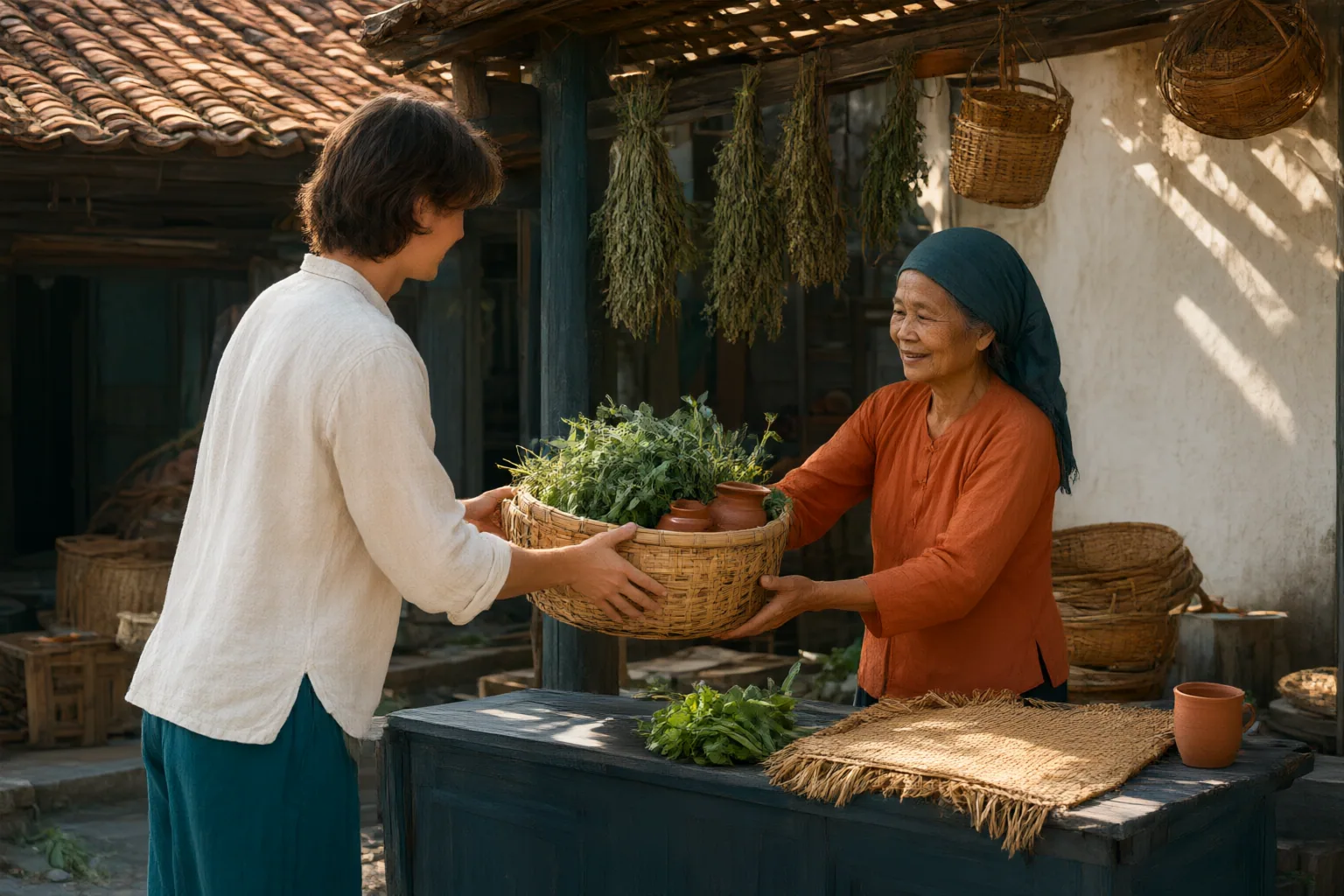
Travel choices can influence where tourism activity is directed. The Pu Luong Trekking guide identifies local guides, family-run accommodation, local restaurants, and village-based experiences as options that keep more activity within communities. The supplied guidance also includes artisans among the locally rooted people travelers can support.
Ethical or eco-friendly wording alone does not demonstrate an experience’s impact. Ecotourism World recommends researching whether a tour marketed as community-based or environmentally friendly produces tangible benefits for local communities and the environment. Before booking, ask who operates the experience, which local services are involved, and how the stated community and environmental benefits are delivered. Use the answers—and whether they are clear enough to evaluate—as part of the decision.
Impact also involves traveler behavior. Across the supplied sources, recurring actions include reducing waste, respecting privacy, and directing spending toward local guides, families, restaurants, and artisans. Visitors seeking to limit crowding and intrusion can avoid treating residential areas as unrestricted attractions and follow locally communicated boundaries. A locally rooted booking is most consistent with respectful travel when it is paired with considerate behavior rather than treated as permission for closer access to private life.
Conclusion
Respectful engagement rests on a short set of repeatable choices: protect people’s privacy, request permission before entering homes or taking photographs, follow household etiquette, reduce waste and intrusion, and direct spending toward locally rooted providers. Claims of community or environmental benefit deserve scrutiny rather than automatic acceptance.
Before your next community visit, ask permission, check local etiquette, choose local guides, family-run accommodation, restaurants, artisans, or village-based activities where appropriate, and verify how the experience benefits residents and the environment before booking or joining it.
Disclosures and limitations
- This article was prepared with AI assistance using the supplied Vietnam Tourism, Pu Luong Trekking, and Ecotourism World research excerpts as its factual sources.
- The cited tourism-oriented guidance was synthesized and paraphrased; no personal visit, product use, interview, or independent field test is claimed.
Related reading
Sources
- Vietnam Local Life Tours, Local Life Tours in Vietnam, Vietnam Local Life, Local Life Vietnam, | Inside Vietnam Travel — insidevietnamtravel.com
- Pu Luong Trekking | Private Tours & Authentic Walking Experience in Vietnam — Pu Luong Trekking
- Community-Based Tourism: Supporting Vietnam's Local Eco-Initiatives – Ecotourism World — Ecotourism World
- Visa policy of Uzbekistan – Wikipedia — en.wikipedia.org
- Vietnamese etiquette for travellers — Vietnam Tourism
- Urbanization in Viet Nam: Building inclusive & sustainable cities — unhabitat.org
- World Happiness Report – Wikipedia — en.wikipedia.org