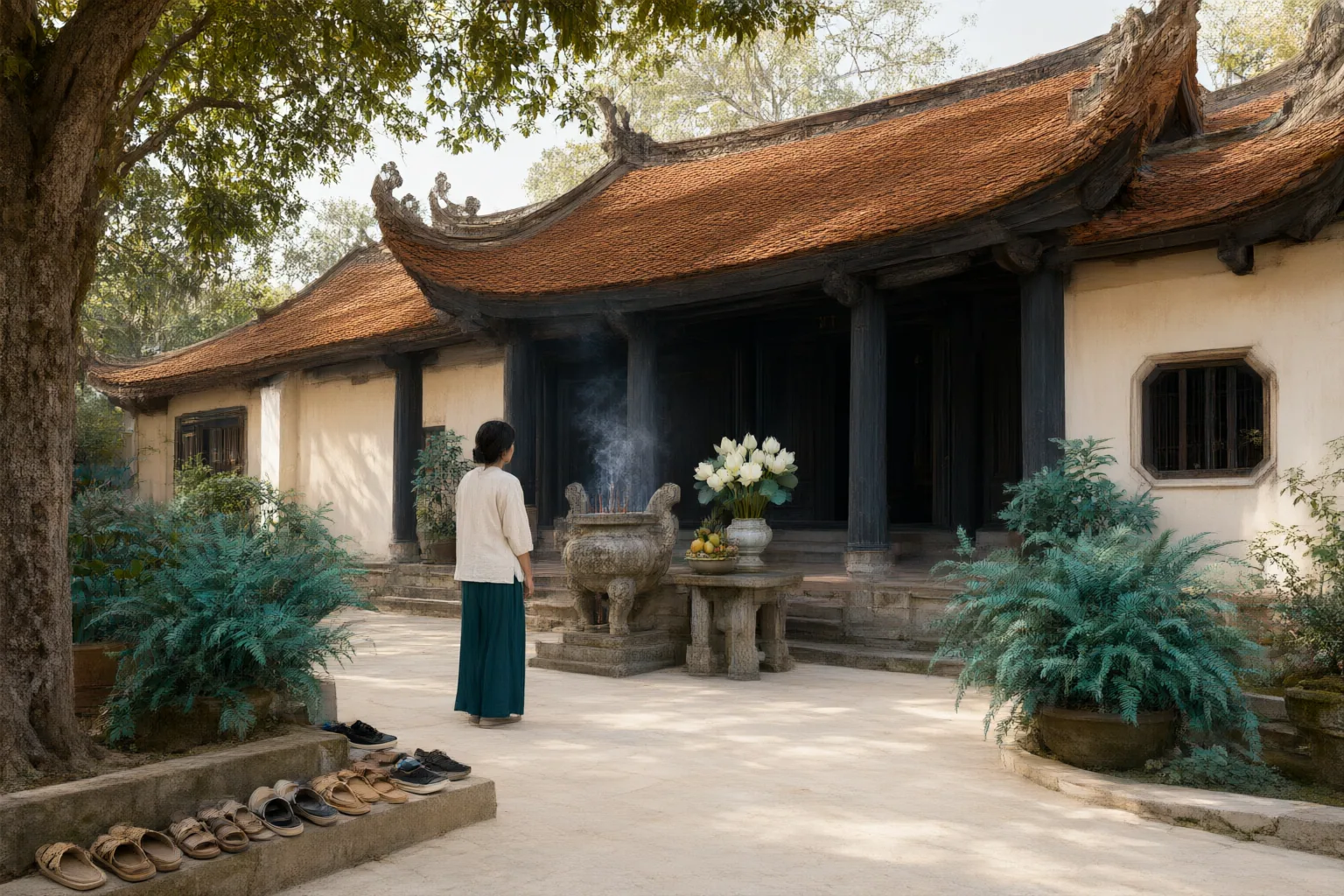
When entering a Vietnamese pagoda, begin with conservative clothing, quiet behavior, and careful observation. Cover your shoulders and knees, look for footwear and photography instructions, and give worshippers room. You do not need to imitate rituals you do not understand. Because expectations can vary by site, building, and occasion, posted rules, staff guidance, and current worship conditions should take precedence over general advice.
What to wear and where to remove shoes
Choose clothing that covers your shoulders and knees, regardless of gender. Avoid tight or sheer garments and clothing intended for the beach. These are useful conservative defaults for an active place of worship, although an individual pagoda may provide more specific instructions.
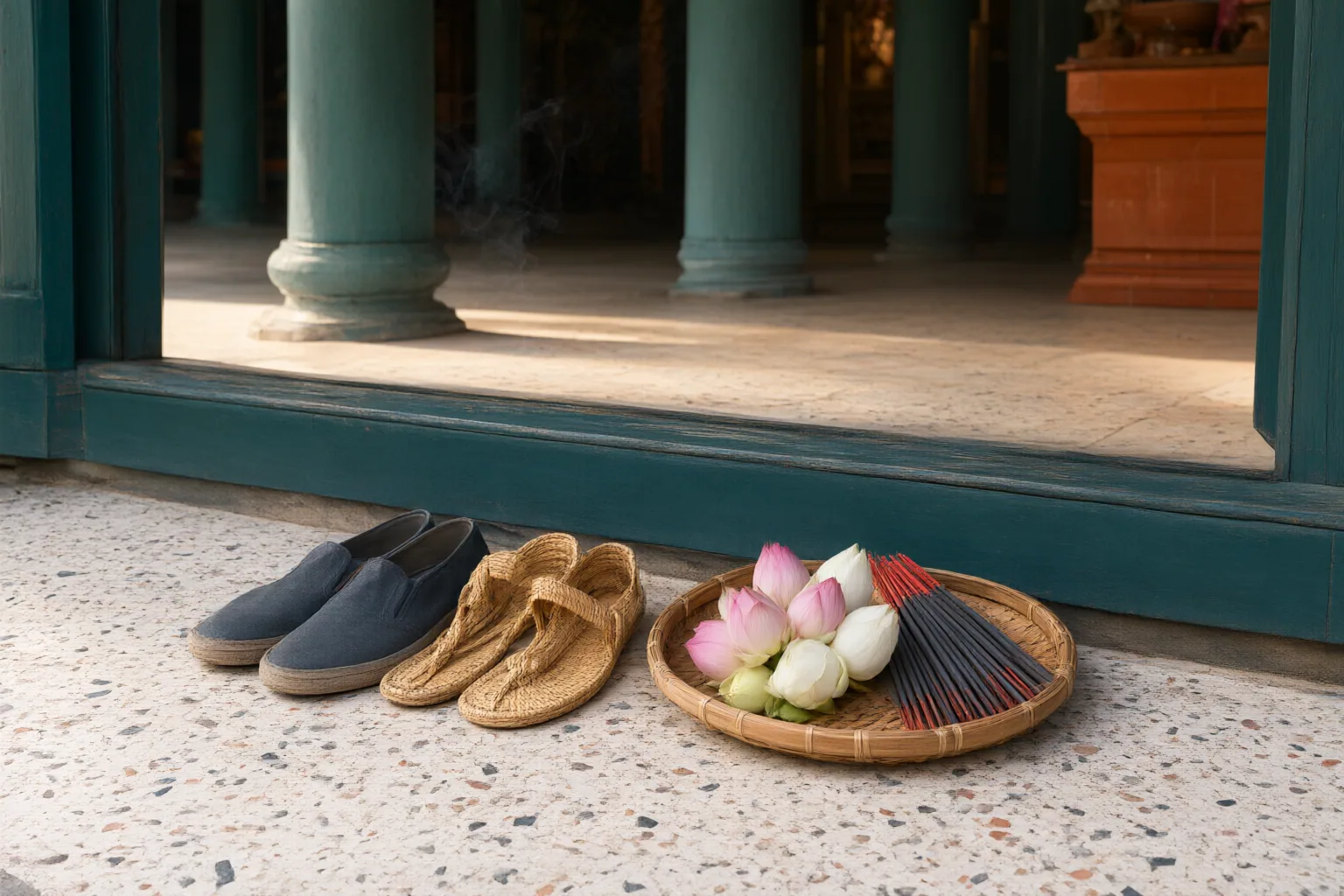
Footwear rules require similar attention to local cues. Remove your shoes wherever signs or staff direct you to do so. A shoe rack or a group of shoes left beside an entrance can also indicate that you are approaching a shoes-off space. Do not assume, however, that footwear must be removed across the entire complex: a rule for one worship hall may not apply to an outdoor courtyard or another building.
Pause at each entrance instead of relying on what happened at the previous doorway. This simple check helps you follow the boundaries of the particular space without treating broad etiquette advice as a universal rule.
When photography is appropriate
Photographing exterior architecture is generally less sensitive than taking pictures inside a sanctuary, but local restrictions still apply. Before photographing within a worship space, check for signs or ask staff. Avoid using flash in worship halls.
People praying deserve particular consideration. Do not photograph them without appropriate permission, and avoid positioning yourself where taking a picture would intrude on worship or obstruct movement. A quiet room with no visible barrier should not automatically be treated as permission to use a camera.
Photography policies may differ from one pagoda to another and even between spaces within the same complex. If the rule is unclear, keep the camera or phone lowered until someone responsible for the site can clarify it. Observing first is the safest practical response when signs and circumstances do not provide a clear answer.
Offerings, donations, and quiet conduct
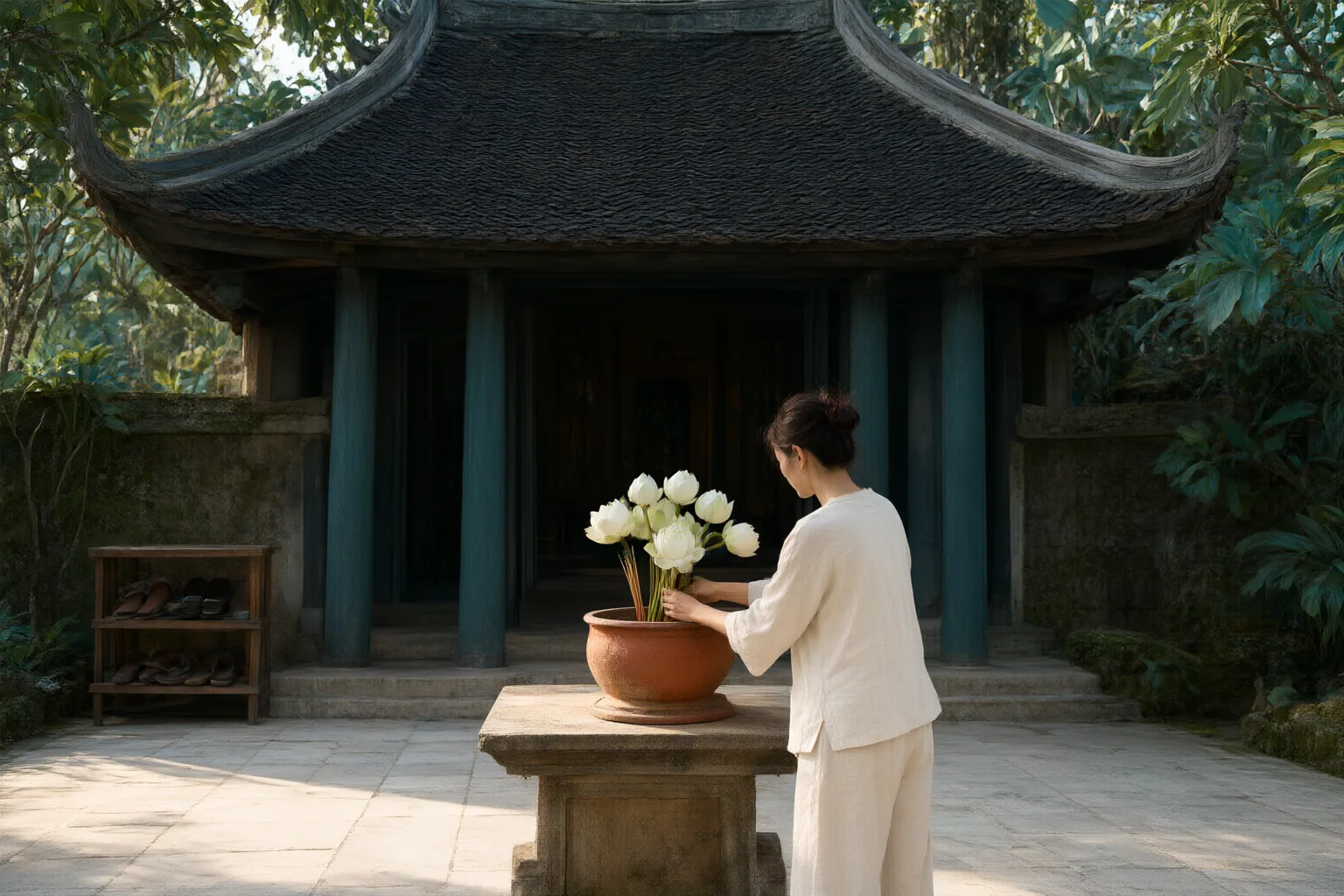
Visitors are not required to light incense or make an offering. If you do not understand a ritual, watching quietly is respectful; participate only when the pagoda permits it and you know what to do. Donations are also optional. If you decide to donate, use the pagoda’s official donation box or stated process rather than improvising.
Inside and around worship areas, speak softly and move calmly. Give worshippers enough space to pray, and keep entrances and incense areas clear. Avoid walking or standing between a person who is praying and the altar. These habits matter because a pagoda may function simultaneously as a place of worship, a community setting, and a destination for visitors.
Do not touch statues, altars, offerings, or ritual objects unless permission is expressly given. An object’s accessibility does not mean it is intended for visitors to handle. Families should keep the same boundaries in mind for children while allowing others to worship without interruption.
Careful observation is more useful than copying nearby actions automatically. If a ceremony is underway or movement through a space seems restricted, wait, follow staff directions, and let worshippers take priority.
Conclusion
The most reliable approach is to arrive with conservative defaults, then adapt to the specific pagoda. Dress modestly, stay quiet, notice footwear cues, and seek permission when photography or ritual expectations are unclear. Follow posted rules and staff instructions over any general checklist.
Conditions may be different during Tết, lunar observance days, festivals, or ceremonies. Pagodas can be busier, while access routes and expectations may change. Before entering, pause to check signs and shoes near the doorway; if you are still uncertain, ask staff before taking a photograph, entering a worship area, or joining a ritual.
Disclosures and limitations
- This article was prepared with AI assistance from the supplied travel-oriented research sources; it does not replace current instructions from an individual pagoda.
- No product or affiliate recommendations are included. Site-specific signs, staff directions, and present worship conditions should take precedence over this general guidance.
Related reading
- Destinations for Curious Trips and Meaningful Stops
- Beach Safety Flags in Vietnam: How to Read Warnings, Swimming Zones, and Rip-Current Clues
- Is Khu Du Lịch Đại Nam a Good Short Trip? A Practical Visitor Guide
Sources
- Temple etiquette in Vietnam: what to wear, do and avoid — vietnamtourism.com
- Vietnam Etiquette for Temple Visits: Tourist Guide | Revitrip — revitrip.com
- Vietnam Pagoda Etiquette Guide: Dos, Don'ts & Tips — vietnamtoday-travel.com
- 10 Pagodas In Vietnam With Magnificent Architecture — TheSmartLocal Vietnam – Travel, Lifestyle, Culture & Language Guide
- Vietnamese Temples & Pagodas: Etiquette And Visitor Guide — Indochina Travel Group
- Buddhism and pagodas in Vietnam: a traveler's guide to temples and rituals — vietnamtourism.com