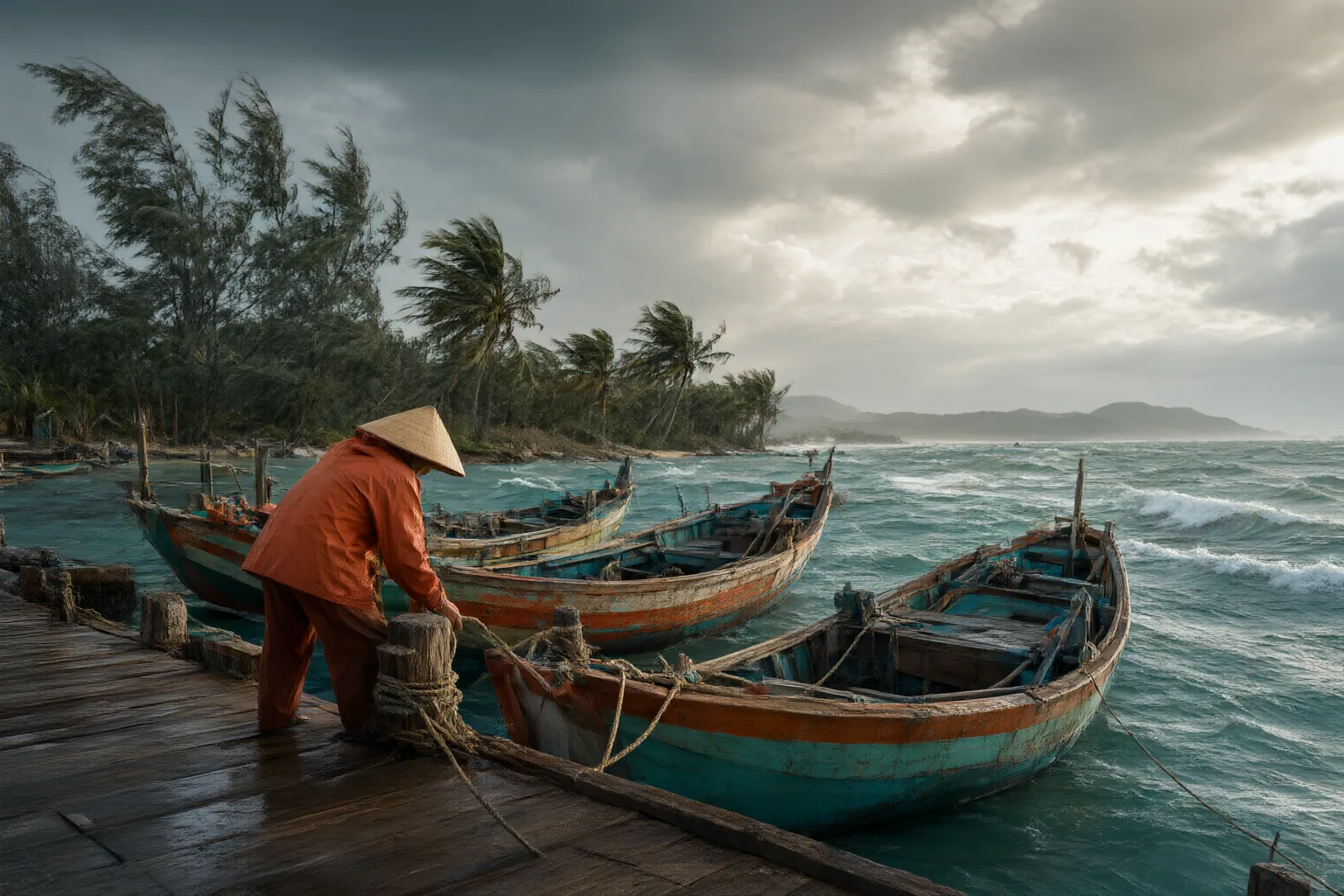
Strong winds can turn a workable Vietnam itinerary into an unsafe one, especially when a route involves exposed roads, boats, or coastal stops. Check official warnings and operator notices for the specific destination and departure time, then continue, reroute, or postpone according to the reported wind, wave, flooding, and landslide risks.
What Strong-Wind Forecasts Mean for a Vietnam Trip
Wind is moving air produced by differences in atmospheric pressure, with air moving from higher-pressure areas toward lower-pressure areas. Forecasts commonly describe its speed and direction: speed is measured with an anemometer, while direction indicates where the wind comes from.
For travelers, the useful question is not simply whether Vietnam is experiencing strong winds. It is whether a forecast covers the location, route, and time of the planned journey. Reports supplied for this guide concern particular events and areas, so their figures should not be treated as current nationwide conditions.
One report, for example, said Typhoon Champi’s circulation could strengthen northeasterly winds over the northern East Sea around October 23–24. It forecast force 6–7 winds, force 9–10 gusts, and waves of 3–5 meters in the affected area. Those figures illustrate why gusts and waves matter to travel decisions, but they do not describe every Vietnamese destination or another date.
Read each warning geographically and by time. A strong-wind notice affecting a sea area may justify changing a boat itinerary without requiring the same response for an inland stop outside that warning. Conversely, a thunderstorm forecast can introduce local hazards even when a tropical system is not expected to enter the East Sea directly.

When to Postpone or Reroute a Boat Trip
Treat forecasts of strong winds, rough seas, or large waves as reasons to reassess a boat journey rather than assume the original schedule will hold. During an August storm in northern Vietnam, reported hazards included very rough seas, possible damage to or sinking of fishing, transport, and tourist vessels, and interruptions to marine tourism. These were event-specific reports, but they show how marine conditions can affect both safety and operations.
Before committing to a departure:
- Check current official weather warnings for the precise sea area and travel period.
- Ask the operator for its latest departure notice and route information.
- Confirm that communications and safety arrangements are in place.
- Do not proceed through a sea area covered by an applicable warning.
- Choose a later departure or a land-based alternative when hazardous conditions affect the planned route.
The Champi report advised vessels to monitor forecasts, maintain communications, inspect safety equipment, adjust routes under official guidance, and avoid warned sea areas. For a passenger, the practical equivalent is to rely on current official direction and operator confirmation rather than an old forecast, a general national outlook, or the original booking time.
Postpone when strong winds or large waves make the intended sea passage hazardous, when the route falls within a warned area, or when safe operating arrangements cannot be confirmed. Reroute only when the alternative is outside the reported hazard and is supported by current official and operator information. The supplied sources do not establish present transport schedules or closures, so verify both immediately before travel.

How to Adapt Overland Plans and Respond Outdoors
Strong-wind travel planning also applies inland. During the reported August storm in northern Vietnam, hazards included fallen trees and signs, urban flooding, flash floods, and landslides. A separate Thanh Hoa report described moderate to very heavy rain accompanied by thunderstorms, whirlwinds, lightning, hail, and strong winds, leading local authorities to request proactive response measures.
These conditions can make a road itinerary unsafe even when it does not include a coastal or boat segment. Review whether the planned route is exposed to trees, signs, bridges, flooding, or terrain affected by landslide risk. If applicable warnings cover the route, delay that segment or select another route only after checking current official information. Do not assume that changing from sea travel to road travel automatically removes the weather risk.
If squalls, strong winds, and heavy rain catch you outdoors, stop moving and seek safe shelter. Guidance on the supplied VietNamNet topic page specifically says to avoid routes with large trees or high bridges. This matters because continuing toward a destination can increase exposure to falling objects or an exposed crossing.
Use a simple sequence: stop, get out of the exposed area, check the warning for your location, and reassess the next segment. Resume only when the information available for that route supports doing so. Where reports mention flooding, flash floods, or landslides, treat those as separate route hazards rather than focusing on wind speed alone. Families and independent travelers should keep the decision centered on current conditions, not on preserving every stop in the itinerary.
Conclusion
Make the decision route by route. Continue only when destination-specific warnings and current operator information do not identify hazards affecting the journey. Reroute when a verified alternative avoids the warned sea or road area. Postpone when strong winds, large waves, flooding, landslides, or unsafe outdoor exposure affect the planned route.
Before departure, check current official weather warnings and operator notices for your exact route. If the reported risks make the journey unsafe, change the plan: delay the trip, choose a safer route, or replace an exposed boat or road segment with an appropriate alternative.
Disclosures and limitations
- This article was prepared with AI assistance using only the supplied research package and was written without firsthand travel, product testing, or interviews.
- Weather reports cited here are time- and location-specific. Verify current official warnings and operator notices before departure; this article contains no product or affiliate recommendations.
Related reading
- Destinations for Curious Trips and Meaningful Stops
- How to Assess a Rural Cycling Route in Vietnam Before You Ride
- Restored Heritage Buildings in Vietnam: How to Assess Comfort Before You Book
Sources
- Gió mạnh — VietNamNet News
- Gió mạnh là gì? Khi tự nhiên phô diễn sức mạnh khí lưu — iweather.edu.vn
- Gió – Wikipedia tiếng Việt — vi.wikipedia.org
- Gió mạnh — Báo và Phát Thanh, truyền hình Thanh Hóa
- Siêu bão Champi mạnh lên "chóng mặt", có thể trở thành bão mạnh nhất thế giới năm 2026 — vietnam.vn
- Vì sao gió thổi mạnh? Giải mã nguyên nhân chênh lệch áp suất — yeukhoahoc.edu.vn
- Bão số 4 đang gây gió mạnh, mưa lớn ở nhiều tỉnh miền Bắc – Saostar.vn — Tạp chí điện tử Saostar.vn