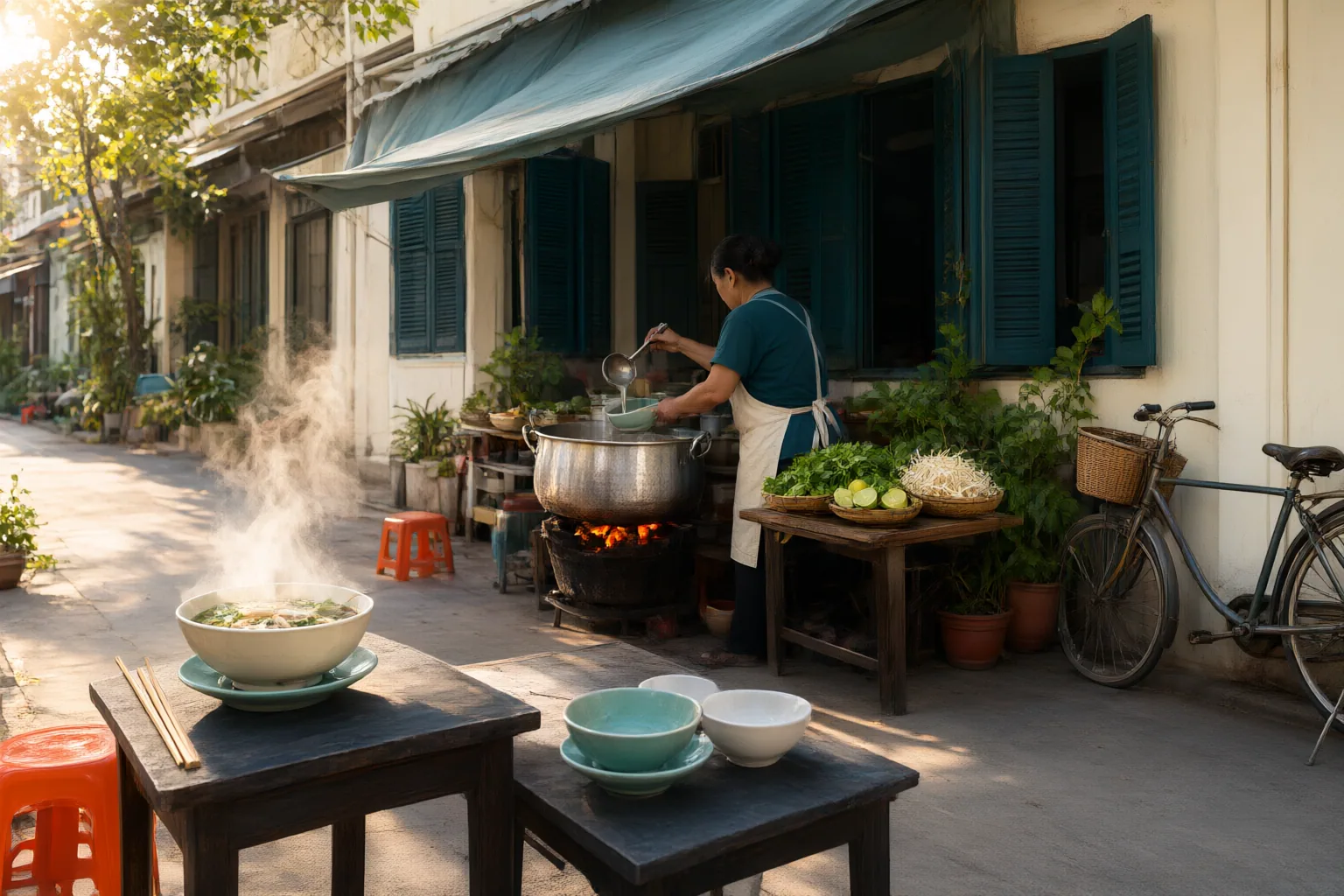
Choose where to eat in Vietnam by assessing the actual venue rather than its label. Consider customer turnover, menu focus, cooking methods, hygiene facilities, water and ice, ordering needs, and your ability to communicate dietary restrictions before deciding whether a market, street stall, family-run eatery, or restaurant suits you.
Start With Your Needs, Not the Venue Label
Begin by identifying what you need from the meal: straightforward ordering, comfortable seating, help discussing ingredients, or a particular level of service. First-time visitors may be uncertain about food safety, unfamiliar ingredients, dining etiquette, or ordering without understanding Vietnamese. Travelers with allergies, strict diets, digestive conditions, or low immunity may need to prioritize clear communication and careful ingredient checks.
Do not assume that a broad label reveals how a place operates. A roundup of family-owned businesses outside Vietnam includes an 18-seat seafood counter, a combined fish market and casual eatery, taverns, cafés, and full-service restaurants. That example does not describe conditions in Vietnam, but it demonstrates the limited point that family ownership can span very different service formats. Likewise, calling somewhere a market, stall, eatery, or restaurant does not by itself establish whether it will meet your needs. Judge the individual establishment’s seating, ordering process, menu, cooking setup, and available facilities.
Compare What You Can Observe Before Ordering
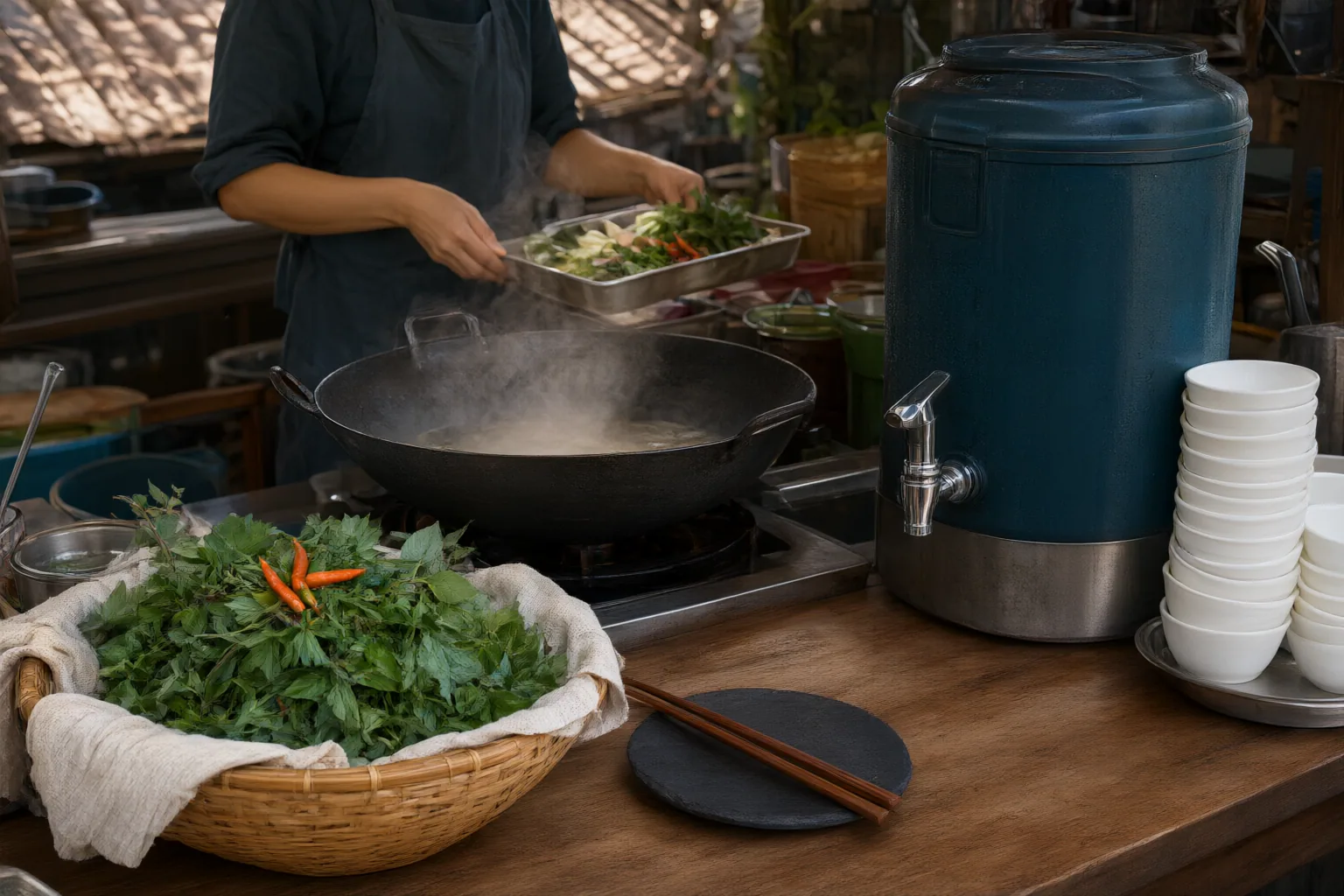
The Vietnam travel source recommends looking for busy local eateries, particularly during mealtimes. It also notes that these places commonly have short menus or no formal menu. Customer turnover and a focused selection can be useful observations, but neither should be treated as a guarantee of safety.
Next, watch how the food is prepared. If you are cautious about raw or undercooked items, identify dishes that are served hot and fully cooked. Check whether the venue has a functioning sink and soap; the source warns that some street stalls and small family-run eateries do not. Also consider what you can establish about drinking water and ice. Its guidance favors properly labeled bottled water or filtered water and recommends extra caution with ice at very cheap or makeshift stalls.
Use the same checks in every setting. A restaurant label should not replace observation, while a compact stall should not be judged only by its format. Compare the conditions you can see with your personal comfort level, then decide whether you have enough information to order confidently.
Adjust the Choice for Health and Dietary Needs
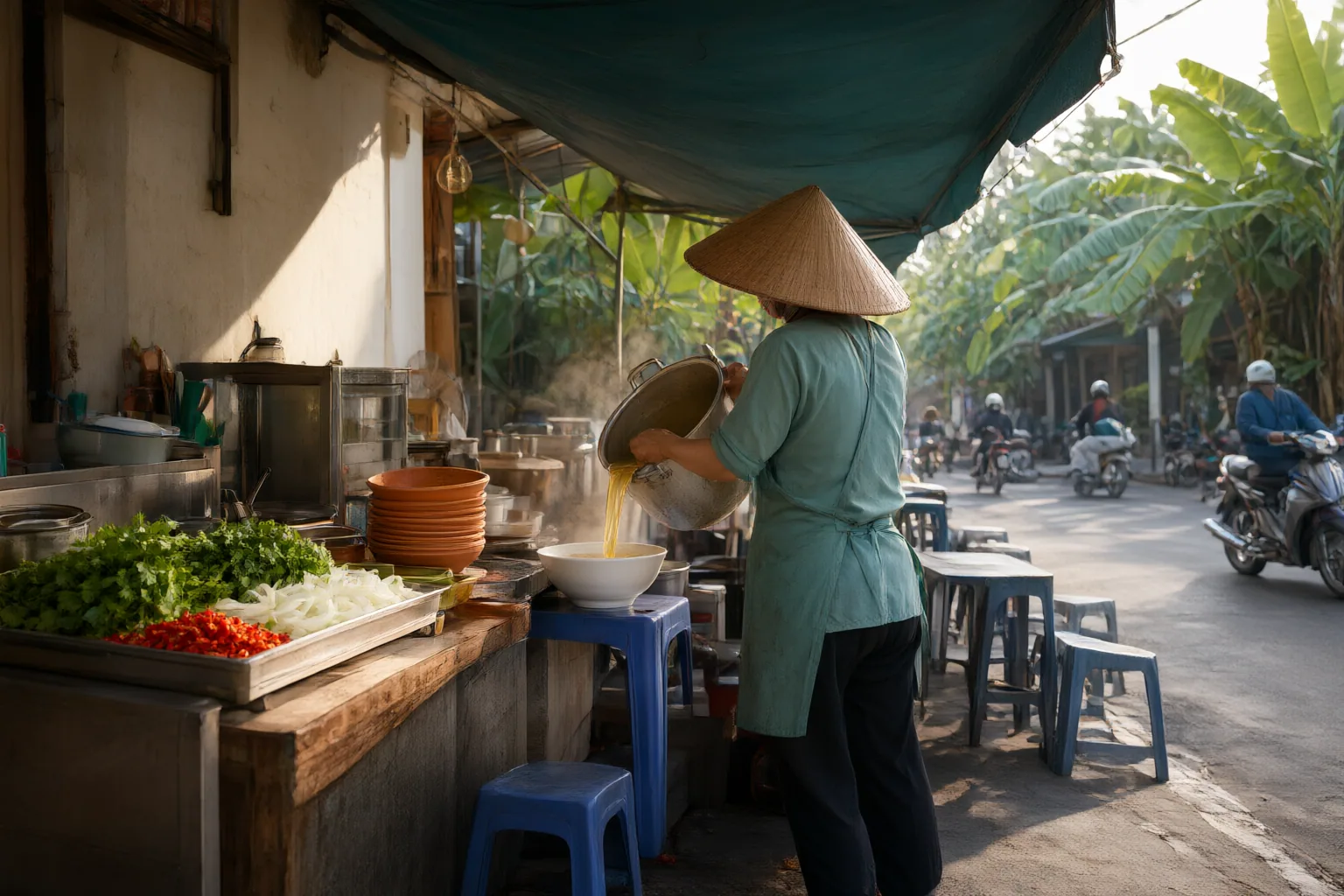
Travelers with sensitive stomachs or little familiarity with local ingredients can begin with hot, fully cooked soups, stir-fries, grilled meats, or steamed foods, as recommended by the Vietnam travel source. This is cautious travel guidance rather than a promise that any particular dish or venue is risk-free.
If handwashing facilities are limited, the same source recommends carrying hand sanitizer, tissues, and wet wipes. For drinks, choose properly labeled bottled water or filtered water and be cautious about ice at very cheap or makeshift stalls. These practical preparations may be especially relevant when considering a street stall or small eatery where a functioning sink with soap may not be available.
Dietary communication requires separate planning. Prepare a clear explanation of your restrictions in Vietnamese before the meal rather than relying only on a venue category or visual inspection. The source notes that dishes may contain less-obvious ingredients such as fish sauce, MSG, fermented vegetables, or animal fat used as cooking oil. People managing allergies, strict diets, digestive conditions, or low immunity should therefore ask about ingredients and select the setting where their restrictions can be communicated most clearly.
Conclusion
The most useful comparison is not market versus restaurant, or street stall versus family-run eatery. It is the match between your needs and the conditions at the specific place. First decide how much assistance, seating, and dietary communication you require. Then observe customer turnover at mealtimes, menu focus, cooking methods, handwashing facilities, and the available water and ice. Ask about ingredients that may not be obvious, and do not treat ownership or venue labels as evidence of suitability.
Before your next meal, use a short checklist: confirm that the format fits your comfort and service needs; observe how the food is cooked and handled; assess the facilities and customer turnover; choose an appropriate water option; and keep a Vietnamese translation of any dietary restrictions ready. If the available information does not meet your needs, choose another venue where you can make a more informed decision.
Disclosures and limitations
- This article was prepared with AI assistance from the supplied research package and reviewed within its stated evidence boundaries. Its claims draw from a Vietnam travel operator’s experience-based guidance and a separate family-owned restaurant roundup used only to illustrate variation in service formats.
- The cited food-safety suggestions are practical travel guidance, not official public-health advice or guarantees. No product recommendation or affiliate relationship is presented.
Related reading
- Food & Drink Guides for Curious Travelers
- Common Menu Terms in Vietnam: A Practical Guide to Reading and Ordering
- Vietnam Dining Etiquette: What Travelers Should Know Before Sharing a Meal
Sources
- 9 Family-Owned Restaurants in California Full of Charm — My Family Travels
- How to Eat Safely in Vietnam: What Travelers Should Know — Beyond Vietnam