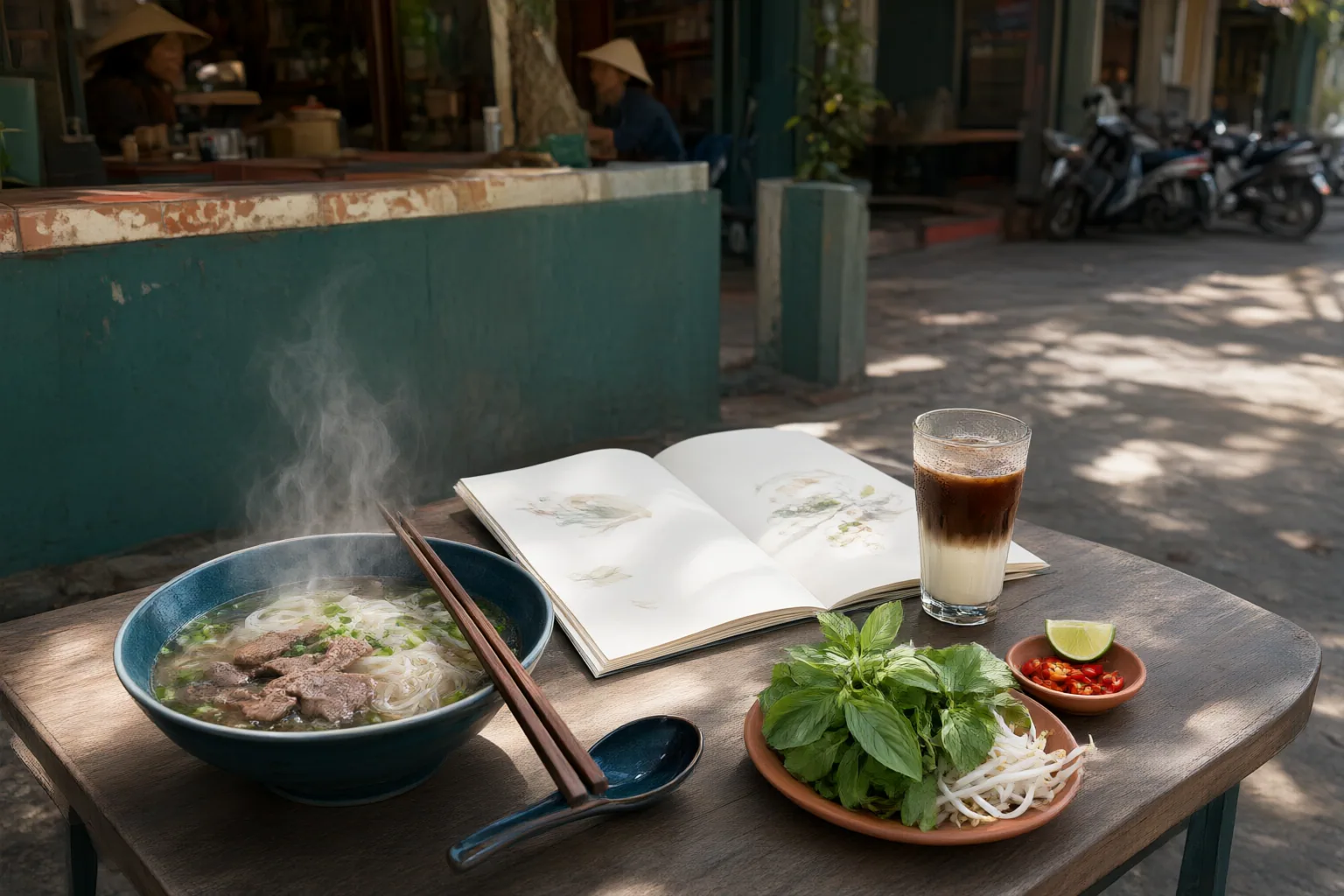
When reading a menu in Vietnam, first look for familiar food or drink clues, then decide whether the remaining wording describes a dish, ingredient, price, option, preparation method, or service format. If an important detail is still unclear, ask one specific question before ordering.
Start With Familiar Food and Ingredient Clues
A small amount of food vocabulary can make an untranslated menu easier to approach. Recurring concepts that travelers may learn to recognize include chicken, beef, rice, ice, milk, tea, and coffee. Spotting one of these clues can identify the broad subject of an item and make the surrounding text less difficult to separate into meaningful parts.
This can be particularly useful in small noodle shops without translated menus, neighborhood markets, family cafés, and less-visited towns, where English may be limited. Vietnamese accent marks can make unfamiliar text appear hard to segment, so begin with the few elements you recognize instead of trying to interpret an entire line at once.
Partial recognition has clear limits. Identifying rice, beef, or coffee does not reveal every ingredient, sauce, accompaniment, or preparation detail. You may understand the general kind of food while remaining unable to identify individual components or follow a vendor’s complete explanation. Treat familiar vocabulary as a starting point for narrowing the choice, not as a complete description of what will arrive.
Separate Dish Names From Ordering Information
Not every unfamiliar expression on a menu names something you can eat. Menu language can refer to several different kinds of information: the dish itself, its ingredients, its price, available options, the ordering process, or the format in which food is offered. General menu terminology also includes concepts such as à la carte service, buffets, tasting menus, and table d’hôte menus. These examples illustrate possible menu functions; they should not be treated as uniquely Vietnamese dining conventions.
Use the menu’s layout to classify information before trying to interpret every word. Ask whether a line appears to be a main item, a component, a choice, a price, or a service format. A repeated expression beside several items may be providing an option or preparation label rather than naming another dish. Likewise, wording near a number may relate to price or portion structure, although the available sources do not establish specific Vietnamese labels for either.
Preparation wording belongs in its own category. It can indicate how food is cooked, but it does not necessarily disclose everything used in the process. This distinction helps prevent a cooking label from being mistaken for a complete ingredient list.
Ask Focused Questions When the Menu Is Not Enough
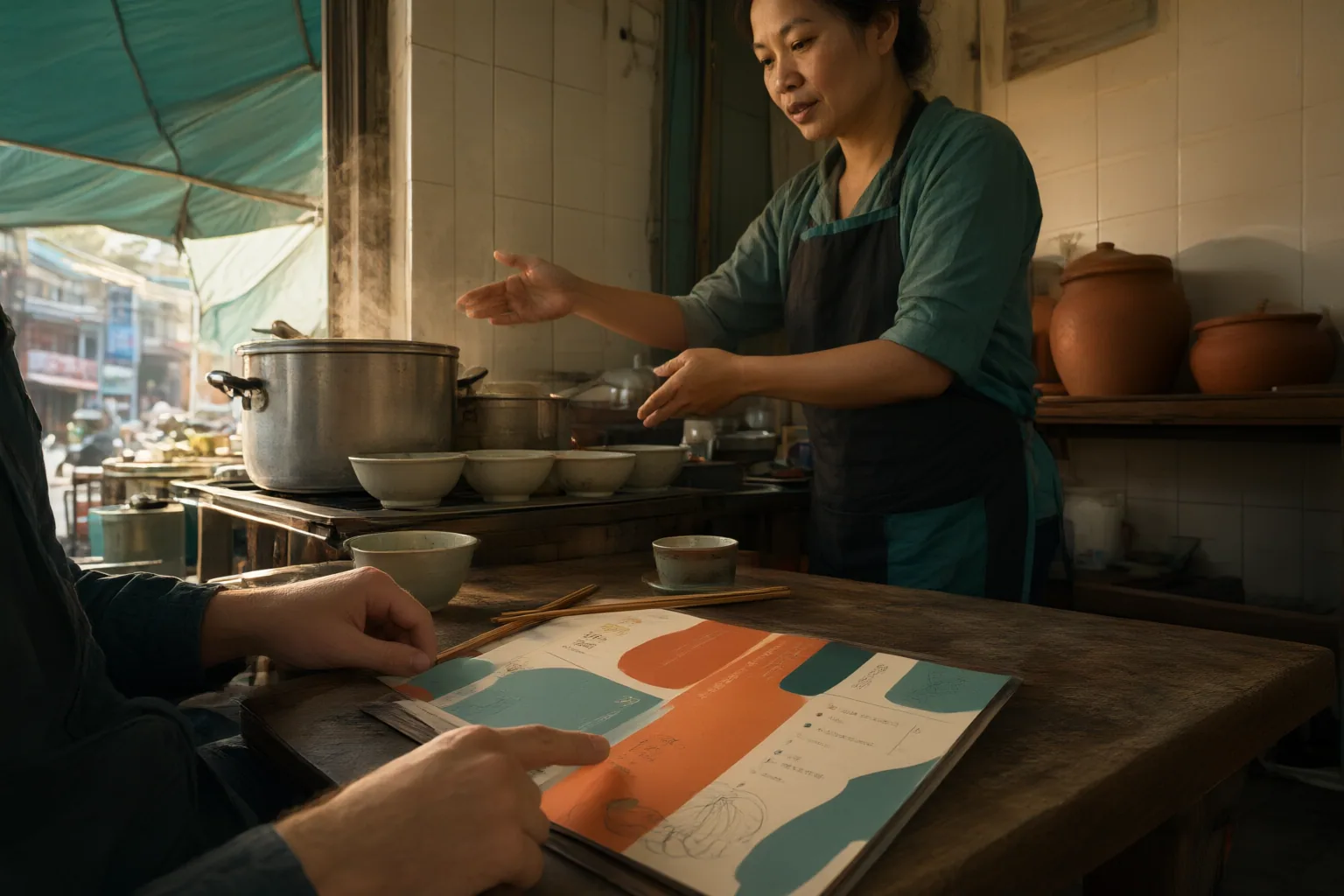
When a detail matters, ask about that detail directly. A preparation label alone may not identify the cooking oil, every component of a sauce, or everything included in a marinade. Instead of asking a broad question about the whole dish, use a narrow question such as, “What oil do you use for frying?” If your concern is a sauce or another component, name that component and the ingredient you need clarified.
This approach keeps the conversation centered on information the menu has not supplied. It is especially useful when you recognize the main food but cannot determine how it was prepared or what else accompanies it. Do not infer a complete recipe from one familiar word or from a single cooking description.
Address can add another layer of uncertainty. Vietnamese commonly uses kinship-based forms including anh, chị, em, cô, chú, bác, ông, and bà. The appropriate choice can depend on relative age and the social relationship being expressed, both of which may be difficult for a visitor to judge confidently. The supplied evidence does not establish one universally appropriate form for every ordering situation. Whatever form of address is used, keep the substantive question short and specific so the ingredient or preparation detail remains clear.
Conclusion
Use a three-step routine when reading menus in Vietnam. First, identify any familiar food or drink clues. Second, classify the other wording by its likely function: dish, ingredient, price, option, preparation, or service format. Third, if something important remains uncertain, ask one precise follow-up question rather than assuming the menu provides a complete recipe.
At your next restaurant, market stall, or café, pause before ordering: identify what each useful clue tells you, then ask the server or vendor one focused question about the ingredient or preparation detail that matters to you.
Disclosures and limitations
- This article was created with AI assistance and is based only on the supplied research sources. It does not claim firsthand dining, purchasing, testing, or interviewing experience.
- No products are recommended in this guide, and no affiliate relationship or commission is represented.
Related reading
- Food & Drink Guides for Curious Travelers
- Vietnam Dining Etiquette: What Travelers Should Know Before Sharing a Meal
- How to Evaluate Hygiene When Choosing Street-Food Stalls in Vietnam
Sources
- Why Learning Vietnamese Makes Travel More Meaningful | Polyglottist Language Academy — Polyglottist Language Academy
- Menu Words – 400+ Words Related to Menu — relatedwords.io
- The Hidden Seed Oil Guide: How to Spot Them on Restaurant Menus — seedoilscout.com