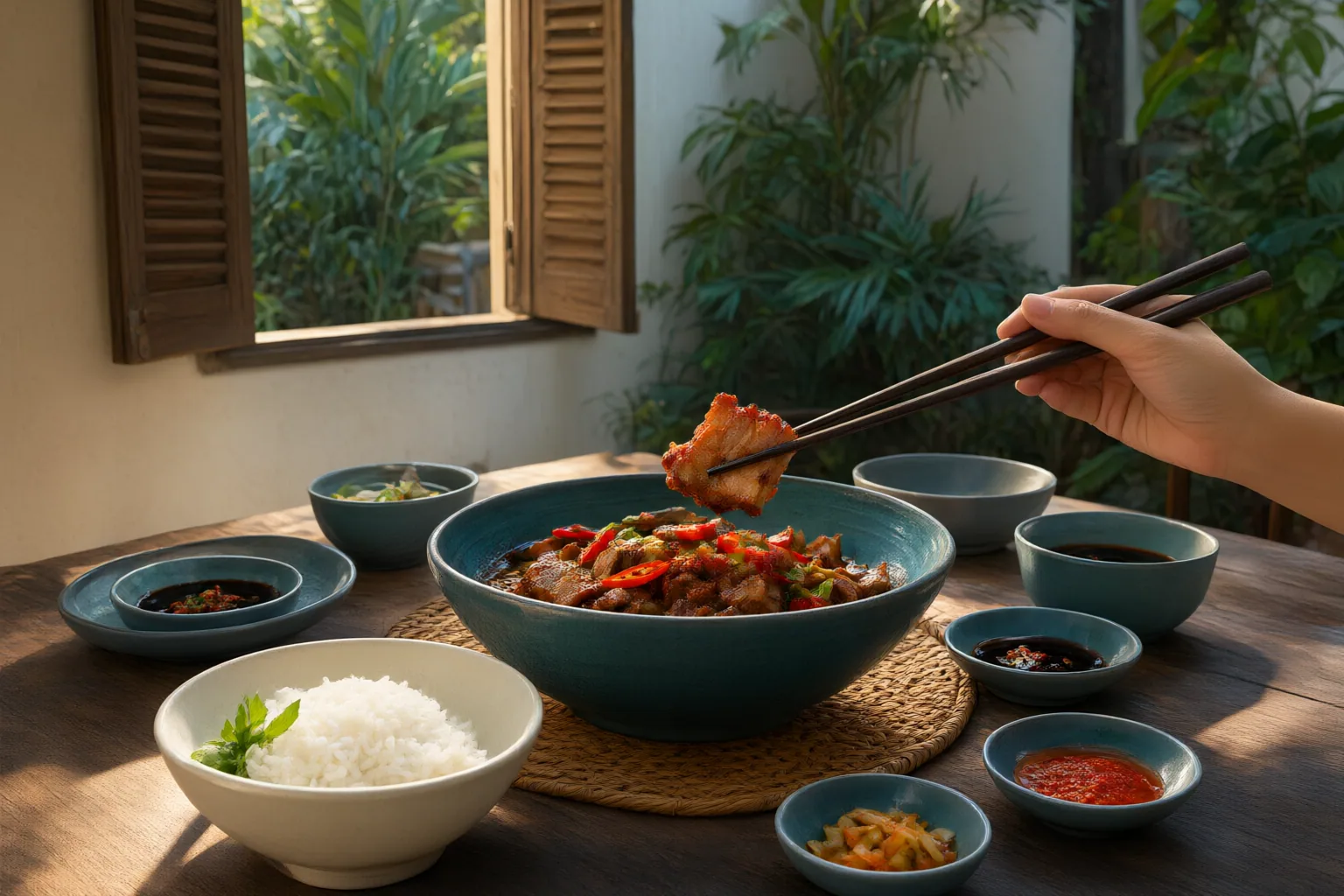
At a shared meal in Vietnam, take your cues from the host, wait before starting, move food from communal dishes to your own bowl, and handle chopsticks considerately. Customs vary, but attentive observation is a reliable starting point.
How a Shared Vietnamese Meal Typically Works
Vietnamese family-style meals commonly feature several dishes placed in the center of the table. Diners share those dishes while using individual rice bowls. For travelers more familiar with separate plates, the key difference is that food generally moves from a communal plate into the personal bowl before it is eaten.
Watch how other diners take food and follow the table’s pace. Rather than treating a central dish as an individual serving, take a portion for your bowl and leave the dish accessible to everyone. This approach fits the communal structure without assuming that every household follows precisely the same routine.
Context matters. Practices can differ among households, generations, regions, and venues. A meal in a family home or homestay may place greater emphasis on shared-table customs and hierarchy than a casual street-food stop or a tourist-oriented restaurant. When the arrangement is unfamiliar, observing the host and other diners can help clarify what applies at that particular table.
When to Start and How to Respect the Host
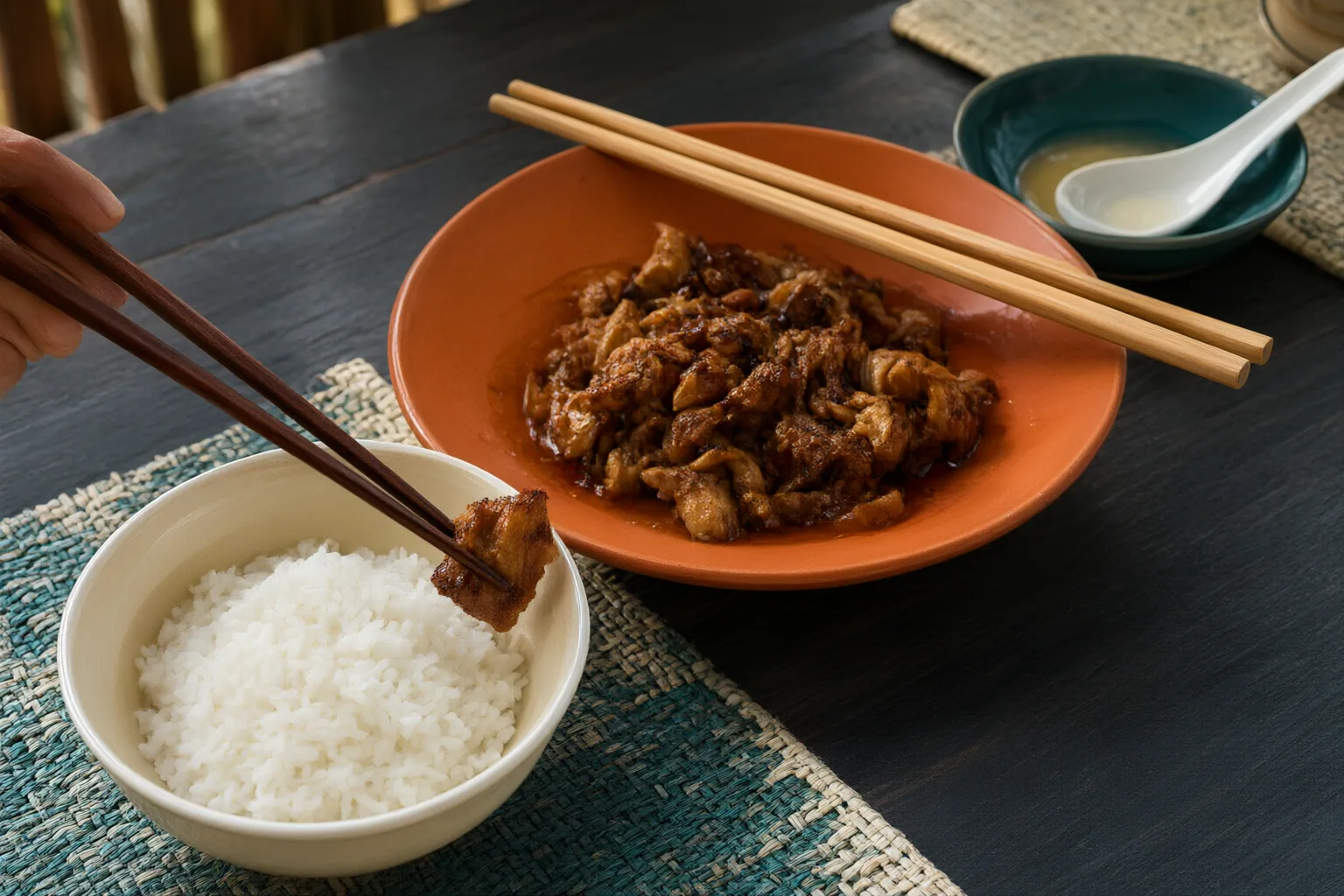
In family and formal settings, diners commonly wait for the eldest person or the host to begin. A host may instead invite a guest to start first, so the practical rule is to pause briefly and look for a verbal or visual cue rather than eating as soon as food arrives.
This custom reflects the social character of a shared meal, but it should not be treated as an inflexible rule for every restaurant or informal gathering. If the host encourages you to begin, accepting that invitation is consistent with following the host’s lead. If no cue is immediately clear, watching the table for a moment usually prevents an awkward start.
Hospitality can be acknowledged simply. Thanking the host and offering a sincere compliment about a home-cooked meal are appropriate ways to recognize the effort involved. There is no need for an elaborate performance: attentive participation, consideration for the other diners, and a clear expression of thanks communicate respect without assuming that customs are identical in every home.
Chopsticks, Shared Dishes, and Common Mistakes to Avoid
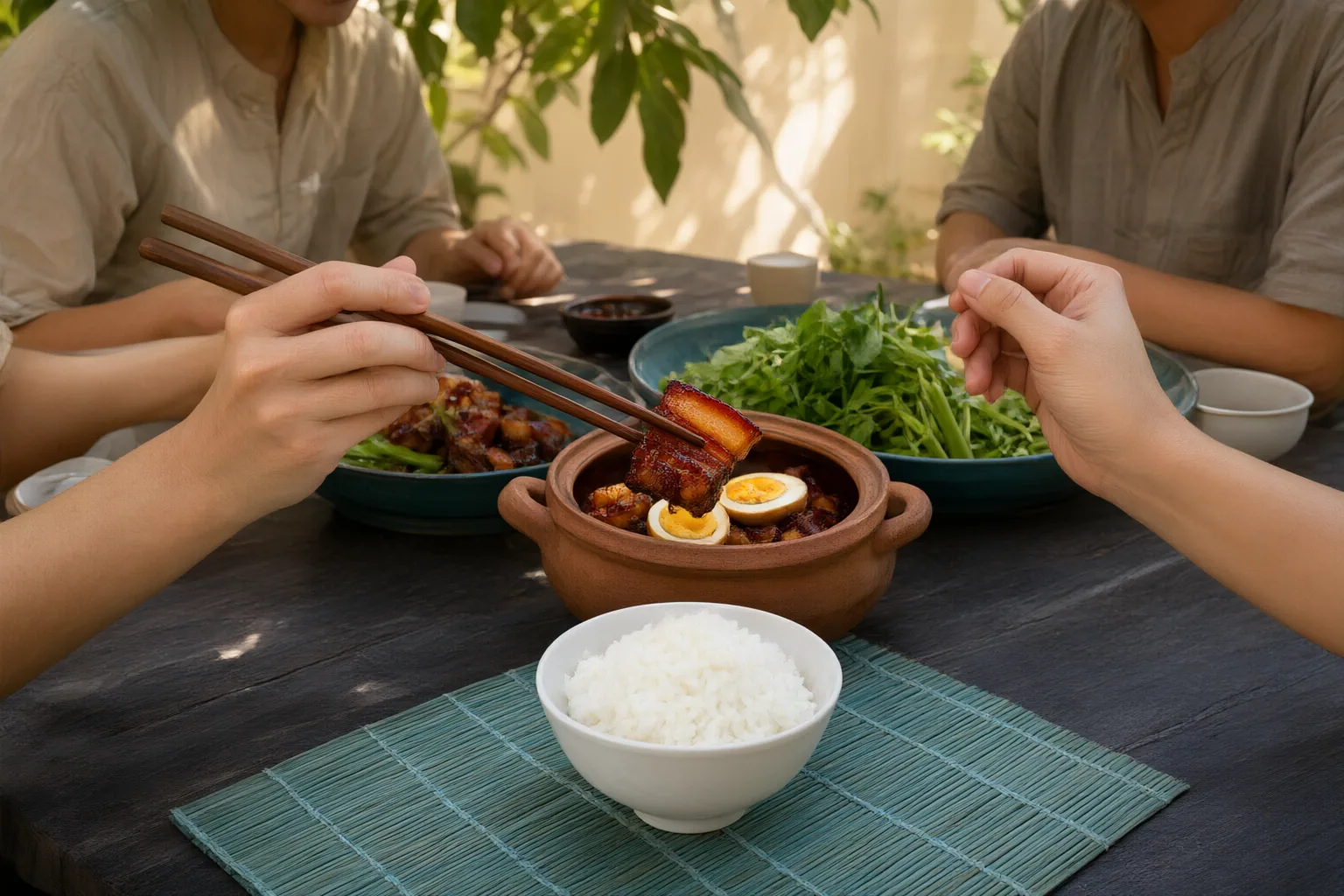
When taking food from a communal dish, use the provided serving utensils when they are available. The cited guides also recommend using the clean reverse ends of chopsticks instead of the ends that have touched the mouth. Place the selected food in your personal bowl before eating it.
Several chopstick gestures are best avoided. Do not leave chopsticks standing upright in a bowl of rice, because multiple guides associate that arrangement with incense used in ancestor or funeral observances. Pointing or waving with chopsticks, or tapping them against tableware, is also described as impolite or disruptive. When you are not using them, place them down without turning them into a gesture or leaving them upright in food.
Phones deserve similar consideration. General table-manners guidance recommends silencing and putting away a phone during a meal, while one Vietnam-focused guide describes placing a mobile phone on the dining table as both impolite and unhygienic. Keeping it off the table allows attention to remain on the shared meal.
These recommendations are most useful as considerate defaults. The exact utensils and habits at a table may differ, so follow what the host provides and observe how communal dishes are being handled.
Conclusion
The most useful approach to dining etiquette in Vietnam is attentive rather than complicated: watch the host, wait for a cue to begin, transfer shared food considerately, and avoid distracting chopstick gestures. Remember that a family home or formal meal may emphasize hierarchy and communal etiquette more than a street-food venue or tourist-oriented restaurant.
The available sources are travel and etiquette guides rather than official cultural authorities, and customs may vary by household, generation, region, and setting. Treat these practices as practical guidance, then adapt to the people and meal in front of you. At your next shared meal in Vietnam, pause for the host’s cue, use the available serving utensils, and thank your host before leaving.
Disclosures and limitations
- This article was prepared with AI assistance using the supplied travel, food, and etiquette sources. The sources are not official cultural authorities, and publication dates were unavailable for four of the five sources.
Related reading
- Food & Drink Guides for Curious Travelers
- How to Evaluate Hygiene When Choosing Street-Food Stalls in Vietnam
- Choosing Food Experiences for Children in Vietnam: A Practical Family Guide
Sources
- Vietnamese Dining Etiquette: Respect & Sharing — https://vietpowertravel.com/blog/vietnamese-dining-etiquette.html
- Vietnamese Dining Etiquette: Chopsticks, Sharing, and Saying ‘Thank You’ — Seek Vietnam
- Table Manners and Etiquette: A Complete Expert Guide — wikiHow
- 49 Eating Rules of the Vietnamese According to Ancient Customs – Hue Flavor — Hue Flavor
- Navigating the Table: Essential Vietnamese Dining Etiquette for Travelers — Seek Vietnam