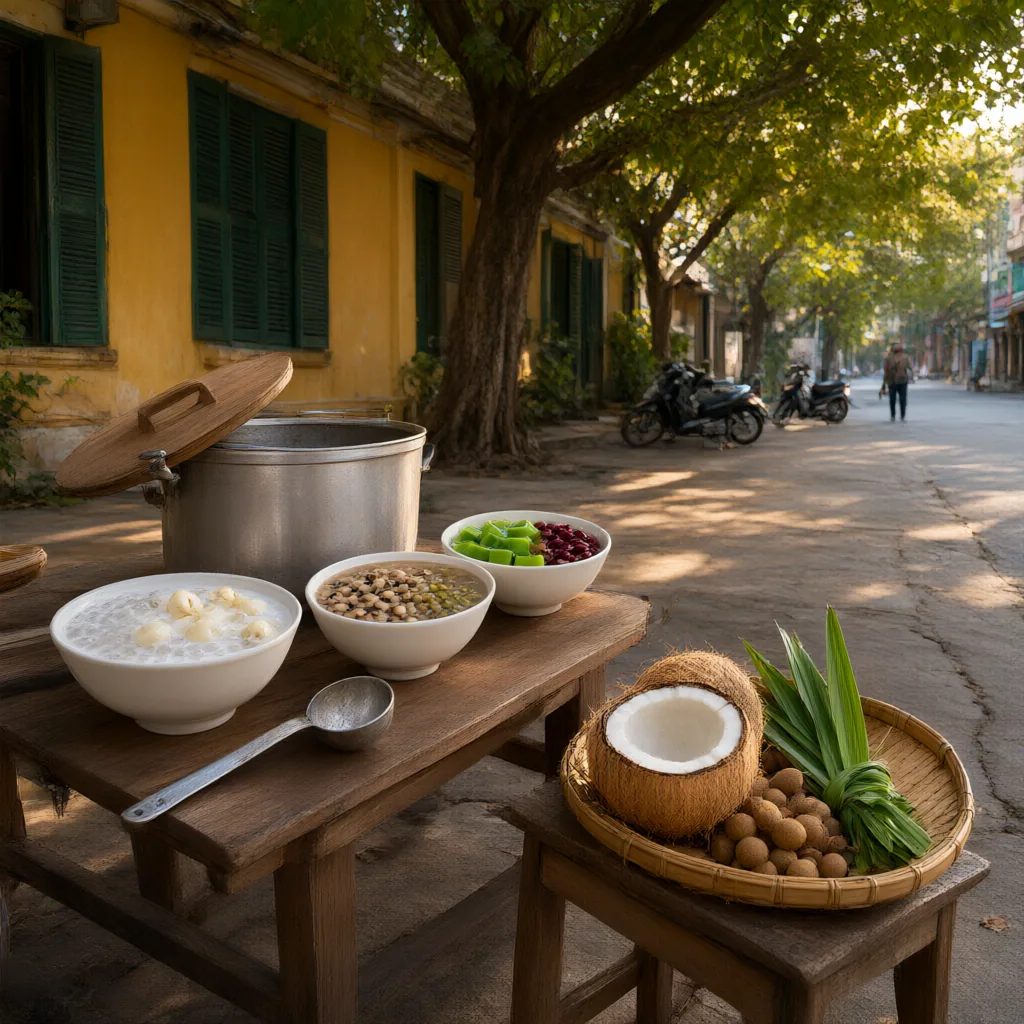
Saigon rewards anyone who likes dessert with range rather than spectacle. A single afternoon can take you from a chilled glass of black bean sweet soup to warm sesame soup, coconut-rich puddings, fruit-packed bowls, and shaved ice layered with jellies and syrups. If you want to eat like a local instead of chasing novelty, the best approach is to understand the styles of che you are likely to find and the settings where each one feels most at home.
What makes Saigon sweet soup worth seeking out
In southern Vietnam, sweet soup is less a single dessert than a flexible category. Some bowls are light and refreshing, built around beans, lotus seeds, seaweed, or tropical fruit. Others are richer, using coconut milk, sticky rice, taro, or soft dumplings for a fuller finish. That variety makes sweet soup especially useful for travelers: it works as an afternoon break, a casual post-dinner stop, or an inexpensive way to sample regional flavors without committing to a large meal.
The Saigon version often leans bright, cold, and easy to eat in warm weather, but that does not mean every dessert is icy or sugary. Many shops balance sweetness with texture, so the pleasure comes from contrast: creamy coconut against crushed ice, chewy tapioca pearls with soft beans, or fragrant pandan beside nutty sesame.
Styles to look for when reading a menu
If you are new to Vietnamese desserts, start with the simpler bowls before moving into mixed combinations. Bean-based sweet soups are a good entry point because they show how subtle the category can be. Mung bean, black bean, red bean, and lotus seed versions are all common, and each brings a different texture.
From there, try mixed desserts that combine jellies, fruit, coconut milk, basil seeds, and ice. These are often the most refreshing options on hot days. Sticky rice desserts are heavier and better when you want something closer to a small snack than a cooling drink. Banana, taro, cassava, and corn also appear often, especially in puddings or warm sweet soups with coconut.
A useful rule in Saigon is to decide first whether you want something cold, creamy, chewy, or light. That choice will guide you better than focusing on one name alone.
Where sweet soup fits into a day in Saigon
Dessert shops in Saigon tend to be woven into everyday routines. Some are tiny neighborhood counters with a few metal tables, while others feel more like casual cafes. Late afternoon is often the easiest time to explore because the heat makes chilled desserts especially appealing and local snack culture is at its liveliest.
Street-facing stalls can be excellent for a quick bowl, but look for signs of steady turnover, clean ingredient storage, and desserts kept covered or properly chilled. In busier dining streets, sweet soup also makes sense as the last stop after savory food. If you are traveling with family or a mixed group, these places are useful because menus usually offer enough variety for different tastes and heat tolerance.
How to choose well without relying on hype
The most memorable dessert stop is not always the one with the longest menu. A focused shop that does a handful of sweet soups consistently can be a better pick than a place trying to cover every snack category at once. Watch what locals are ordering, ask whether a dessert is served hot or cold, and do not hesitate to choose two contrasting bowls to share.
If you prefer gentle sweetness, mention that when ordering where staff can adjust ice, syrup, or coconut milk. Travelers who are texture-sensitive should ask about ingredients like tapioca pearls, beans, jellies, or seeds, since those details define the experience.
Saigon’s sweet soup culture is best enjoyed with curiosity rather than a checklist. Instead of hunting for one perfect bowl, explore the city through its dessert habits: cooling, generous, layered, and unmistakably social.