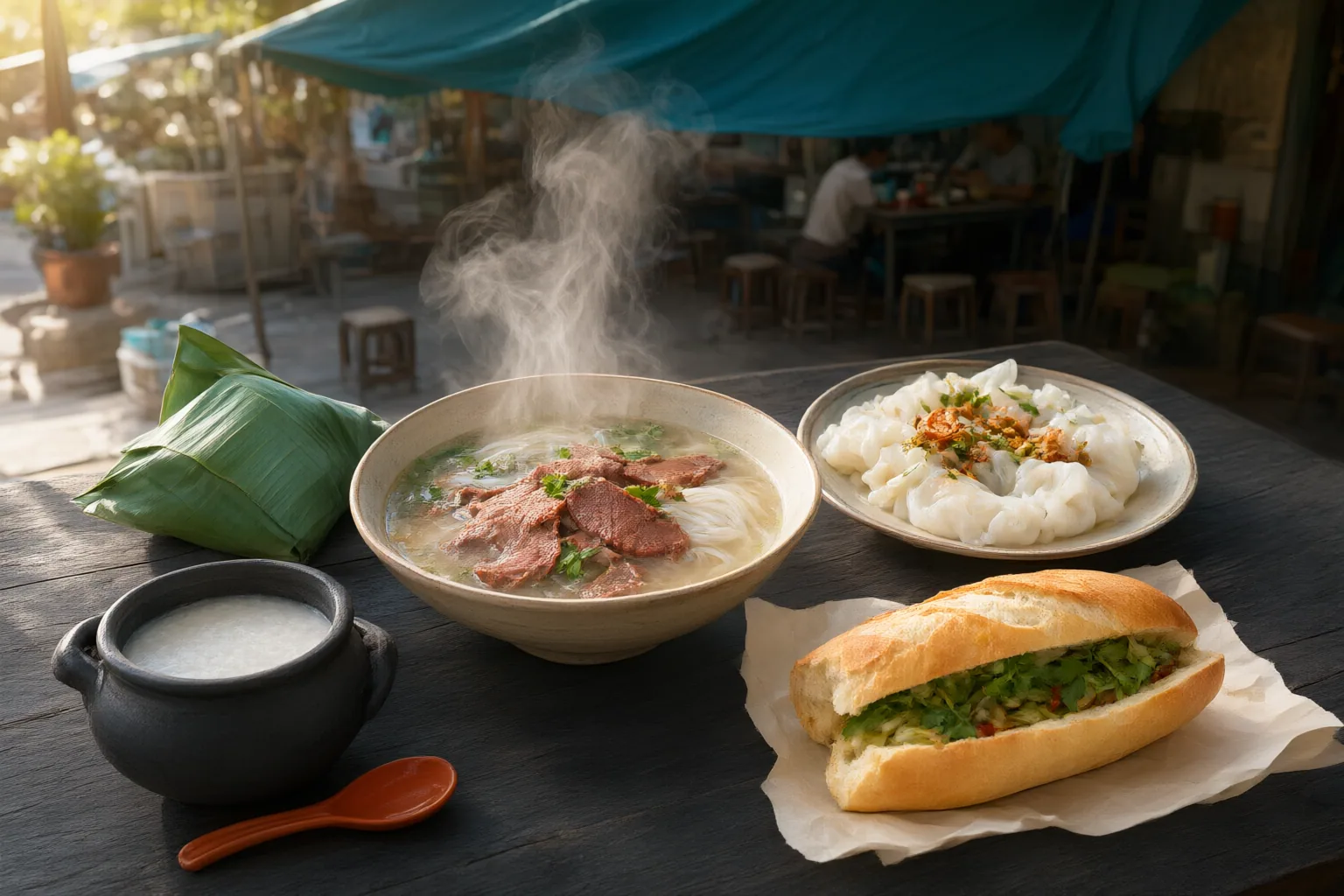
Vietnamese breakfast is varied, savory, and often served early. To find the widest choice, look between 6:00 and 9:00 at morning markets, street stalls, or small specialist shops, then identify dishes by format: noodle soup, low-broth noodles, sticky rice, steamed rolls, porridge, a rice plate, or a baguette sandwich.
When and Where to Find Breakfast in Vietnam
Plan breakfast toward the beginning of the day. One source places the usual eating period between 6:00 and 8:00, while another describes urban breakfast activity from 6:00 to 9:00. These are useful planning windows rather than guarantees for every vendor.
Morning markets, street stalls, and small shops specializing in one dish are practical places to search. Do not assume that a breakfast business will continue serving through lunch: specialist stalls can close after their prepared batch sells out, sometimes by mid-morning or before lunchtime. Going earlier therefore improves the chance of finding the dish you want.
A stall attracting local morning customers can be a useful selection cue, especially when several nearby vendors sell similar foods. A crowd alone, however, does not establish food quality or safety. Use it only to narrow the options, then choose according to your own needs and observations.
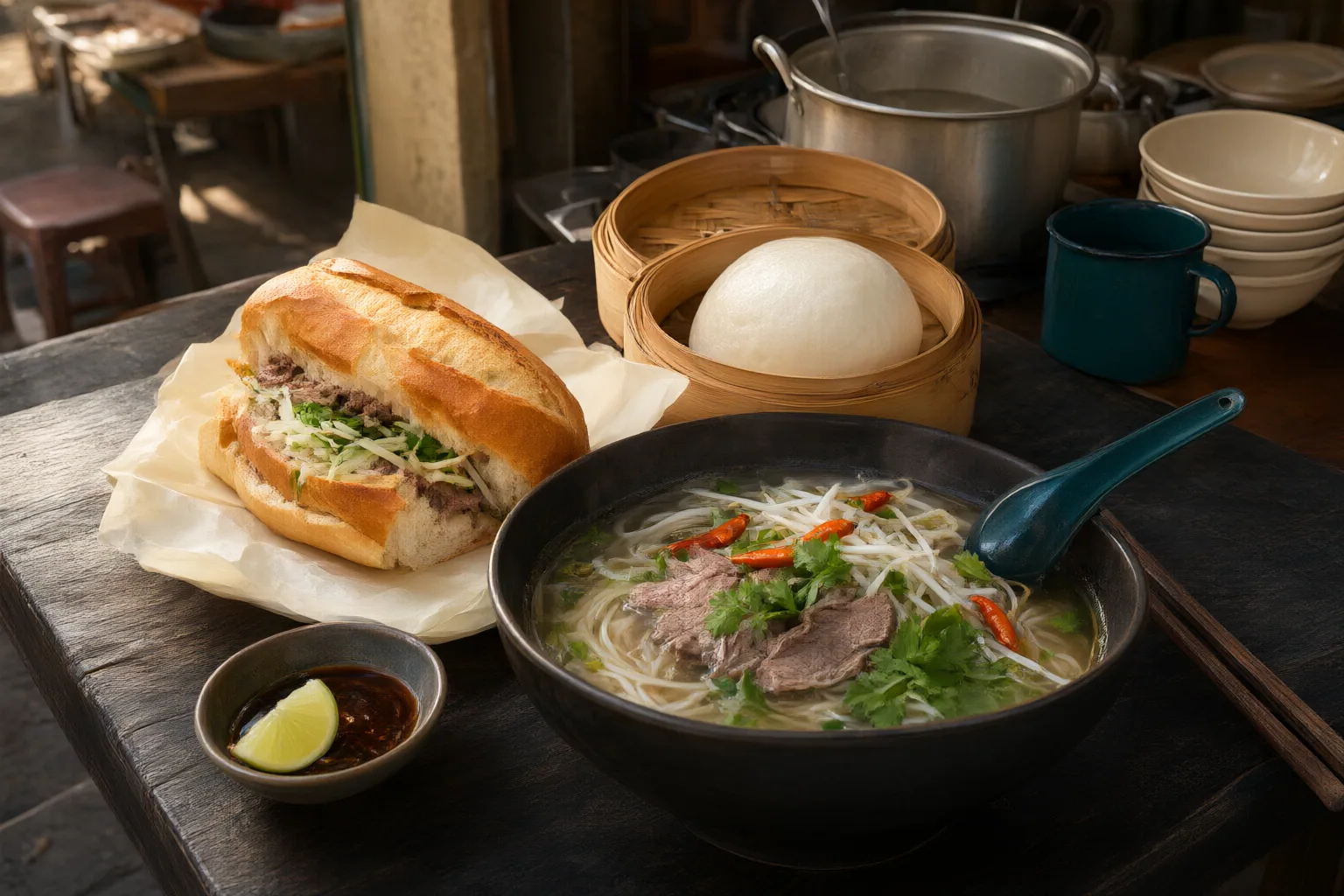
How to Recognize the Main Dish Types
Start with the food’s visible format rather than trying to interpret an unfamiliar name.
- Phở: A rice-noodle soup served with beef or chicken. The cited guides particularly associate it with northern Vietnamese breakfast.
- Bánh mì: A portable baguette sandwich. Common fillings described by the sources include pâté, meat, pickled vegetables, herbs, and chili. Its handheld format makes it practical when traveling between stops.
- Xôi: Sticky rice sold in sweet or savory forms. Depending on the version, toppings can include mung beans, chicken, pork floss, peanuts, or fried shallots. Sources describe it as both filling and portable.
- Bánh cuốn: Thin, steamed rice sheets commonly filled with seasoned pork and wood ear mushrooms. They are served with elements such as fried shallots, herbs, and dipping sauce, making them visibly different from a bowl of noodle soup.
- Cháo: Rice porridge. Plain cháo is identified by one source as a milder, simpler option.
If heat is a concern, one cited guide reports that travelers can request a dish without spiciness by saying “không cay.” Ingredients and serving styles can still vary, so use these descriptions as recognition cues rather than a promise that every portion will be identical.
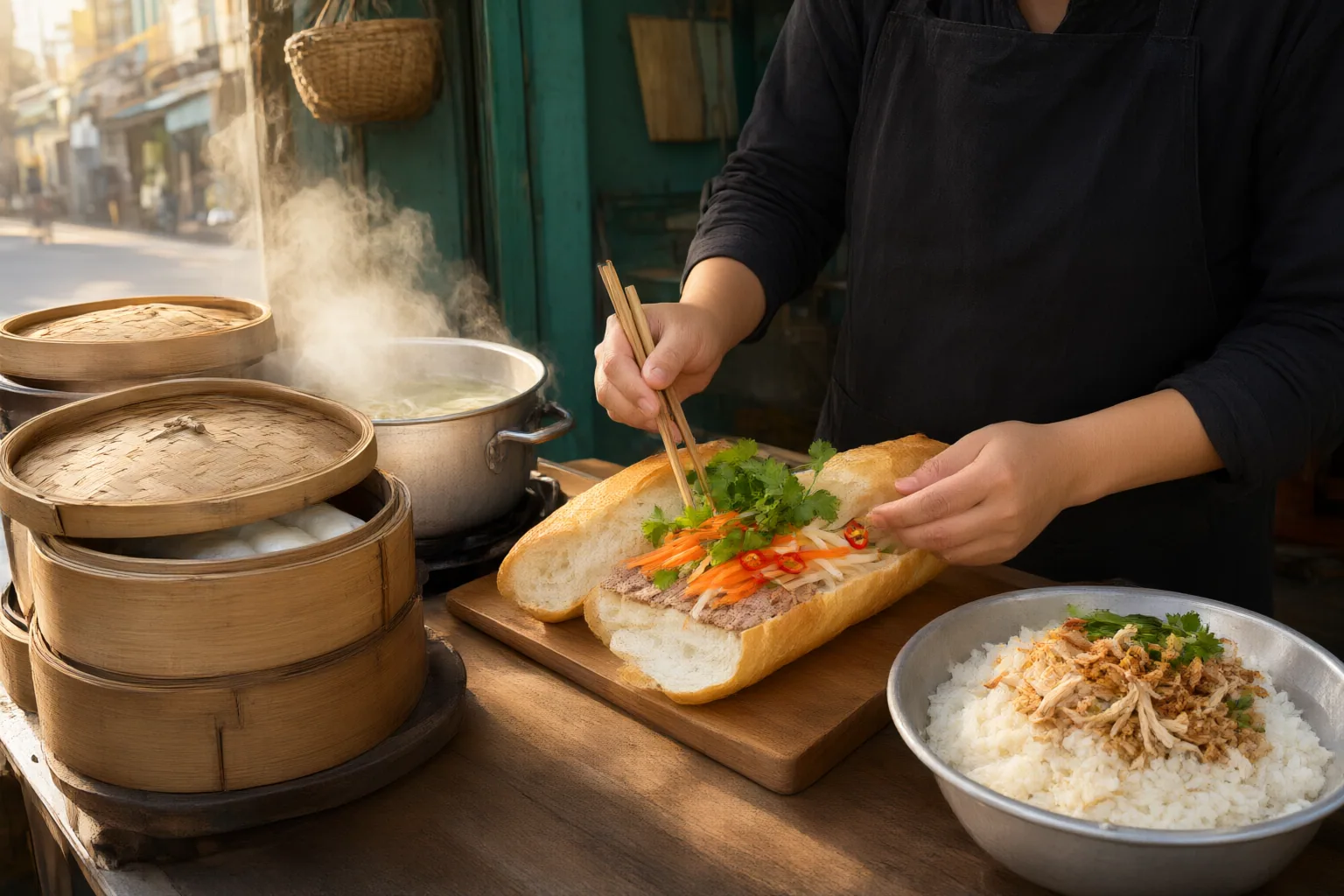
Breakfast Choices by Region
Regional examples can make a breakfast search more focused, although they should not be treated as rigid boundaries.
In northern Vietnam, the cited guides highlight phở and bánh cuốn. Choose phở when you want rice noodles in soup with beef or chicken; look for bánh cuốn when you want thin steamed rice sheets, commonly with a pork-and-mushroom filling, herbs, fried shallots, and dipping sauce.
Central Vietnamese specialties named in the sources include bún bò Huế and mì Quảng. Bún bò Huế is a spicy noodle soup associated with Huế. Mì Quảng is easier to distinguish from a full bowl of soup because it is served with a relatively small quantity of concentrated broth, accompanied by toppings such as herbs and peanuts.
For southern options, the sources identify hủ tiếu and cơm tấm. The available research does not provide enough detail here to specify their ingredients or presentation, so travelers can use the names as search terms while relying on the better-described visual categories above when deciding what style of breakfast they prefer.
Conclusion
Build a simple morning plan around format, place, and time. First decide whether you prefer soup, low-broth noodles, sticky rice, steamed rolls, porridge, a rice dish, or a baguette sandwich. Next, note the relevant name: northern examples include phở and bánh cuốn, central choices include bún bò Huế and mì Quảng, and southern options include hủ tiếu and cơm tấm.
Then search a morning market, street stall, or specialist shop between 6:00 and 9:00, preferably toward the earlier end of that period. Early timing matters because a vendor may finish once the morning batch sells out. For your next breakfast, choose one dish now, save its name and visual cues, and identify a nearby morning market or specialist vendor before setting out.
Disclosures and limitations
- This article was prepared with AI assistance using only the supplied research package and its identified sources; no products, meals, or vendors were personally tested.
- The article contains no product recommendations or disclosed affiliate offers. Dish descriptions and timing guidance are synthesized from the supplied travel-food sources and may not describe every vendor.
Related reading
- Food & Drink Guides for Curious Travelers
- Ordering Seafood by Weight at Coastal Eateries in Vietnam
- How to Choose Between Markets, Street Stalls, Family-Run Eateries, and Restaurants in Vietnam
Sources
- Vietnamese Breakfast: What Vietnamese People Really Eat Every Morning — Our Viet
- 13 Vietnamese Breakfast Dishes Worth Flying For — Bacon is Magic – The Best Food Around the World
- Vietnamese Breakfast: What Locals Eat | MyVietVisa — MyVietVisa
- Breakfast in Vietnam: what locals eat and where to join them — vietnamtourism.com
- Traditional Vietnamese Breakfast Dishes You Must Try| — Lua Viet Tours
- Vietnamese Breakfast: What Locals Eat Before 8am – The Road to Vietnam — theroadtovietnam.com