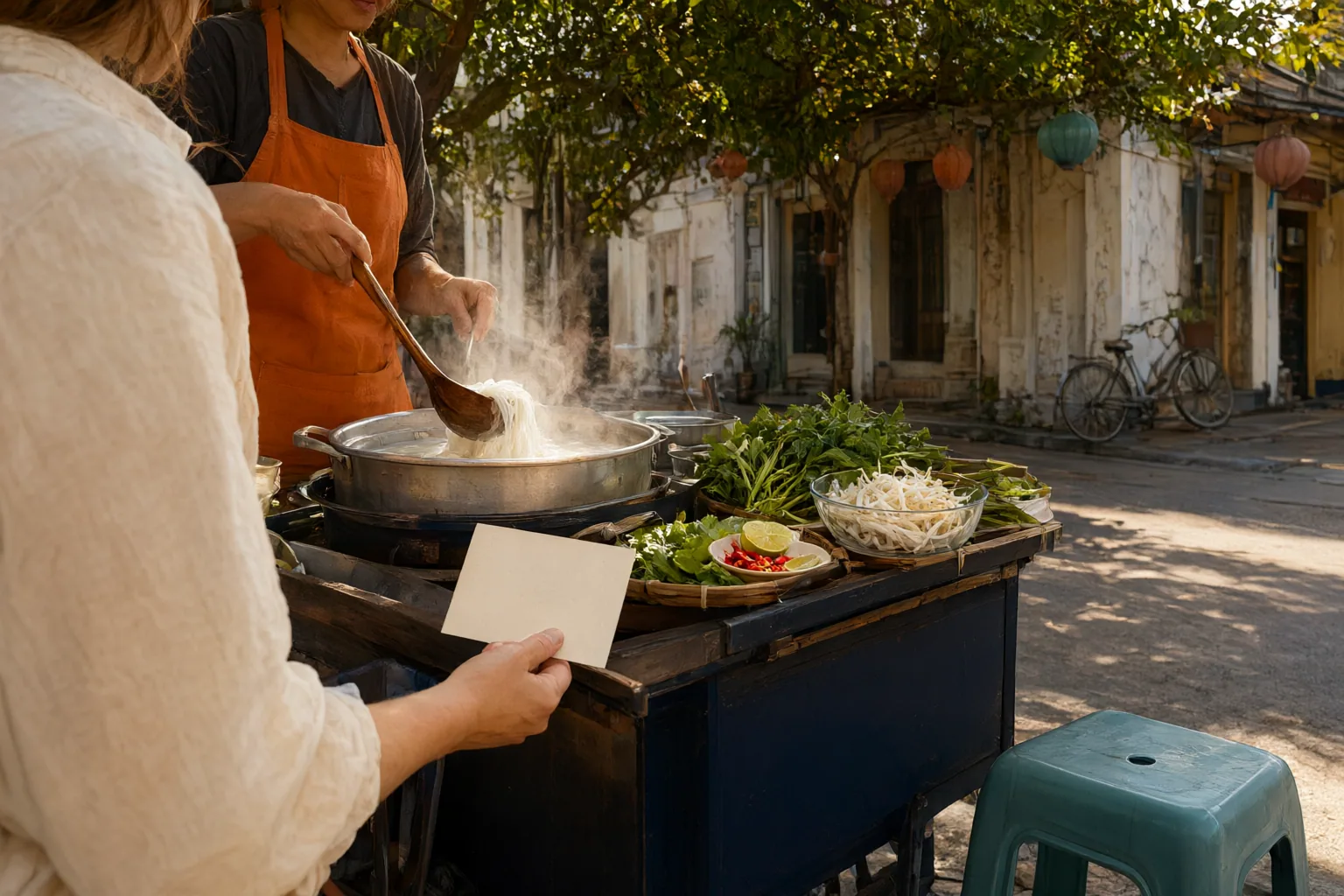
Plan a short route, research each vendor, carry a written Vietnamese restriction card, and verify ingredients and shared equipment at every stop. A familiar dish name or rice-based ingredient alone does not establish suitability.
Build a Short Route Around Carefully Researched Stops
Limit the walk to a few stops that can be checked carefully rather than treating every stall as interchangeable. Start with recent recommendations from local people or recent online reviews. At each candidate stall, look for visible preparation and a setup that appears clean and organized. A busy stall may also have faster food turnover, although these observations do not replace ingredient and preparation questions.
Shape the route around the region you are visiting. Vietnamese street food varies geographically: Prime Travel Vietnam associates pho and bun cha with the north, mi quang and bun bo Hue with central Vietnam, and com tam and hu tieu with the south. These examples can help focus the search, but recipes vary by vendor. Keep backup stops on the shortlist so nobody feels compelled to order when a vendor cannot provide sufficiently clear information.
Prepare to Explain the Restriction Clearly
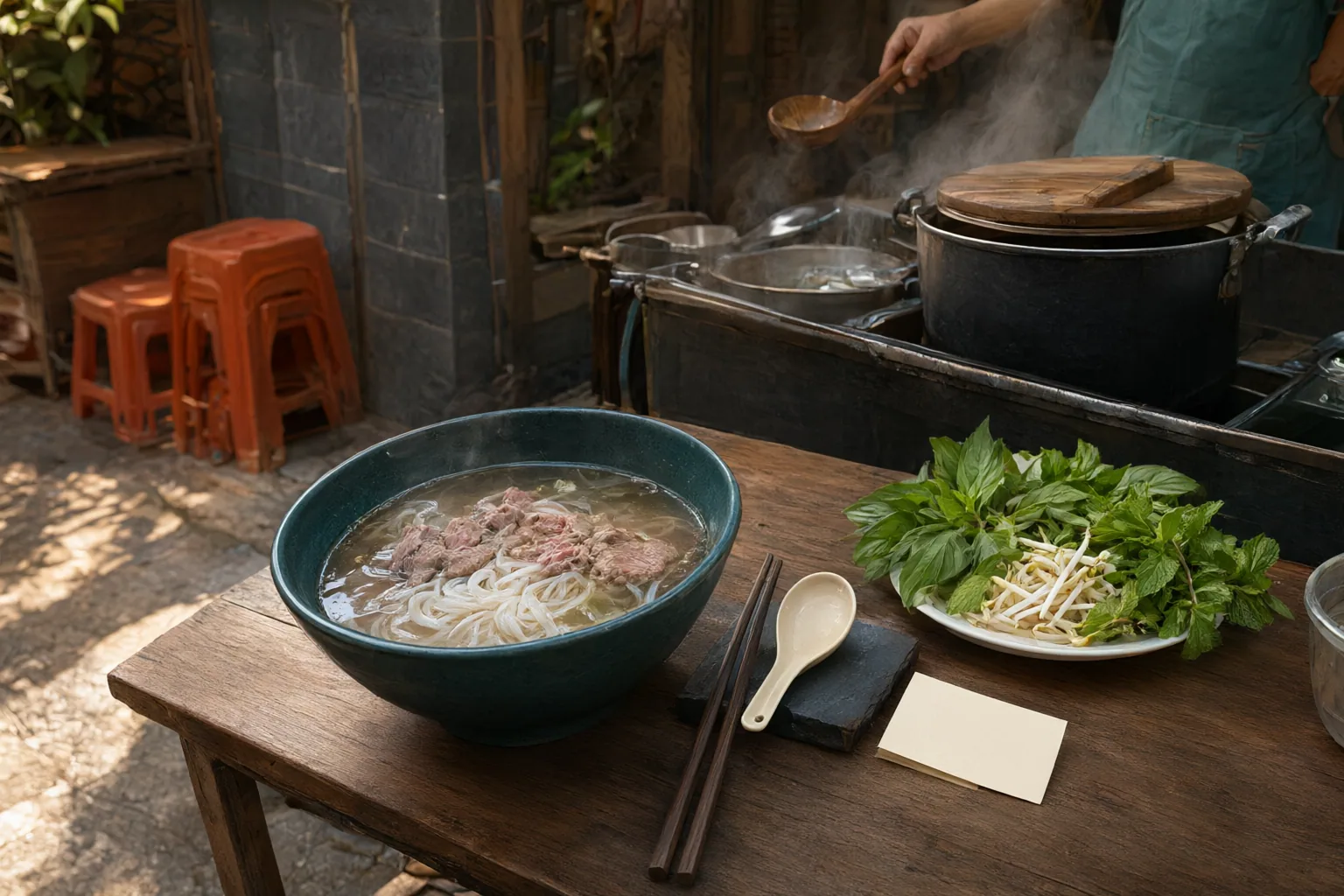
Carry a written Vietnamese translation card that names the restriction and lists the specific ingredients that must be avoided. This can support communication at markets, small restaurants, and homestays, where detailed spoken questions may be difficult.
Make the request precise. Do not ask only whether a dish is “safe” or assume that its obvious base ingredient tells the whole story. Ask about the broth, seasoning, marinade, condiment, and dipping sauce, as relevant. Because vendors may use different recipes for dishes with the same name, repeat the conversation at every stop instead of relying on an answer received elsewhere. The card helps communicate the restriction, but it does not confirm how a particular batch was prepared or whether shared equipment was used.
Check Every Dish, Sauce, and Cooking Process
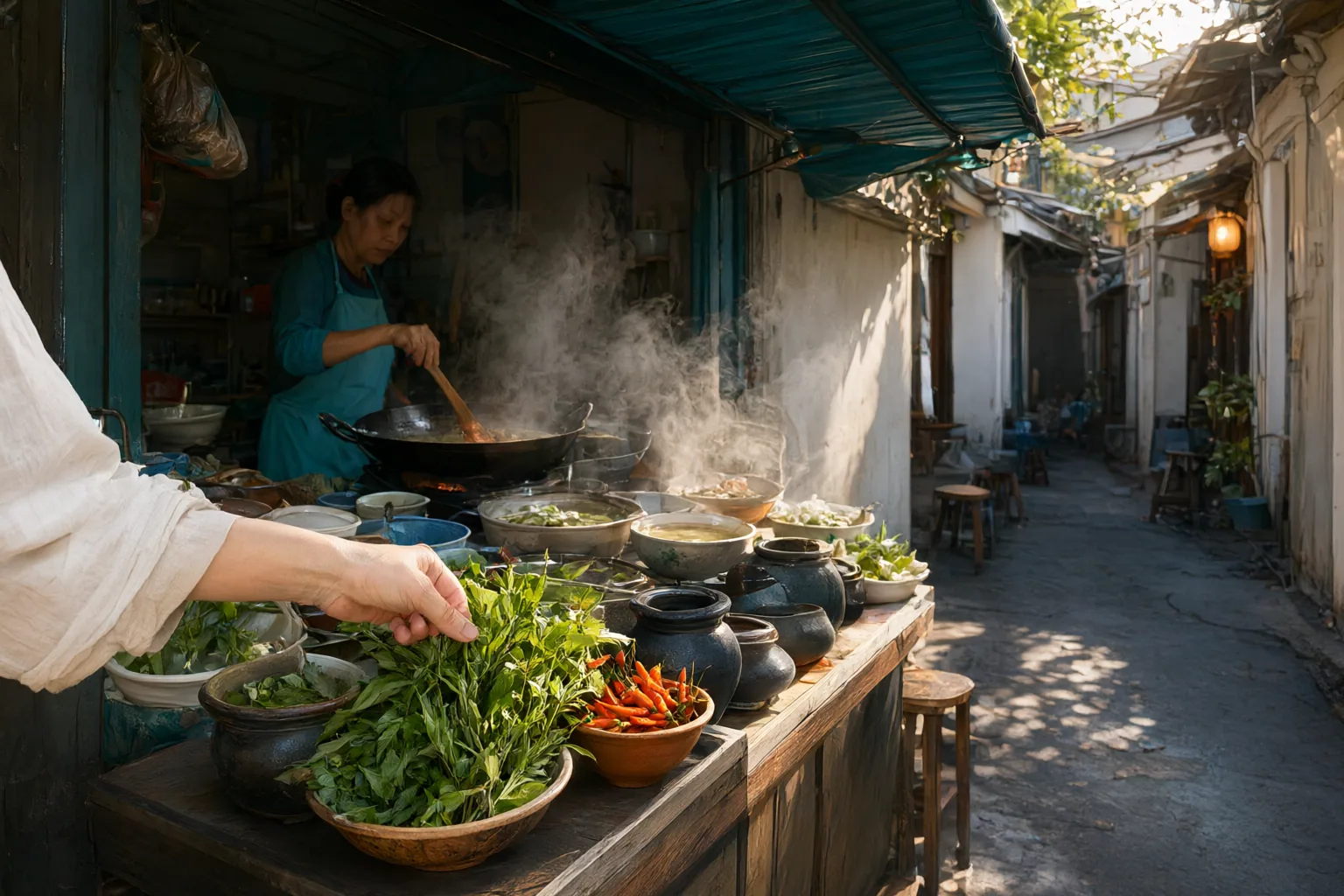
Use the same verification routine before every order:
- Identify the dish’s base ingredients, then ask separately about broth, marinades, seasonings, condiments, dipping sauces, and bouillon.
- Show the written restriction card and confirm that the vendor understands the specific ingredients to avoid.
- Watch the preparation when it is visible.
- Ask whether ladles, woks, tongs, or other utensils are shared with foods containing the restricted ingredient.
- Skip the order if the explanation or preparation practice does not meet the traveler’s needs.
For gluten avoidance, rice noodles or rice paper are not enough to confirm that a dish is gluten-free. The cited gluten-free guide warns that soy sauce, oyster sauce, some fish sauces, and bouillon cubes may contain wheat. It also identifies shared ladles, woks, and tongs as possible sources of cross-contact in busy street kitchens.
Pho, fresh spring rolls, broken rice, hu tieu, bun cha, and banh xeo may be gluten-free when traditionally prepared, but they are candidates to investigate, not guaranteed choices. Confirm seasonings, sauces, bouillon, and preparation practices for the specific vendor and order.
The available dietary evidence focuses mainly on gluten avoidance. It does not establish that these dishes or procedures are safe for every allergy or dietary requirement. Anyone needing strict avoidance must assess the relevant ingredient and cross-contact risks directly at each stop.
Conclusion
Before leaving, shortlist a few recently recommended vendors and prepare at least one backup. At each stop, favor visible, orderly preparation; present the Vietnamese restriction card; and ask about sauces, seasonings, broth, bouillon, marinades, cookware, and utensils. Treat every vendor’s recipe as a fresh check, even when the dish name is familiar.
Do not let the planned route create pressure to order. If the answers are unclear or the preparation practices do not satisfy the traveler’s requirements, skip that stall and move to the next researched option. Begin by choosing the stops and preparing the written card before setting out.
Disclosures and limitations
- This article was prepared with AI assistance from the supplied research package and was not based on personal purchasing, testing, interviews, or firsthand use.
- The guidance synthesizes two general sources, not verified current information for individual stalls. No products or affiliate offers are recommended.
Related reading
- Travel Ideas for Meaningful Trips
- Are Overnight Trains in Vietnam Practical for Families, Solo Travelers, and Light Sleepers?
- How Families Can Choose a Vietnam Cave Experience by Age, Mobility, and Comfort
Sources
- Vietnam Food Safety: The Ultimate Guide to Street Food for Travelers in 2024 — Prime Travel Vietnam
- Vietnamese Street Food in Dubai: Where to Find It — wheretoeatdubai.com
- Eating gluten-free in Vietnam: a practical guide for travelers with allergies — vietnamtourism.com