
Vietnam lies on the eastern edge of mainland Southeast Asia, but health preparation should be based on more than the country alone. First-time visitors should map their destinations and activities, review current vaccine and medicine guidance, and seek itinerary-specific medical advice at least one month before departure.
Orient Your Trip Within Vietnam
Vietnam borders China, Laos, and Cambodia on the eastern edge of mainland Southeast Asia. Hanoi is the capital, while Ho Chi Minh City is the country’s largest city. These basic reference points provide a starting framework for a first itinerary.
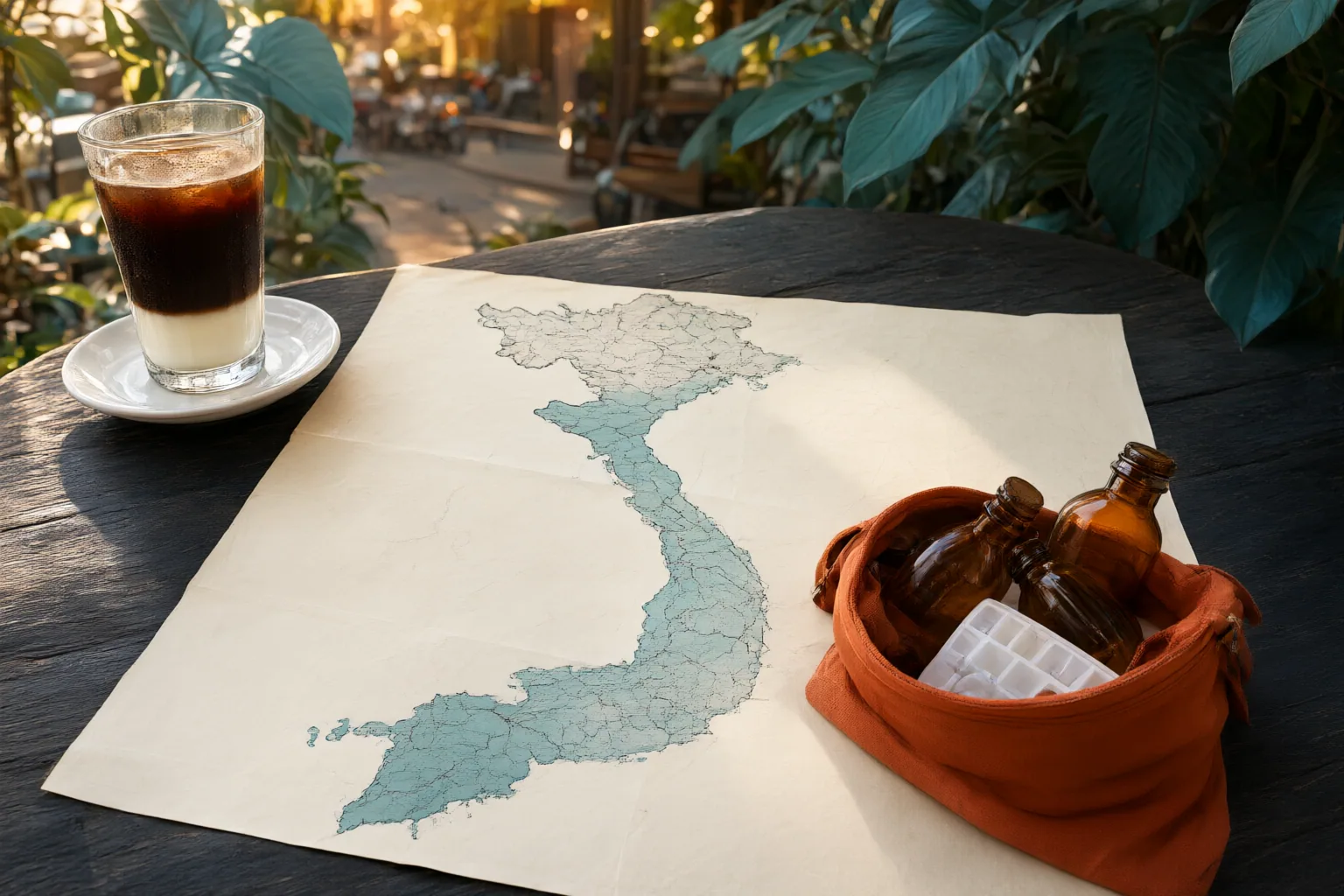
Before seeking health advice, write down each intended destination rather than describing the journey only as “a trip to Vietnam.” Include the places where you expect to stay and any parts of the route that remain undecided. This geographic outline can then support a more specific discussion about the precautions relevant to the trip. The geographic source used here is a general reference rather than an official Vietnamese source, so travelers should treat it as basic orientation.

Start Health Planning Before Departure
The CDC guidance observed on September 2, 2026, advises travelers to Vietnam to review recommended vaccines and medicines and visit a doctor at least one month before traveling. It also recommends being up to date on routine vaccines before departure.
Use that lead time to bring together your vaccination status and itinerary details for a healthcare professional. Starting early matters because the appropriate discussion may depend on where you are going and what you plan to do. If departure is less than a month away, current professional advice can still help clarify the remaining preparations, although the source specifically recommends consultation at least one month in advance.
Health recommendations can change. Recheck current guidance before departure instead of relying solely on the guidance date summarized in this article.
Match Health Questions to Your Itinerary
Mosquito-related planning should reflect the actual route. The CDC recommends taking steps to prevent mosquito bites in Vietnam, while its malaria advice varies by location. On the CDC page observed on September 2, 2026, malaria transmission was associated with rural areas of Vietnam. The page listed no malaria transmission in Da Nang, Hai Phong, Hanoi, Ho Chi Minh City, Nha Trang, or Quy Nhon. This dated distinction should not be treated as a permanent guarantee; verify the latest location-specific guidance with an appropriate healthcare professional.
For a useful consultation, identify possible rural exposure, outdoor activities, accommodation, trip duration, and any activities that are still uncertain. These factors also matter when discussing Japanese encephalitis vaccination. According to the CDC material, whether that vaccine should be considered depends partly on rural exposure, outdoor activity, accommodation, duration, and uncertainty about planned activities.
Do not assume that advice for one listed city automatically answers questions about an entire multi-stop itinerary. Present every intended destination and the nature of the planned activities so a healthcare professional can assess location-specific malaria prevention and other precautions using current information.
Conclusion
Turn the planning into a short checklist. First, map your intended destinations in Vietnam and note which stops or activities remain uncertain. Record possible rural exposure, outdoor plans, accommodation, and trip duration. Next, arrange professional health advice at least one month before departure and confirm whether your routine vaccinations are current. Ask about recommended vaccines, medicines, mosquito-bite prevention, Japanese encephalitis considerations, and any location-specific malaria measures relevant to your route.
Finally, verify current official health recommendations before leaving because guidance may have changed since September 2, 2026. Map your route now, then take that itinerary to an appropriate healthcare professional for a timely, individualized discussion.
Disclosures and limitations
- This article was prepared with AI assistance using the supplied geographic reference and CDC travel-health material; it does not replace individualized medical advice.
- The health source was observed on September 2, 2026, and recommendations may change. The geographic overview came from Wikipedia rather than an official Vietnamese source.
Related reading
- Community Stories, Contributor Profiles, and Shared Travel Insight
- Traveling Vietnam by Xe Máy: What Independent Travelers Should Clarify Before a Trip
- How Travelers Can Engage Respectfully With Local Communities in Vietnam
Sources
- Vietnam – Traveler view | Travelers' Health | CDC — CDC.gov
- Vietnam – Wikipedia — en.wikipedia.org
- Community – Wikipedia — en.wikipedia.org
- Vietnam War – Wikipedia — en.wikipedia.org