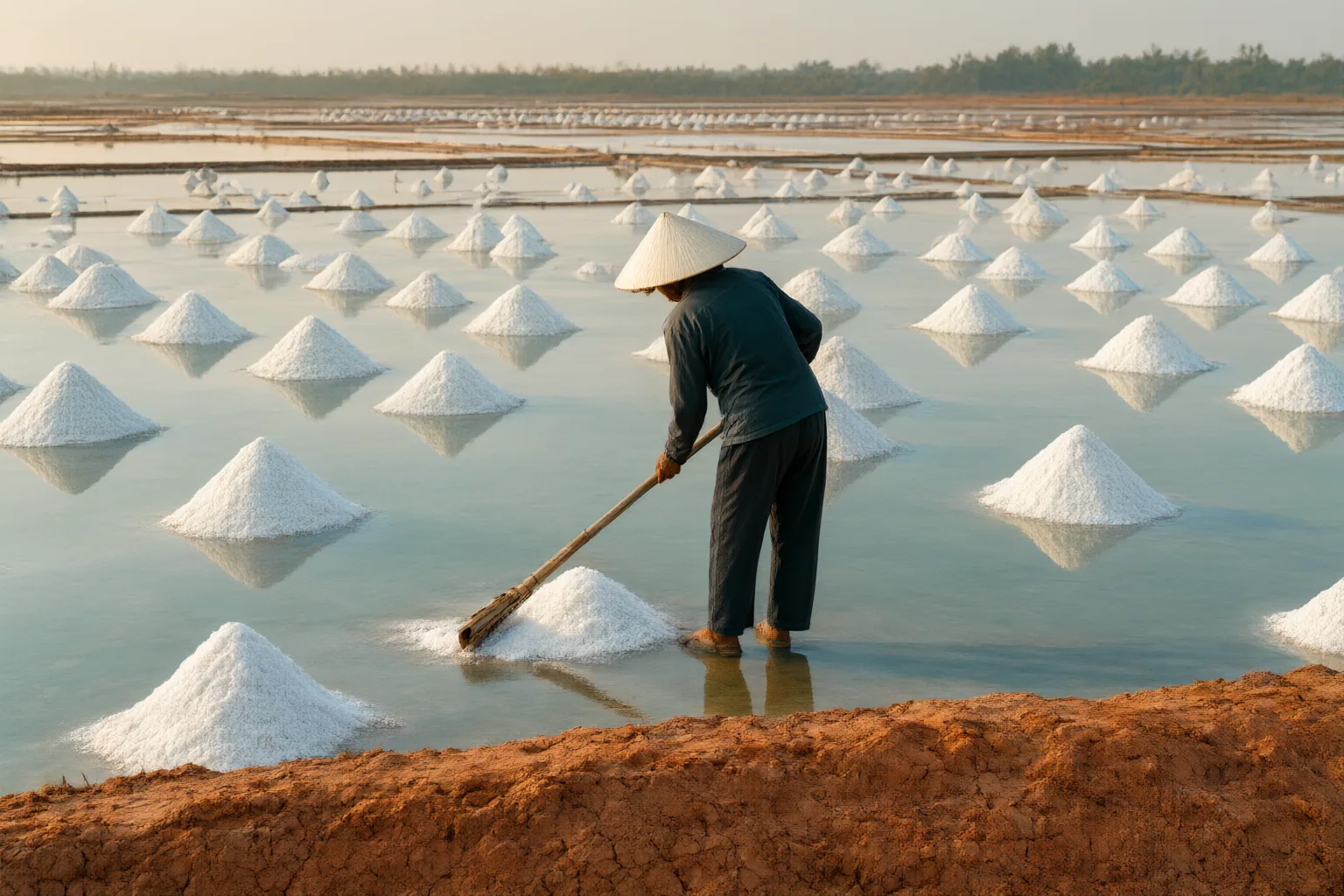
Treat a working salt field as a place of livelihood first and a visitor destination second. Choose the location and season carefully, confirm current conditions, prepare for exposed terrain, and obtain permission before entering production areas, photographing farmers, touching tools, or attempting any work activity.
Choose the Field, Season, and Time of Day
Vietnam’s salt fields do not share one nationwide visitor season. In Bạc Liêu, the cited harvest period generally runs from December through April, during the dry season. Bạch Long has a different reported peak, from March through August. These periods are useful planning guides, but salt production depends heavily on sunny, dry weather. Confirm recent weather and harvesting activity locally before making the journey.
Bạc Liêu’s main fields are spread across Hòa Bình and Đông Hải districts rather than arranged as a single, clearly marked attraction. Decide which area you intend to visit instead of navigating simply to “the salt fields.”
For Bạc Liêu, early morning and late afternoon offer a better chance of seeing farmers at work and are usually more comfortable than midday, when heat and glare can be intense. A visit may still be quiet if the weather has interrupted production or local work has moved to another stage. Approach the schedule as an opportunity to observe current conditions, not as a guaranteed performance for visitors.
Plan Access and Prepare for Field Conditions
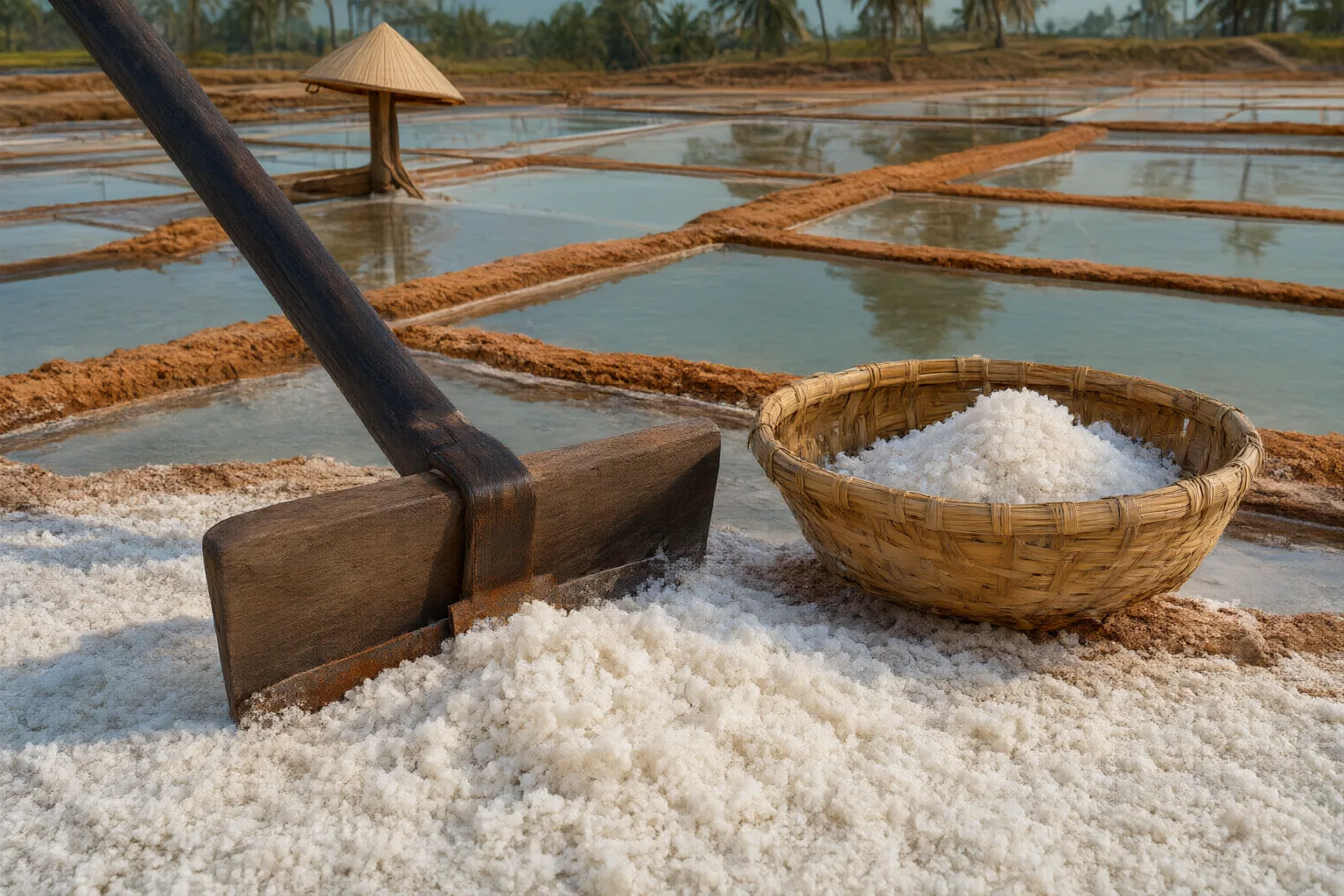
Arrange transportation before departure. One cited guide reports no public bus running directly to Bạc Liêu’s dispersed salt fields, so independent visitors should identify both a specific destination and a practical return journey in advance. Working fields may also have little formal tourist infrastructure. Detailed explanations in English may not always be available, so keep questions simple and remain ready to follow gestures or local directions.
Prepare for an exposed landscape. For Bạc Liêu, the source recommends carrying drinking water, using sun protection, and wearing sturdy shoes. At Bạch Long, the cited footwear includes waterproof sandals, flip-flops, or rubber boots because the ground can be wet and saline. These recommendations are location-specific rather than universal: check the expected surface at your chosen field and select footwear that provides secure footing without damaging production areas.
Bring only what you can manage without blocking narrow routes or distracting workers. The practical aim is to remain comfortable and self-sufficient while avoiding any expectation that farmers will provide visitor facilities, equipment, or guidance during their workday.
Ask Before Walking, Photographing, or Joining In
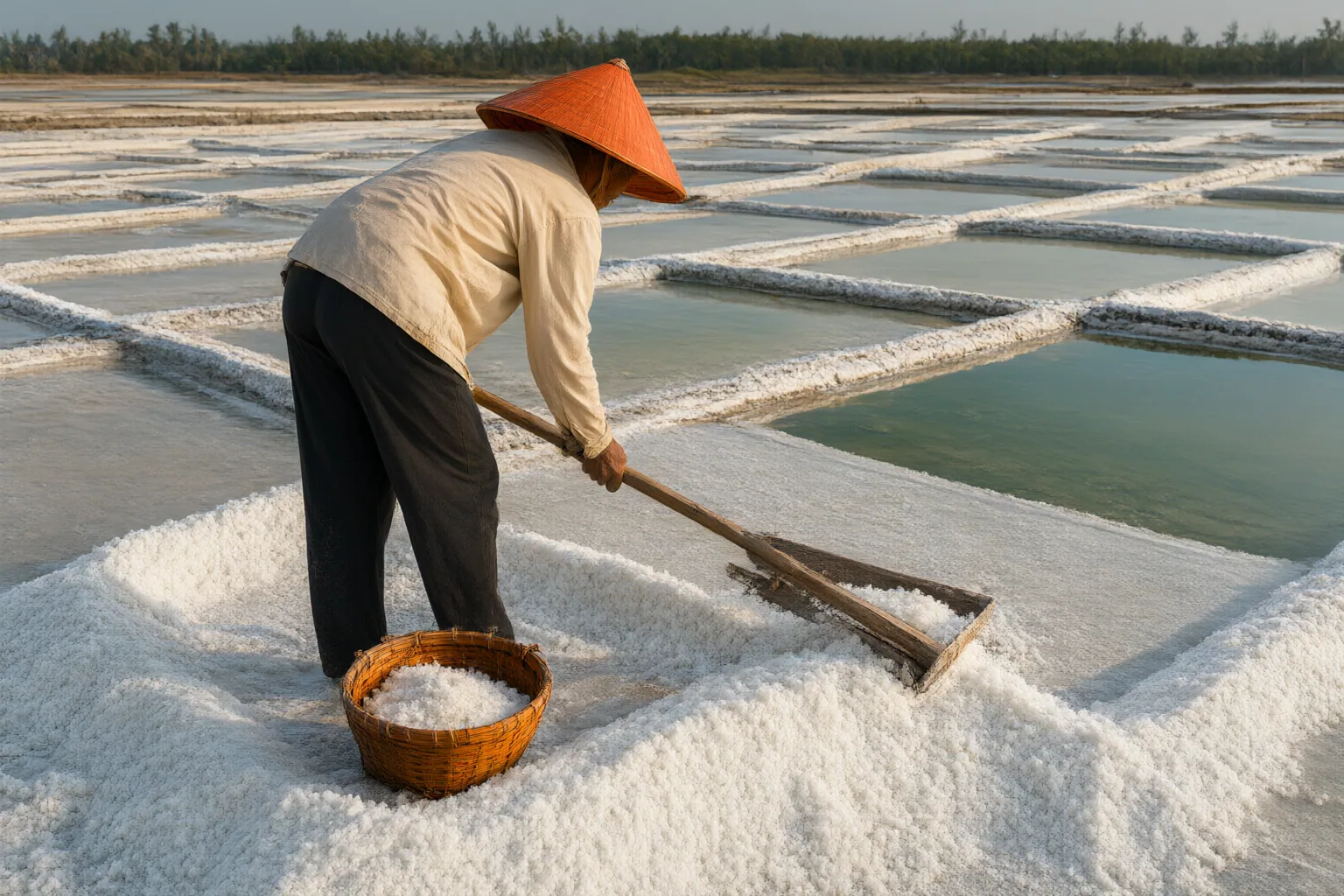
An open-looking salt field is still an active production site. Before stepping onto a drying yard or other work area, locate a farmer or an appropriate local contact and ask where visitors may stand or walk. If permission is unclear, remain outside the production area. Apply the same rule to photographs: ask before photographing farmers, even when taking wider field scenes that include people.
Do not pick up tools, rake salt, pose as though working, or enter a field for a photograph unless a farmer has expressly agreed. Permission to take one photograph does not automatically mean permission to move around the site or participate in the work.
Understanding the process helps explain why restraint matters. Traditional production can involve preparing and flattening drying yards, evaporating seawater under the sun, raking the resulting crystals, leaving salt to drain, and carrying it to a collection point. A visitor standing in the wrong place could obstruct a prepared surface, a farmer’s raking path, or a transport route. Keep equipment and bags out of these areas, allow loaded workers to pass, and move immediately if asked.
Respectful conduct is relevant beyond one destination: sources for both Bạc Liêu and Bạch Long recommend asking before photographing or entering work areas. Local instructions should always take priority over a general travel guide.
Conclusion
On the day of your visit, reconfirm the weather and whether harvesting is active. Arrive in the early morning or late afternoon when visiting Bạc Liêu rather than planning around the strongest midday heat. Carry water and sun protection, wear footwear suited to the named destination, and use the access point indicated by a local person.
Once there, pause before entering any production space. Ask where you may walk, request consent before photographing farmers, and leave tools and salt untouched unless a worker explicitly invites participation. Stay clear of drying yards, raking paths, draining areas, and transport routes. Treat every salt field as a workplace first: arrange transport in advance, follow local directions, and change or shorten your visit whenever conditions or ongoing work require it.
Disclosures and limitations
- This article was prepared with AI assistance using the travel-source material identified by the accompanying source IDs; season, access, and working conditions should be confirmed locally before travel.
- No products are recommended, and no affiliate relationship is presented in this article.
Related reading
- Travel Ideas for Meaningful Trips
- How to Evaluate a Guided Kayaking Trip in Vietnam’s Limestone or Mangrove Landscapes
- How to Plan a National Park Day Hike in Vietnam