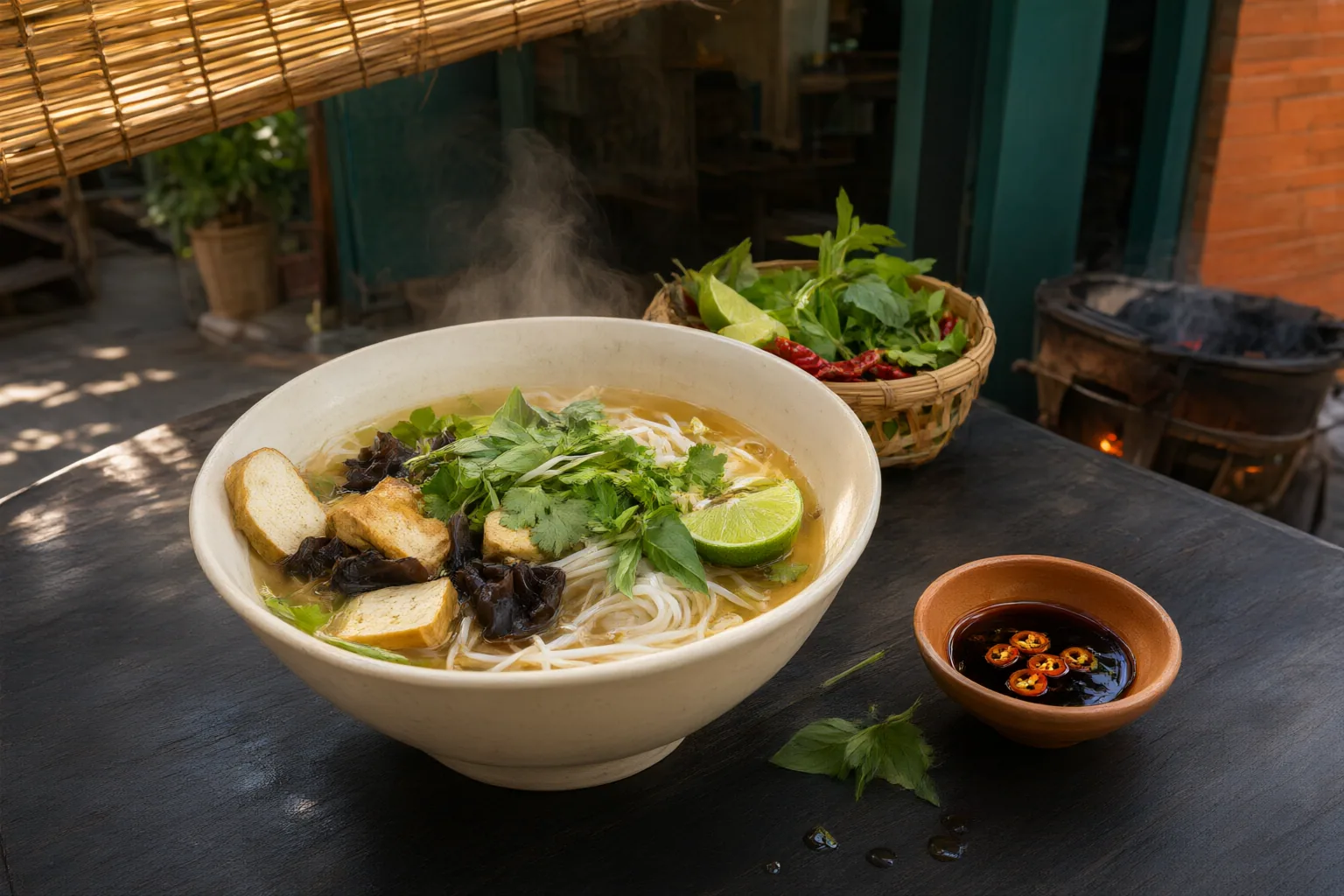
In Vietnam, “chay” is a useful starting point for finding vegetarian food, but a label or meat-free appearance may not reveal the broth, sauces, garnishes, or spreads. Confirm the base ingredients, name each exclusion clearly, and carry a written card when spoken communication is difficult.
Start With “Chay,” Then Confirm the Dish
Look for the word “chay” when searching menus and signs. Vietnam Tourism recommends “quán chay” and “cơm chay” as useful terms for locating vegetarian venues or meals. It also gives examples of dishes that may be offered in meat-free versions, including phở chay, bánh mì chay, gỏi cuốn chay, and mì xào chay.
These terms can narrow the search, but they should begin the conversation rather than settle every ingredient question. The supplied sources do not establish that every restaurant, stall, or menu uses vegetarian terminology consistently. Once you find a promising dish, confirm how it is prepared and whether its base, sauces, and garnishes meet your requirements.
This distinction matters when choosing between a dedicated vegetarian venue and a modified dish at a general restaurant. A “chay” sign offers a useful signal, while a dish made meat-free on request may require more detailed questions about ingredients prepared before the order is placed.
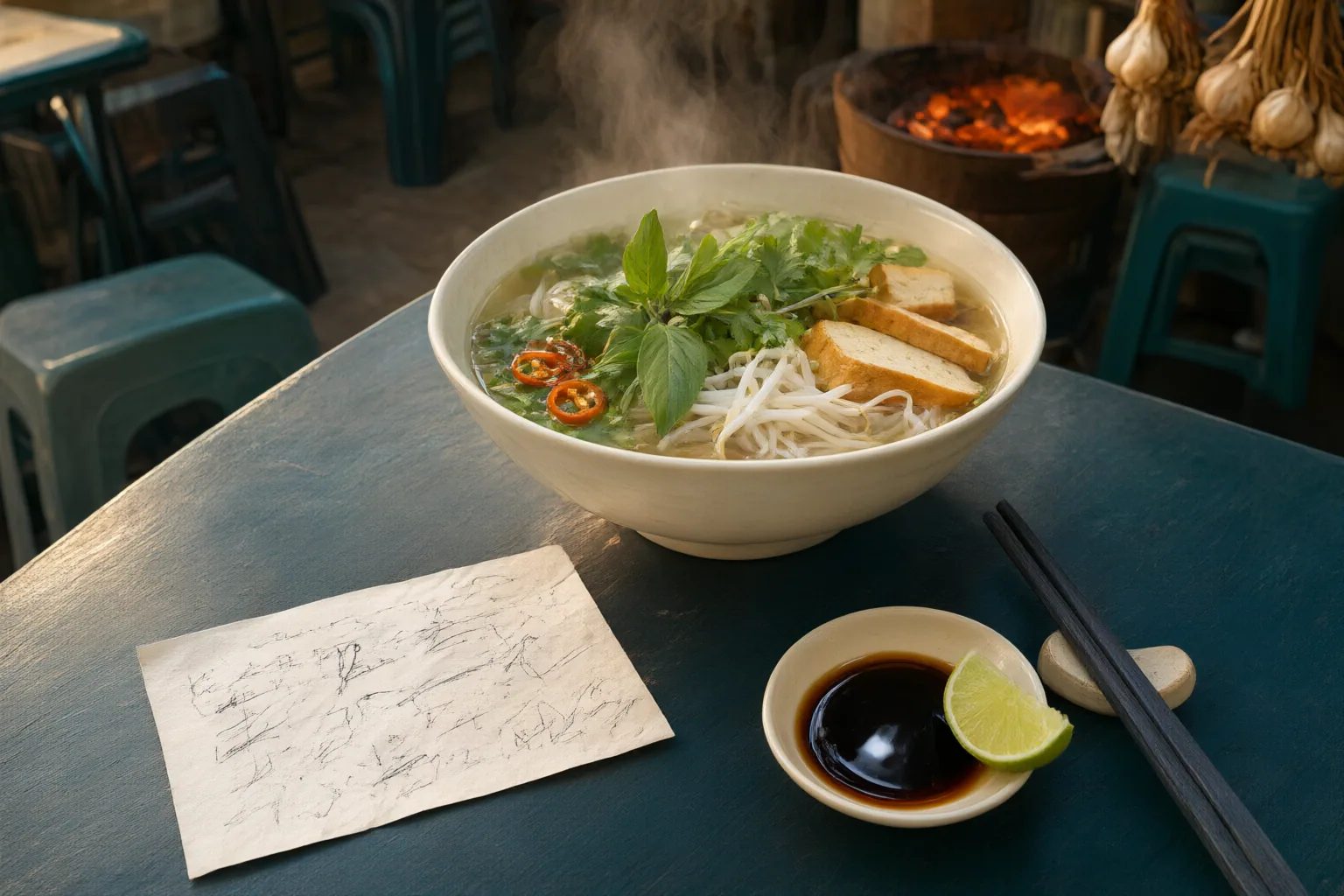
Check Broths, Sauces, Garnishes, and Spreads
A dish can look free of meat while still containing an animal-derived ingredient. The practical travel guide specifically warns travelers to check for fish sauce, oyster sauce, shrimp paste, bone broth, and pâté. These ingredients may appear in a cooking base, seasoning, condiment, garnish, or spread rather than as an obvious piece of meat.
Give soups particular attention. According to the guide, some soups are built on meat broth before a customer orders, so removing visible meat may not change the underlying base. Ask about the broth before requesting a modification. The same principle applies to sauces already mixed into a dish: establish what is in the preparation instead of judging only what is visible at serving time.
For sandwiches or similar dishes, ask about spreads such as pâté as well as the main filling. For foods served with dipping sauces or table condiments, confirm whether fish sauce, oyster sauce, or shrimp paste is included. Vietnam Tourism’s phrase “không nước mắm,” meaning a request for no fish sauce, addresses one common concern, but travelers with broader restrictions should identify every ingredient they need excluded.
Use Specific Phrases and a Written Exclusion Card
Vietnam Tourism provides several practical phrases: “Tôi ăn chay” to say you are vegetarian, “không thịt” to request no meat, and “không nước mắm” to request no fish sauce. Start with the general statement, then follow it with the exclusions relevant to the dish. A no-meat request alone may not communicate that you also want to avoid oyster sauce, shrimp paste, meat-based broth, or pâté.
Naming ingredients individually makes the request more precise. For example, establish whether the broth contains meat before discussing toppings, and ask separately about fish sauce or other prepared condiments. This approach does not guarantee how every venue will interpret the request, but it gives the vendor clearer questions to answer than a broad menu label does.
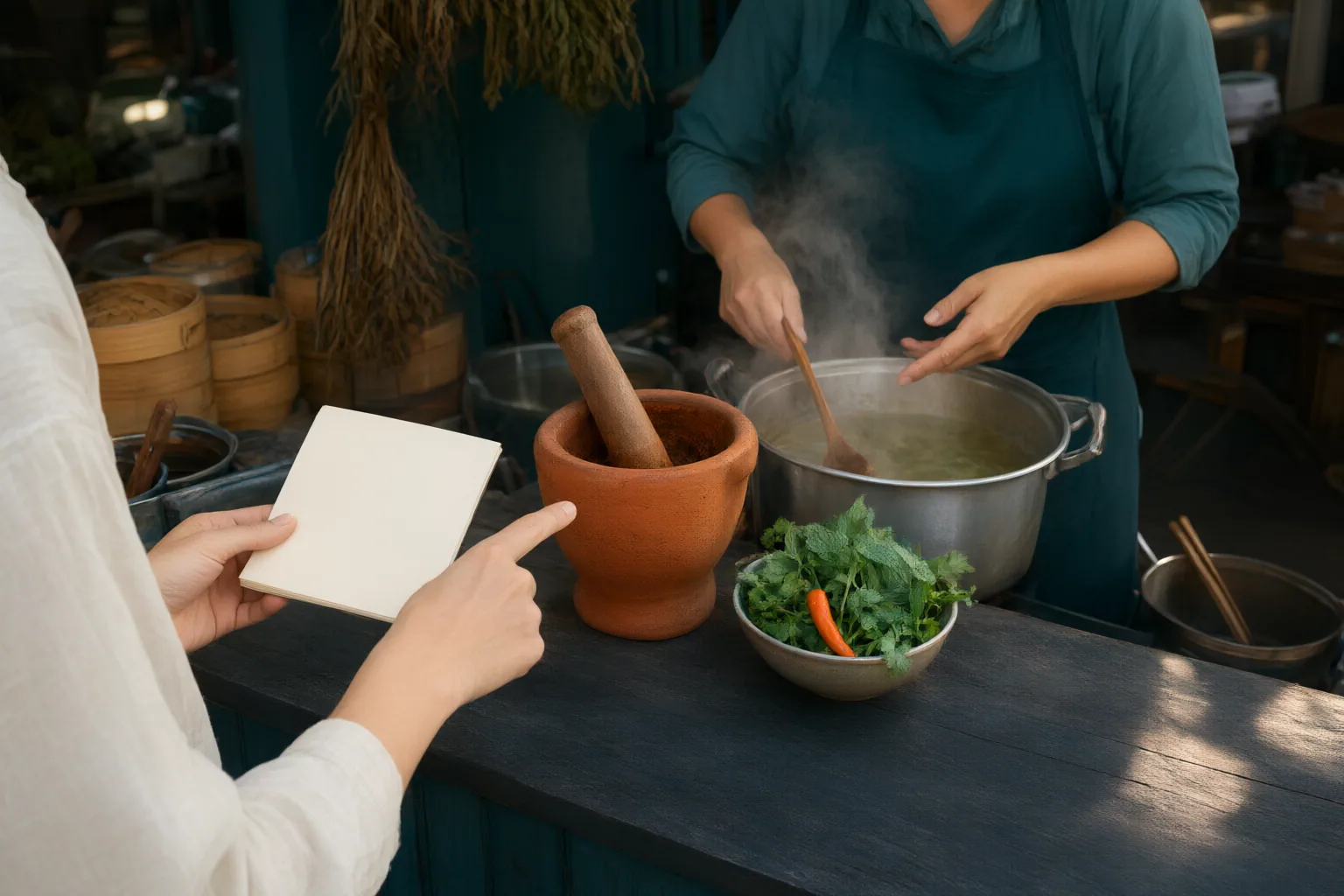
When conversation is difficult, the practical travel guide recommends showing the vendor a written point card. Its suggested format pairs the foods wanted with explicit exclusions such as no fish sauce, oyster sauce, meat broth, or pâté. This is guidance reported by an individual travel writer, not a universal restaurant protocol. Still, a prepared card can be especially useful at a noisy stall or when traveler and vendor do not share a language. Keep the wording focused on the ingredients that matter to you and show it before the order is prepared.
Conclusion
Use a repeatable check at each meal: look for “chay,” confirm the dish’s base, ask about sauces and garnishes, and state every important exclusion. If spoken communication is unclear, show a written ingredient-exclusion card before preparation begins.
Travelers who also exclude eggs or dairy, or who need to address cross-contact, must ask additional questions because the supplied guidance does not fully define those boundaries. Do not assume that a “chay” label answers requirements that have not been discussed. Before your next meal in Vietnam, save the key Vietnamese phrases and prepare a card listing the ingredients you need excluded.
Disclosures and limitations
- This article was prepared with AI assistance from the supplied research package and reflects information attributed to Vietnam Tourism and an individual travel writer’s practical guide.
- No products are recommended in this article, and no affiliate relationship is presented. Readers should confirm ingredients directly with each food vendor.
Related reading
- Food & Drink Guides for Curious Travelers
- How to Navigate Vietnam’s Fermented Foods: Ingredients, Serving Roles, and Aromas
- How to Plan Vietnam Food Stops Around Meal Times and Busy Queues
Sources
- A vegetarian guide to Vietnam — Vietnam Tourism
- Vegetarian Food in Vietnam: A Practical Guide (What Actually Works) — A Little Adrift Travel Blog